Sexing La Mode

Sexing La Mode

Jennifer M. Jones

60,14 €
IVA incluido
Disponible
Editorial:
Bloomsbury Publishing plc
Año de edición:
2004
ISBN:
9781859738351
60,14 €
IVA incluido
Disponible

Selecciona una librería:

  • Librería Samer Atenea
  • Librería Aciertas (Toledo)
  • Kálamo Books
  • Librería Perelló (Valencia)
  • Librería Elías (Asturias)
  • Donde los libros
  • Librería Kolima (Madrid)
  • Librería Proteo (Málaga)

The connection between fashion, femininity, frivolity and Frenchness has become a cliché. Yet, relegating fashion to the realm of frivolity and femininity is a distinctly modern belief that developed along with the urban culture of the Enlightenment. In eighteenth-century France, a commercial culture filled with shop girls, fashion magazines and window displays began to supplant a court-based fashion culture based on rank and distinction, stimulating debates over the proper relationship between women and commercial culture, public and private spheres, and morality and taste. Mary Wollstonecraft was one of those particularly critical of this ’vulgar’ obsession with ’tawdry finery’, declaring it to be ’merely the external mark of a depravity shared with slaves’. The story of how la mode was ’sexed’ as feminine offers a compelling insight into the political, economic and cultural tensions that marked the birth of modern commercial culture. Jones examines men’s and women’s relation to fashion at this time, looking at both consumption and production to argue how clothing was becoming increasingly conceptualized as feminine/effeminate. A concise history of French fashion culture suitable for anyone interested in eighteenth-century culture, women and gender studies or fashion history.


Artículos relacionados

  • Gender Identities in Italy in the First Millennium BC
    This book includes papers from a conference held at the Institute of Classical Studies, London, in June 2006.                         ...
    Disponible

    77,26 €

  • Crossing the catwalk
    Laura Cherrie Beaney
    In the 1930s, Freud observed that 'when you meet a human being, the first distinction you make is ’male or female?’ and you are accustomed to make the distinction with unhesitating certainty.' As Freud suggests, society is divisible by gender. We are taken to be either 'male' or 'female.' This notion seems to be fixed within our culture and is often unquestioned. In this dynami...
  • Crossing the catwalk
    Laura Cherrie Beaney
    In the 1930s, Freud observed that 'when you meet a human being, the first distinction you make is ’male or female?’ and you are accustomed to make the distinction with unhesitating certainty.' As Freud suggests, society is divisible by gender. We are taken to be either 'male' or 'female.' This notion seems to be fixed within our culture and is often unquestioned. In this dynami...
    Disponible

    51,44 €

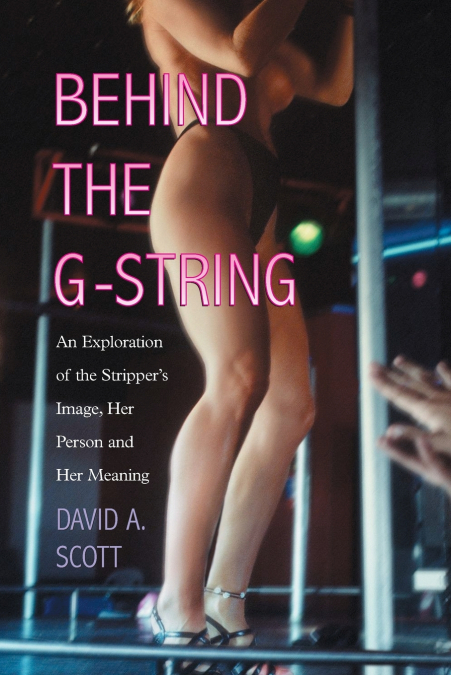
  • Behind the G-String
    David A. Scott
    In recent years, the number of strip clubs in the United States has increased dramatically. Dressed up with terms such as 'gentlemen’s clubs,' they often feature valet parking, limousines, executive dining rooms, extravagant menus-and, of course, topless or nude women dancing on stage. Stripping has become a big business, with over 3.5 million people, primarily men, attendin...
    Disponible

    42,71 €

  • A Genealogy of the Wives of the American Presidents and Their First Two Generations of Descent
    Craig Hart
    From Martha Washington to Laura Bush, the wife of each U.S. president has found her place in history, often setting trends and doing important work for the nation. This reference work traces the lineage of all presidents’ wives, arranged alphabetically from Abigail Adams to Jane Wyman. Genealogy reveals that some of the women are connected to one another through common anc...
    Disponible

    71,73 €

  • Stereotypes of Women in Power
    Barbara Garlick / Suzanne Dixon
    ...

Otros libros del autor

  • Sexing La Mode
    Jennifer M. Jones
    The connection between fashion, femininity, frivolity and Frenchness has become a cliché. Yet, relegating fashion to the realm of frivolity and femininity is a distinctly modern belief that developed along with the urban culture of the Enlightenment. In eighteenth-century France, a commercial culture filled with shop girls, fashion magazines and window displays began to supplan...