

 Librería Samer Atenea
 Kálamo Books
 Librería Elías (Asturias)
 Librería Kolima (Madrid)
 Librería Proteo (Málaga)
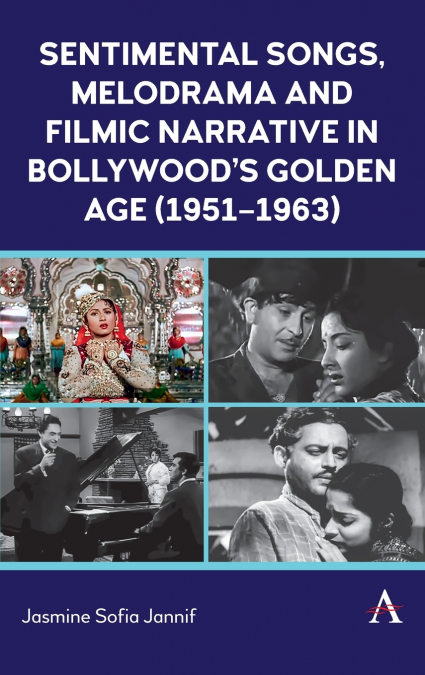
The considerably large critical literature on Bollywood cinema is marked by an absence as it has not engaged fully with the ways in which songs lead to the memorial construction of films and how a spectator connects with films through their songs. The studies tended to deflect the emotional dimension of songs, their internal lyrical structure and their intertextual connections in favour of readings that treat songs as subsidiary to other formal elements. Consequently, there was little understanding of songs and their complex relationship with the narrative of the film. To address this absence, this book begins by taking a look at the prior history of Bollywood songs since the arrival of talkies with the film Alam Ara (1931). The chapter takes the reader through the journey of film songs from synchronous singing and music during production to non-diegetic music and the playback singer. In addition, the somewhat disparate filmic milieu of history, emotion and ethics, much of which are drawn from traditional texts, served to affirm the values of a secular India. Melodrama, mediated via Indian theories of sentimentality, became one of the key colonial discourses through which the politico-social order was critiqued and Indianness celebrated.The book then raises the question, ’Can one speak about periods?’ After defending periodisation in this instance because it does have heuristic value, the argument is given added support by positing melodrama as the dominant dramatic mode of Indian Hindi (Bollywood) cinema of the Golden Age. The term ’melodrama’ is used to designate a film genre marked by sentimental songs that appeal to the heightened emotions of the spectator. Because emotionality is central to the concept of melodrama, a consideration of how emotions may be theorised is also given. The Indian classical concept of rasa is examined to provide a theoretical frame that is both historical and indigenous. Sentimental and melodramatic emotion ultimately enhanced cinema’s ethical role in building a post-colonial nation - a nation that was emerging from the trauma of partition as well as the excesses of colonisation. However, by focusing with holistic lens on the period in question - the ’Golden Age’ - the book finesses the value of periodisation in this instance. Frame analyses of a sample of song sequences from a variety of films are used to demonstrate the roles of various song registers and the way these different registers (as identified in the appendices) work within the narrative. The argument for a connection between songs and narrative in the period is strengthened by an examination of the elements of song picturisation, most notably body movement, mise-en-scènes, lyrics, vocal expression, lighting, shots and music. A close examination of these elements reinforced the links between felt emotion and the melodramatic form in the Golden Age. Furthermore, it is argued that while Indian theories of emotional responses - notably rasa theory - recognised the place of cathartic outpouring in any dramatic presentation, the shape and structure of Bollywood cinema was indebted to the melodramatic imaginary that came to India with British colonisation. The archival material on English novels read in colonial times indicated that novels dealing with the ’man of feeling’, novels such as Henry Mackenzie’s The Man of Feeling (1771) and Oliver Goldsmith’s The Vicar of Wakefield (1766), provided the melodramatic structures within which native structures of feeling (as in the varied rasas) may be given felt presence. That structure and its emotional pulling power dictated cinema and especially the cinema of the Golden Age. There are direct links between Devdas (1935), a seminal film based on a sentimental Bengali novel, and Pyaasa (1957), and these links speak to the presence of English discourses of sentimentality. Such was their pervasive power, indeed their affective intensities and strength, that no film of the ’Gold





