

 Librería Samer Atenea
 Kálamo Books
 Librería Elías (Asturias)
 Librería Kolima (Madrid)
 Librería Proteo (Málaga)
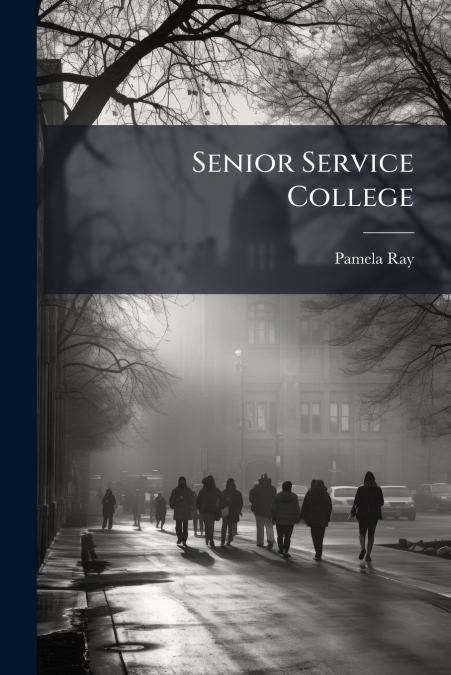
This paper discusses the importance of senior service colleges (SSCs) to civilian leader development and recommends initiatives that DOD can take to maximize the contributions of its senior civilian cadre. DOD’s unique organization, critical national security mission, and reliance on the Total Force warrant intensified senior leadership focus on the SSC’s role in civilian senior leader development and the subsequent dispersion of these human capital assets enterprise-wide. Support to the warfighter mandates a strong, competitive blended military-civilian leadership team that appreciates and evaluates challenges with a heightened strategic perspective. The SSCs provide civilians with opportunities for sustained, intellectual interaction with their military counterparts and promote lifelong personal and professional growth. Maximizing the benefits of the Total Force culture, these institutions enhance strategic capabilities and complement enterprise succession planning. During the past decade, DOD civilians represented approximately 7% of the SSCs’ student body annually; yet DOD has 760,000 civilians that play a prominent role in its success. More must be done to fill this void. The institutional development of a strong, civilian leadership corps has been elusive for the Department. Leader development resources are dispersed throughout DOD, with a parochial approach adopted by the components. DOD should assess the reasons for the civilian sector’s underuse of SSCs and review department-wide senior leader development programs to determine redundancies and benchmark best practices. Within the nation’s largest federal agency, the adoption of a holistic, coordinated approach for leadership development, which would ensure an efficient use of DOD resources and include SSC as a core component, should be an agency imperative.This work has been selected by scholars as being culturally important, and is part of the knowledge base of civilization as we know it. This work was reproduced from the original artifact, and remains as true to the original work as possible. Therefore, you will see the original copyright references, library stamps (as most of these works have been housed in our most important libraries around the world), and other notations in the work.This work is in the public domain in the United States of America, and possibly other nations. Within the United States, you may freely copy and distribute this work, as no entity (individual or corporate) has a copyright on the body of the work.As a reproduction of a historical artifact, this work may contain missing or blurred pages, poor pictures, errant marks, etc. Scholars believe, and we concur, that this work is important enough to be preserved, reproduced, and made generally available to the public. We appreciate your support of the preservation process, and thank you for being an important part of keeping this knowledge alive and relevant.





