Inicio > Humanidades > Filosofía > Ética y filosofía moral > Seneca on Anger, Benefits, Clemency, and a Happy Life (Polis & Praxis Stoic Series)
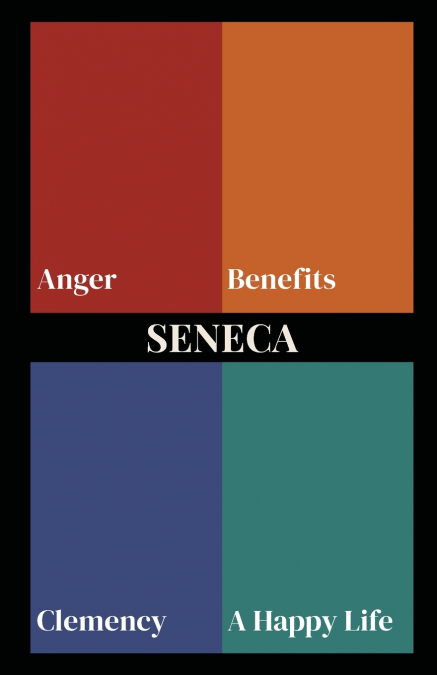
Seneca on Anger, Benefits, Clemency, and a Happy Life (Polis & Praxis Stoic Series)

Seneca on Anger, Benefits, Clemency, and a Happy Life (Polis & Praxis Stoic Series)

Lucius Seneca / Roger L’Estrange

13,09 €
IVA incluido
Disponible
Editorial:
Indy Pub
Año de edición:
2026
Materia
Ética y filosofía moral
ISBN:
9798240966347
13,09 €
IVA incluido
Disponible

Selecciona una librería:

  • Librería Samer Atenea
  • Kálamo Books
  • Librería Elías (Asturias)
  • Librería Kolima (Madrid)
  • Librería Proteo (Málaga)

Discover how a 2,000-year-old Roman philosopher mapped the modern struggles of distraction, outrage, and ambition.Lucius Annaeus Seneca was a Stoic philosopher who wrote with unnerving precision about the exact problems we face today. He understood the experience of spending your life solving problems you did not choose, the ambient fury of an outrage-driven culture, and the suspicion that you are busy in ways that fall short of actually being alive.The four classic works collected in this Polis & Praxis Stoic Series edition speak directly to the present moment. Written in the middle of the first century AD, Seneca’s essays provide a survival manual for contemporary life. He offers a philosophy of attention to combat our fragmented focus, a rational antidote to the temporary insanity of anger, a defense of genuine reciprocity in a transactional world, and a sharp meditation on the use of power.Seneca writes with disarming honesty. He navigated the temptations of extreme wealth and influence in the court of Nero, and he shares what he found useful anyway. He remains one of the most readable and deeply practical moral writers in the Western tradition.The Four Essays Included:On a Happy Life: A guide to living well under conditions that are actively hostile to it.On Benefits: An exploration of the networks of obligation, gratitude, and genuine reciprocity.On Anger: A vital manual for navigating an era organized around the performance and consumption of outrage.On Clemency: An urgent argument on why restraint is the highest expression of strength.Exclusive Additions to the Polis & Praxis Edition:Comprehensive New Introduction: Explores why Seneca’s philosophy of time, attention, and morality is essential reading today.Individual Essay Introductions: Short orientations for each of the four works, grounding Seneca’s arguments in their historical context and modern relevance.Author Biography: A clear-eyed look at Seneca’s brilliant, flawed, and deeply self-aware life.Curated Further Reading List: Carefully selected resources to deepen your understanding of Stoicism and Seneca’s legacy.Pick up any page. He is talking to you.

Artículos relacionados

  • Ka Ab Ba Building The Lighted Temple
    Dr Terri R. Nelson / Dr Terri RNelson
    The book KaAbBa Building The Lighted Temple/Metaphysical Keys to the Tree of Life draws a circle that is inclusive of the Afrikan origin of the Ancient Kemetic/Egyptian wisdom. It reveals the undeniable root and link of Ancient Africa to all the religious systems that would develop worldwide. This book is explosive in its power to convey the meaning of KaAbBa, the Medu Neter  (...
    Disponible

    37,41 €

  • Technoethics and the Evolving Knowledge Society
    Rocci Luppicini
    Recently, there has been a major push to rediscover the ethical dimension of technology across the sciences, social sciences, and humanities. Technoethics and the Evolving Knowledge Society: Ethical Issues in Technological Design, Research, Development, and Innovation examines human processes and practices connected to technology embedded within social, political, and moral sph...
  • Kant
    Immanuel Kant
    Kant’s Groundwork of the Metaphysics of Morals is one of the most important works in modern moral philosophy. It belongs beside Plato, Aristotle, Machiavelli, and Hobbes. Here Kant sets out to articulate and defend the Categorical Imperative - the fundamental principle that underlies moral reasoning - and to lay the foundation for a comprehensive account of justice and human vi...
  • On the Duty of Civil Disobedience
    HENRY DAVID THOREAU
    Civil Disobedience argues that citizens should not permit their governments to overrule their consciences, and that they have a duty to avoid allowing their acquiescence to enable the government to make them the agents of injustice. Thoreau was motivated in part by his disgust with slavery and the Mexican-American War, but the sentiments he expresses here are just as pertinent ...
  • Beyond Good and Evil
    Friedrich Nietzsche
    Nietzsche, though primarily a philosopher, wrote widely on art, philology, history, religion, tragedy, culture, and science.  In 1886, at the height of his powers, he published Beyond Good and Evil.  Here he examines much of the best of human thought--dogmatic philosophy, Judeo-Christian morality, science and democracy – and finds it lacking.  Rejecting “slave-morality” he pres...
  • Beyond Good and Evil
    Friedrich Nietzsche
    Nietzsche, though primarily a philosopher, wrote widely on art, philology, history, religion, tragedy, culture, and science.  In 1886, at the height of his powers, he published Beyond Good and Evil.  Here he examines much of the best of human thought--dogmatic philosophy, Judeo-Christian morality, science and democracy – and finds it lacking.  Rejecting “slave-morality” he pres...
    Disponible

    9,99 €