
Inicio > > Redes y comunicaciones informáticas > Self-Organized Lightwave Networks
Self-Organized Lightwave Networks

Self-Organized Lightwave Networks

Tetsuzo Yoshimura

144,15 €
IVA incluido
Disponible
Editorial:
Taylor & Francis Ltd
Año de edición:
2018
Materia
Redes y comunicaciones informáticas
ISBN:
9781138746886
144,15 €
IVA incluido
Disponible

Selecciona una librería:

  • Librería Samer Atenea
  • Librería Aciertas (Toledo)
  • Kálamo Books
  • Librería Perelló (Valencia)
  • Librería Elías (Asturias)
  • Donde los libros
  • Librería Kolima (Madrid)
  • Librería Proteo (Málaga)

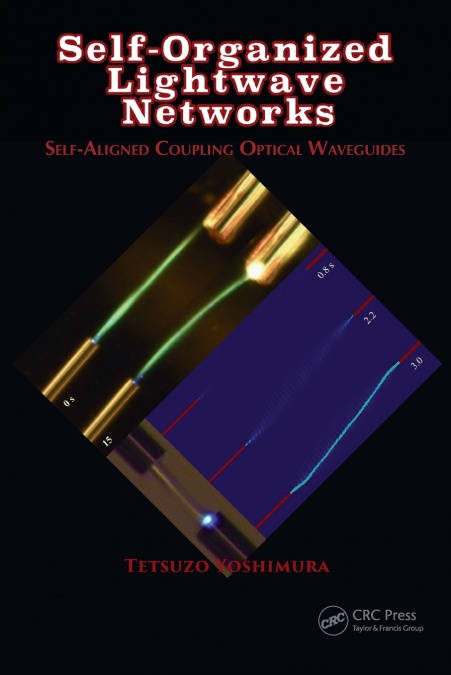
This book gives a solution to the problem of constructing lightwave paths in free spaces by proposing the concept of a Self-Organized Lightwave Network (SOLNET). This concept enables us to form self-aligned coupling optical waveguides automatically. SOLNETs are fabricated by self-focusing of lightwaves in photosensitive media, in which the refractive index increases upon light beam exposure, to realize the following functions: 1) Optical solder: Self-aligned optical couplings between misaligned devices with different core sizes 2) Three-dimensional optical wiring 3) Targeting lightwaves onto specific objects SOLNETs are expected to reduce the efforts to implement lightwaves into electronic systems and allow us to create new architectures, thus reducing costs and energy dissipation and improving overall system performance. SOLNETs are also expected to be applied to a wide range of fields where lightwaves are utilized, for example, solar energy conversion systems and biomedical technologies, especially photo-assisted cancer therapies. Readers will systematically learn concepts and features of SOLNETs, SOLNET performance predicted by computer simulations, experimental demonstrations for the proof of concepts, and expected applications. They will also be prepared for future challenges of the applications. This book is intended to be read by scientists, engineers, and graduate students who study advanced optoelectronic systems such as optical interconnects within computers and optical networking systems, and those who produce new ideas or strategies on lightwave-related subjects.  

Artículos relacionados

  • Next Generation Search Engines
    Recent technological progress in computer science, Web technologies, and the constantly evolving information available on the Internet has drastically changed the landscape of search and access to information. Current search engines employ advanced techniques involving machine learning, social networks, and semantic analysis. Next Generation Search Engines: Advanced Models for ...
  • Collaboration and the Semantic Web
    Collaborative working has been increasingly viewed as a good practice for organizations to achieve efficiency. Organizations that work well in collaboration may have access to new sources of funding, deliver new, improved, and more integrated services, make savings on shared costs, and exchange knowledge, information and expertise. Collaboration and the Semantic Web: Social Net...
  • Resource Allocation in Next-Generation Broadband Wireless Access Networks
    With the growing popularity of wireless networks in recent years, the need to increase network capacity and efficiency has become more prominent in society. This has led to the development and implementation of heterogeneous networks. Resource Allocation in Next-Generation Broadband Wireless Access Networks is a comprehensive reference source for the latest scholarly research o...
  • Advanced Topics in Information Technology Standards and Standardization Research, Volume 1
    Kai Jakobs
    ...
  • Data Warehouses and OLAP
    ...
  • Selected Readings on Database Technologies and Applications
    Terry Halpin
    Education and research in the field of database technology can prove problematic without the proper resources and tools on the most relevant issues, trends, and advancements. Selected Readings on Database Technologies and Applications supplements course instruction and student research with quality chapters focused on key issues concerning the development, design, and analysis ...

Otros libros del autor

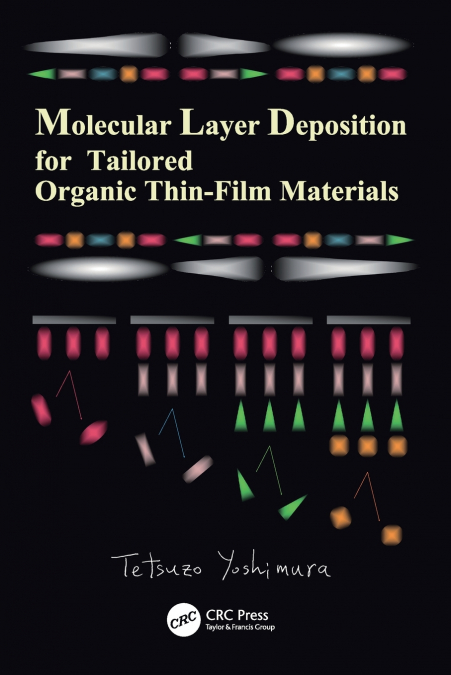
  • Molecular Layer Deposition for Tailored Organic Thin-Film Materials
    Tetsuzo Yoshimura
    This book provides concepts and experimental demonstrations for various types of MLD and organic multiple quantum dots (Organic MQDs), which is a typical tailored organic thin-film material. Possible applications of MLD to optical interconnects, energy conversion systems, molecular targeted drug delivery, and cancer therapy are proposed. ...
    Disponible

    109,68 €

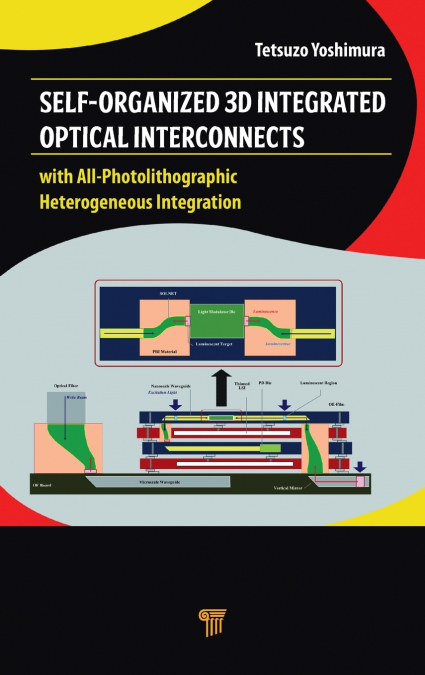
  • Self-Organized 3D Integrated Optical Interconnects
    Tetsuzo Yoshimura
    Currently, light waves are ready to come into boxes of computers in high-performance computing systems like data centers and super computers to realize intra-box optical interconnects. For inter-box optical interconnects, light waves have successfully been introduced by OE modules, in which discrete bulk-chip OE/electronic devices are assembled using the flip-chip-bonding-based...
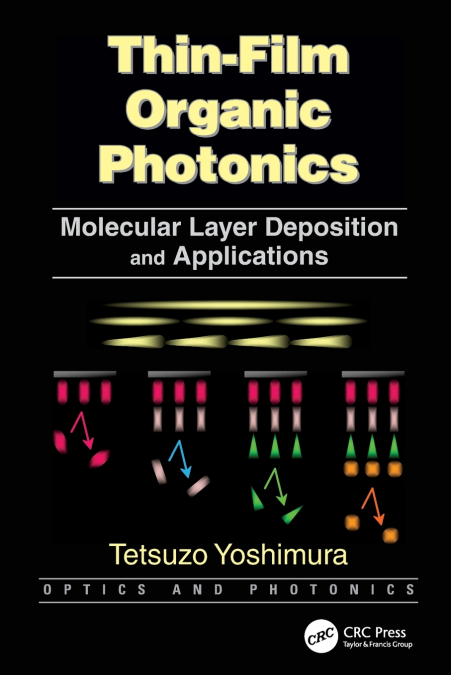
  • Thin-Film Organic Photonics
    Tetsuzo Yoshimura
    This book is an invaluable resource for material scientists working to develop artificial materials that can be structurally tailored at the atomic/molecular-level. This capability will enable electron-wave function control, which would improve material performance and generate new photonic/electronic phenomena. Exploring the prospect of structural modification in artificial ma...
    Disponible

    155,17 €

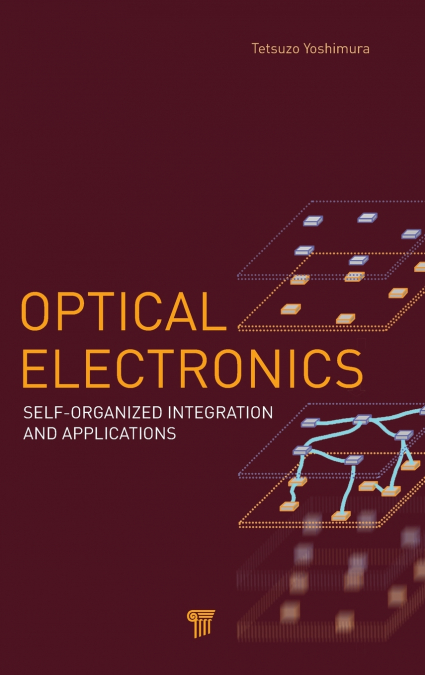
  • Optical Electronics
    Tetsuzo Yoshimura
    This book proposes and reviews comprehensive strategies based on optical electronics for constructing optoelectronic systems with minimized optics excess. It describes the core technologies such as self-organized optical waveguides based on self-organized lightwave network (SOLNET), three-dimensional optical circuits, material-saving heterogeneous thin-film device integration p...
  • Thin-Film Organic Photonics
    Tetsuzo Yoshimura
    Among the many atomic/molecular assembling techniques used to develop artificial materials, molecular layer deposition (MLD) continues to receive special attention as the next-generation growth technique for organic thin-film materials used in photonics and electronics. Thin-Film Organic Photonics: Molecular Layer Deposition and Applications describes how photonic/electronic pr...