 Librería Samer Atenea
 Kálamo Books
 Librería Elías (Asturias)
 Librería Kolima (Madrid)
 Librería Proteo (Málaga)
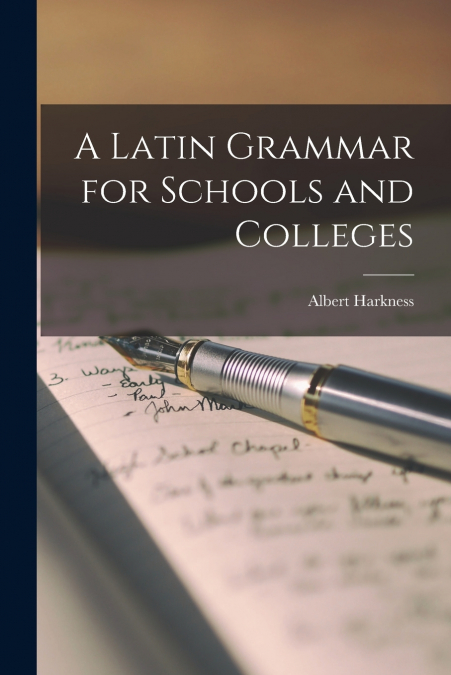
A nineteenth-century masterclass in Latin. Clear, rigorous, and eminently useful. Albert Harkness’s Second Latin Book pairs a historical Latin reader with succinct notes and methodical rules for translating, and an exercise-book that develops a complete analytical syntax through a carefully graded series of lessons and drills. Each lesson centres on the construction, analysis and reconstruction of Latin sentences, training the student to recognise syntactic patterns and to convert analysis into confident composition. As a Latin language textbook it combines philological care with practical translation training, giving readers tools to approach classical authors with informed attention rather than rote memorisation.Organised for progressive study, the volume supplies analytical syntax exercises and targeted drills in Latin sentence construction that reward deliberate practice. It suits self-directed learners and classroom settings alike, from Latin for self-study and a homeschool Latin curriculum to more formal classical language study and university revision. Teachers, students and collectors seeking advanced Latin practice will appreciate the book’s systematic translation rules and clear exposition; within the Harkness Latin series it stands as a pedagogy-first classical education resource that privileges method over gimmick. The text’s steady, workmanlike tone makes it unusually approachable for casual readers curious about classical language study while offering depth for seasoned students.Republished by Alpha Editions in a careful modern edition, this volume preserves the spirit of the original while making it effortless to enjoy today, a heritage title prepared for readers and collectors alike. Historically significant as an exemplar of nineteenth century Latin pedagogy, it appeals equally to casual readers curious about classical languages and to collectors of classical literature who prize faithful, workmanlike educational texts. Collectors value its faithful presentation of period pedagogy, while casual readers may relish the clear, hands-on approach to translation and sentence composition. A useful companion for modern students and teachers.