Librería Samer Atenea
 Kálamo Books
 Librería Elías (Asturias)
 Librería Kolima (Madrid)
 Librería Proteo (Málaga)
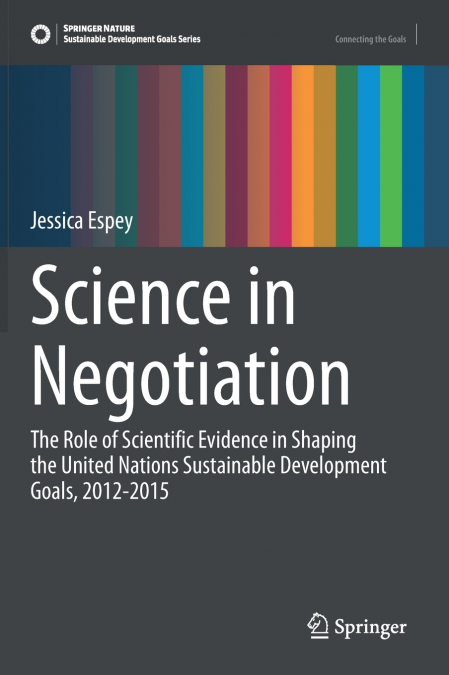
This book explores the role of scientific evidence within United Nations (UN) deliberation by examining the negotiation of the Sustainable Development Goals (SDGs), endorsed by Member States in 2015. Using the SDGs as a case study, this book addresses a key gap in our understanding of the role of evidence in contemporary international policy-making. It is structured around three overarching questions: (1) how does scientific evidence influence multilateral policy development within the UN General Assembly? (2) how did evidence shape the goals and targets that constitute the SDGs?; and (3) how did institutional arrangements and non-state actor engagements mediate the evidence-to-policy process in the development of the SDGs? The ultimate intention is to tease out lessons on global policy-making and to understand the influence of different evidence inputs and institutional factors in shaping outcomes.To understand the value afforded to scientific evidence within multilateral deliberation, a conceptual framework is provided drawing upon literature from policy studies and political science, including recent theories of evidence-informed policy-making and new institutionalism. It posits that the success or failure of evidence informing global political processes rests upon the representation and access of scientific stakeholders, levels of community organisation, the framing and presentation of evidence, and time, including the duration over which evidence and key conceptual ideas are presented. Cutting across the discussion is the fundamental question of whose evidence counts and how expertise is defined? The framework is tested with specific reference to three themes that were prominent during the SDG negotiation process; public health (articulated in SDG 3), urban sustainability (articulated in SDG 11), and data and information systems (which were a cross-cutting theme of the dialogue). Within each, scientific communities had specific demands and through an exploration of key literature, including evidence inputs and UN documentation, as well as through key informant interviews, the translation of these scientific ideas into policy priorities is uncovered. The intended audiences of this book include academic practitioners studying evidence to policy processes, multilateral negotiation and/or UN policy planning. The book also intends to provide useful insights for policy makers, including UN diplomats, officials and staff working to improve the quality of evidence communication and uptake within multilateral institutions. Finally, it aims to support the whole global academic and scientific community, including students of public policy and political science, by providing insights on how to input into, influence, and even shape international evidence-informed policy-making.