 Librería Samer Atenea
 Kálamo Books
 Librería Elías (Asturias)
 Librería Kolima (Madrid)
 Librería Proteo (Málaga)
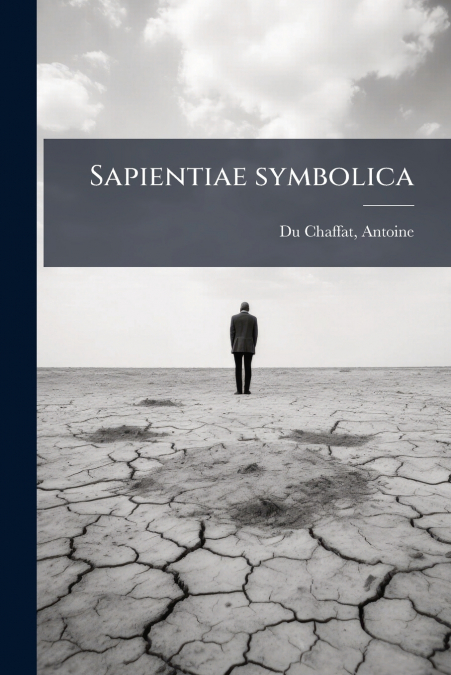
Sapientiae symbolica, by Antoine Du Chaffat, published in 1719, presents a collection of fourteen emblematic images, each designed to impart precepts of prudence and moral guidance. The work, originally written in Latin with the title 'Sapientiae symbolica: XIIII. emblematibus prudentiae morumque praecepta, explicans virutis commendationi dicata,' also includes a German translation, 'Emblematische Weissheits-Regeln : in XIIII. Sinnbildern zur Erweckung der Liebe zur Tugend vorgestellet.'This dual-language edition reflects the intellectual currents of the early 18th century, where emblem books served as vehicles for disseminating ethical and philosophical ideas. Du Chaffat’s work encourages readers to contemplate virtues through symbolic representation, offering a fascinating glimpse into the moral and artistic sensibilities of the period. The book’s enduring appeal lies in its synthesis of art, philosophy, and language, making it a valuable resource for scholars interested in Renaissance and early modern thought.This work has been selected by scholars as being culturally important, and is part of the knowledge base of civilization as we know it. This work was reproduced from the original artifact, and remains as true to the original work as possible. Therefore, you will see the original copyright references, library stamps (as most of these works have been housed in our most important libraries around the world), and other notations in the work.This work is in the public domain in the United States of America, and possibly other nations. Within the United States, you may freely copy and distribute this work, as no entity (individual or corporate) has a copyright on the body of the work.As a reproduction of a historical artifact, this work may contain missing or blurred pages, poor pictures, errant marks, etc. Scholars believe, and we concur, that this work is important enough to be preserved, reproduced, and made generally available to the public. We appreciate your support of the preservation process, and thank you for being an important part of keeping this knowledge alive and relevant.