

 Librería Samer Atenea
 Kálamo Books
 Librería Elías (Asturias)
 Librería Kolima (Madrid)
 Librería Proteo (Málaga)
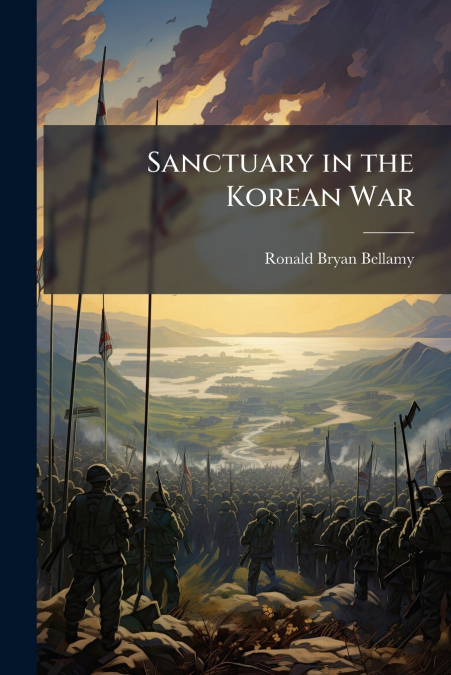
Sanctuary has been a factor in war throughout history. The availability of sanctuary to an enemy can often limit the ability of friendly forces to achieve tactical success in military operations. Prior to the advent of airpower, combatants could often attain sanctuary, or safe haven, simply because one enemy could not physically employ significant military force into an area used by the other. Technological advancements in airpower since World War II provide the United States with the theoretical ability to target enemies in any geographic area on earth. However, during numerous conflicts over the last 60 years, enemies of the U.S. have still enjoyed sanctuary due to political restraints placed on friendly military operations. The Korean War provides an excellent example of political restraints creating an enemy sanctuary. Joint Publication 5-0 cites the restrictions placed on General MacArthur’s authority to strike Chinese targets north of the Yalu River during the Korean War as an example of an operational limitation. The U.S. military had the physical capability to target Chinese forces, particularly via airstrikes, yet it was politically restrained from doing so. The political restraints placed on U.S. military commanders restricted their ability to target the Manchurian sanctuary available to North Korean and Chinese forces. This research questions why U.S. military commanders were politically restrained from conducting tactical operations north of the Yalu River during the Korean War. An examination of the events that shaped the strategic and operational environment prior to the Korean War reveals the problem facing the United States in 1950. The U.S. must find a way to counter the communist invasion of South Korea while avoiding a confrontation with the Union of Soviet Socialist Republics (USSR) in Europe. An examination of the initial U.S. operational approach highlights the initial tactical, operational, theater strategic, and grand strategic objectives inThis work has been selected by scholars as being culturally important, and is part of the knowledge base of civilization as we know it. This work was reproduced from the original artifact, and remains as true to the original work as possible. Therefore, you will see the original copyright references, library stamps (as most of these works have been housed in our most important libraries around the world), and other notations in the work.This work is in the public domain in the United States of America, and possibly other nations. Within the United States, you may freely copy and distribute this work, as no entity (individual or corporate) has a copyright on the body of the work.As a reproduction of a historical artifact, this work may contain missing or blurred pages, poor pictures, errant marks, etc. Scholars believe, and we concur, that this work is important enough to be preserved, reproduced, and made generally available to the public. We appreciate your support of the preservation process, and thank you for being an important part of keeping this knowledge alive and relevant.





