
Rubbish Belongs to the Poor

Rubbish Belongs to the Poor

Patrick O’Hare

34,29 €
IVA incluido
Disponible
Editorial:
Pluto Books Ltd
Año de edición:
2022
Materia
Antropología social y cultural, etnografía
ISBN:
9780745341408
34,29 €
IVA incluido
Disponible

Selecciona una librería:

  • Librería Samer Atenea
  • Librería Aciertas (Toledo)
  • Kálamo Books
  • Librería Perelló (Valencia)
  • Librería Elías (Asturias)
  • Donde los libros
  • Librería Kolima (Madrid)
  • Librería Proteo (Málaga)

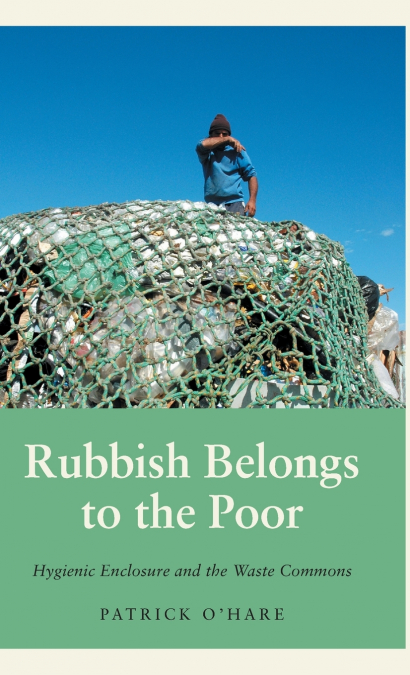
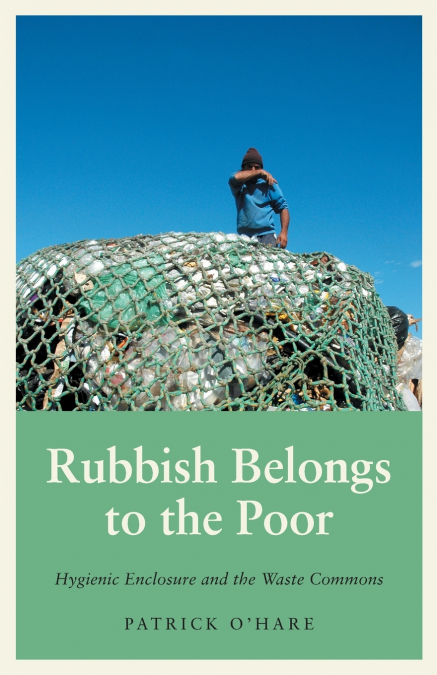
Garbage. Waste. Trash. Whatever term you choose to describe the things we throw away, the connotations are the same; of something dirty, useless and incontrovertibly ’bad’. But does such a dismissive rendering mask a more nuanced reality? In Rubbish Belongs to the Poor, Patrick O’Hare journeys to the heart of Uruguay’s waste disposal system in order to reconceptualize garbage as a 21st century commons, at risk of enclosure. On a giant landfill site outside the capital Montevideo we meet the book’s central protagonists, the ’classifiers’: waste-pickers who recover and recycle materials in and around its fenced but porous perimeter. Here the struggle of classifiers against the enclosure of the landfill, justified on the grounds of hygiene, is brought into dialogue with other historical and contemporary enclosures - from urban privatizations to rural evictions - to shed light on the nature of contemporary forms of capitalist dispossession. Supplementing this rich ethnography with the author’s own insights from dumpster diving in Britain, the book analyzes capitalism’s relations with its material surpluses and what these tell us about its expansionary logics, limits and liminal spaces. Rubbish Belongs to the Poor ultimately proposes a fundamental rethinking of the links between waste, capitalism and dignified work.Rubbish. Waste. Trash. Whatever term you choose to describe the things we throw away, the connotations are the same; of something dirty, useless and incontrovertibly ’bad’. But does such a dismissive rendering mask a more nuanced reality? In Rubbish Belongs to the Poor, Patrick O’Hare journeys to the heart of Uruguay’s waste disposal system in order to reconceptualize rubbish as a 21st century commons, at risk of enclosure. On a giant landfill site outside the capital Montevideo we meet the book’s central protagonists, the ’classifiers’: waste-pickers who recover and recycle materials in and around its fenced but porous perimeter. Here the struggle of classifiers against the enclosure of the landfill, justified on the grounds of hygiene, is brought into dialogue with other historical and contemporary enclosures - from urban privatizations to rural evictions - to shed light on the nature of contemporary forms of capitalist dispossession. Supplementing this rich ethnography with the author’s own insights from dumpster diving in the UK, the book analyses capitalism’s relations with its material surpluses and what these tell us about its expansionary logics, limits and liminal spaces. Rubbish Belongs to the Poor ultimately proposes a fundamental rethinking of the links between waste, capitalism and dignified work.
Artículos relacionados

  • Investigating Prehistoric Hunter-Gatherer Identities
    Edited by H. L. Cobb, F. Coward, L. Grimshaw and S. Price.This volume stems from sessions at the 2004 Theoretical Archaeology Conference at Glasgow University, entitled "Hunter-Gatherers in Early Prehistory" and "Hunting for Meaning: Interpretive Approaches to the Mesolithic". The sessions came about as a response to a continuing lack of appreciation of new developments in theo...
    Disponible

    60,70 €

  • Tea and Tourism
    Lee Jolliffe
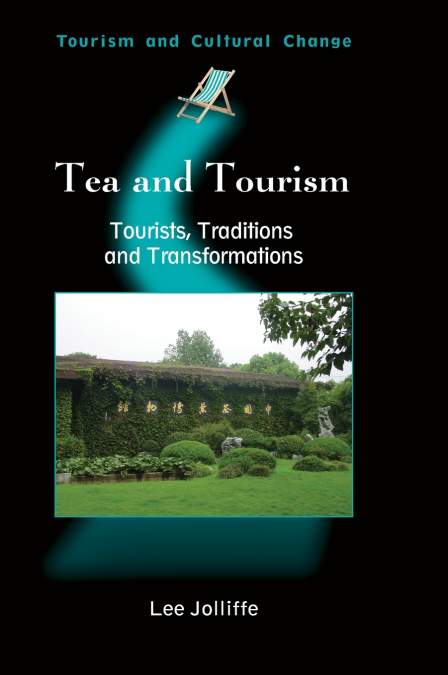
    The global production, marketing and consumption of tea present a resource for tea-related tourism. Tea and Tourism: Tourists, Traditions and Transformations profiles tea cultures and examines the social, political and developmental contexts of using related traditions for touristic purposes. This volume views tourism related to tea from differing disciplinary perspectives, and...
  • An Archive of Possibilities
    Rachel Marie Niehuus
    In An Archive of Possibilities, anthropologist and surgeon Rachel Marie Niehuus explores possibilities of healing and repair in the eastern Democratic Republic of Congo against a backdrop of 250 years of Black displacement, enslavement, death, and chronic war. Niehuus argues that in a context in which violence characterizes everyday life, Congolese have developed innovative and...
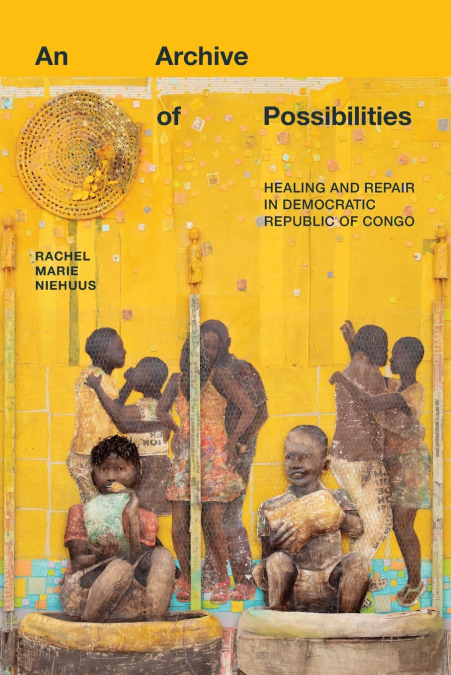
  • An Archive of Possibilities
    Rachel Marie Niehuus
    In An Archive of Possibilities, anthropologist and surgeon Rachel Marie Niehuus explores possibilities of healing and repair in the eastern Democratic Republic of Congo against a backdrop of 250 years of Black displacement, enslavement, death, and chronic war. Niehuus argues that in a context in which violence characterizes everyday life, Congolese have developed innovative and...
    Disponible

    34,38 €

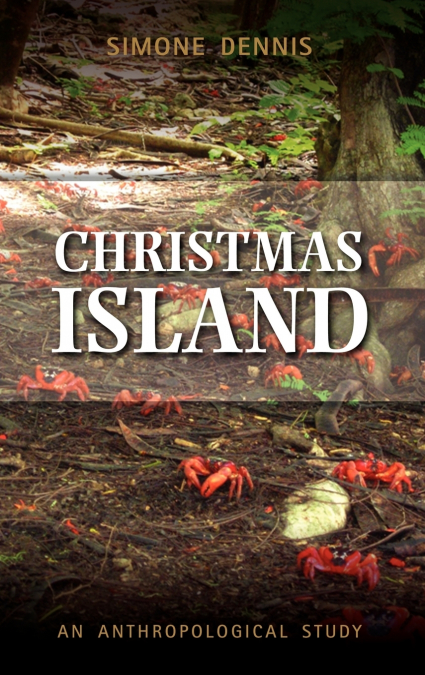
  • Christmas Island
    Simone Dennis
    Christmas Island is a small territory of Australia located in the Indian Ocean. It is home to three main ethnic groups, the smallest of which are European Australians. Christmas Island is also where those who arrive 'illegally' to seek asylum in Australia are accommodated. Christmas Island has played a key role in Australian security, located as it is at the northern extremity ...
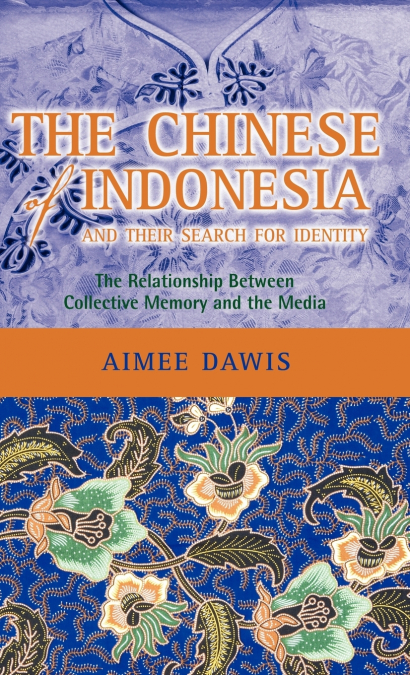
  • The Chinese of Indonesia and Their Search for Identity
    Aimee Dawis
    This book examines how the Indonesian Chinese who were born after 1966 negotiate meanings about their culture and identity through their collective memory of growing up in a restrictive media environment that specifically curtailed Chinese language and culture. The restrictive media environment was the result of a series of policies administered during the Suharto era (1965-199...

Otros libros del autor

  • Rubbish Belongs to the Poor
    Patrick O’Hare
    Garbage. Waste. Trash. Whatever term you choose to describe the things we throw away, the connotations are the same; of something dirty, useless and incontrovertibly ’bad’. But does such a dismissive rendering mask a more nuanced reality? In Rubbish Belongs to the Poor, Patrick O’Hare journeys to the heart of Uruguay’s waste disposal system in order to reconceptualize garbage a...