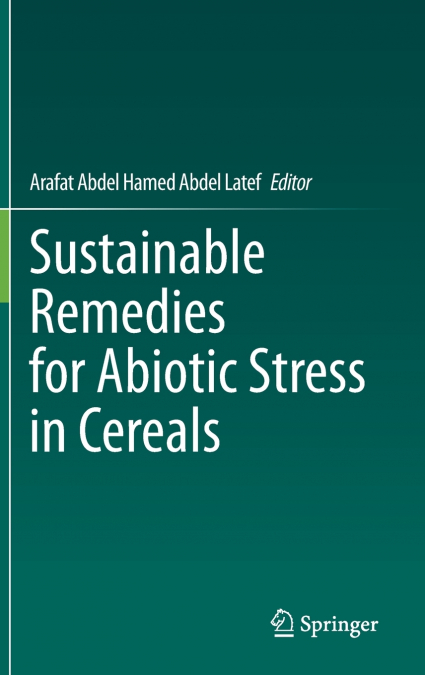


Arafat Abdel Hamed Abdel Latef
 Librería Samer Atenea
 Kálamo Books
 Librería Elías (Asturias)
 Librería Kolima (Madrid)
 Librería Proteo (Málaga)
Abiotic stress is a major threat to global agricultural productivity, and the rapid pace of environmental change often exceeds plants’ natural capacity to adapt. Endophytes, microorganisms that reside within plant tissues without causing harm, have emerged as important regulators of plant stress responses, enhancing resilience through mechanisms that complement and strengthen plant defense systems. These benefits are driven by well-established biochemical processes, which help plants tolerate adverse conditions and maintain growth. Although the specific responses vary depending on the stressor, the underlying mechanisms consistently support improved plant performance. As research advances, endophytes are providing new insights into the biological foundations of plant resilience and offering promising strategies for sustainable crop production. Role of Endophytes in Enhancing Plant Resilience to Abiotic Stressors examines the mechanistic pathways through which endophytes improve plant tolerance to environmental stress, emphasizing osmolyte accumulation, antioxidant enzyme regulation, and related biochemical processes that underpin stress resilience. By exploring plant responses to challenges such as drought, salinity, heavy metal exposure, and temperature extremes, this book bridges fundamental research with emerging approaches, including multi-omics analysis and the use of complementary biostimulants to enhance crop performance. Covering topics such as abiotic stress tolerance, microorganisms, and sustainable agriculture, this book serves as a valuable resource for graduate and doctoral students, plant biologists, plant physiologists, microbiologists, agricultural extension specialists, agri-biotech professionals, and researchers.