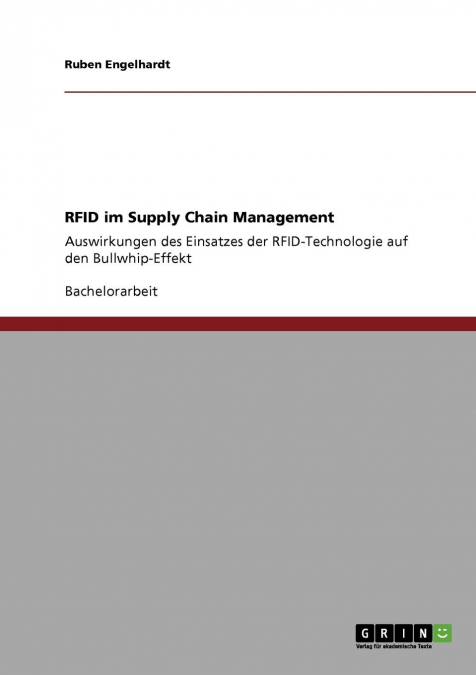

RFID im Supply Chain Management

RFID im Supply Chain Management

RFID im Supply Chain Management

Ruben Engelhardt

45,10 €
IVA incluido
Disponible
Editorial:
GRIN Verlag
Año de edición:
2010
Materia
Contabilidad
ISBN:
9783640570317
45,10 €
IVA incluido
Disponible

Selecciona una librería:

  • Librería Samer Atenea
  • Librería Aciertas (Toledo)
  • Kálamo Books
  • Librería Perelló (Valencia)
  • Librería Elías (Asturias)
  • Donde los libros
  • Librería Kolima (Madrid)
  • Librería Proteo (Málaga)

Bachelorarbeit aus dem Jahr 2009 im Fachbereich BWL - Rechnungswesen, Bilanzierung, Steuern, Note: 2,3, Universität Bayreuth, Sprache: Deutsch, Abstract: 1 RFID und Bullwhip-Effekt im Supply Chain Management 1.1 Motivation und Zielsetzung Der Bullwhip-Effekt stellt ein viel diskutiertes Thema in der Literatur im Bereich des Supply Chain Managements dar. Es handelt sich dabei um einen Effekt, der zu schwankenden Bestellmengen und Beständen entlang der Supply Chain führt, welche sich upstream vom Abnehmer bis hin zum Produzenten zunehmend verstärken. Diese Schwankungen vermindern die logistische Leistungsfähigkeit, erhöhen die Logistikkosten und führen schließlich zu einer geringeren Wettbewerbsfähigkeit aller beteiligten Supply Chain Mitglieder. Um dem entgegenzuwirken, sehen viele Unternehmen Handlungsbedarf und möchten neue Technologien einsetzen, um Effizienzsteigerungen innerhalb des eigenen Unternehmens und in weiterer Folge in der gesamten Supply Chain zu realisieren. Denn lange Prozesszeiten, hohe Bestände, steigende Herstellkosten und eine mangelnde Produktverfügbarkeit sind nur einige negative Aspekte, mit denen sich Unternehmen, welche einer Supply Chain angehören, auseinandersetzen müssen. Daher ist seit einigen Jahren verstärkt der Begriff Radio Frequency Identification, kurz RFID, in den Topmanagementebenen der Unternehmen zu hören. Grund hierfür ist, dass durch den stetig wachsenden Kosten- und Zeitdruck, den individuellen Kundenwünschen und der schnell voranschreitenden Globalisierung die Anforderungen an die Supply Chains steigen. Mithilfe der RFID-Technologie profitieren Unternehmen entlang der gesamten Lieferkette und können somit durch eine verbesserte Transparenz die Effizienz im Logistikbereich, im Materialmanagement sowie im Produktions- und Servicebereich steigern. Darüber hinaus besitzt diese Technologie noch eine Vielzahl weiterer Vorteile. Die Frage, die sich vielen Unternehmen oder auch ganzen Supply Chains stellt, ist, inwieweit du

Artículos relacionados

  • Business Forensics 101
    Johnathon Vermaelen
    Business Forensics combines the aspects of Forensic Accounting, Business Administration, Industrial Engineering, and Organizational Psychology into one discipline. Learn how ot solve problems inside and outside ones’ organization order to keep employees productive and customers happy. This book will help you be a corporate crime fighter to identify red flags and suspicious acti...
    Disponible

    35,73 €

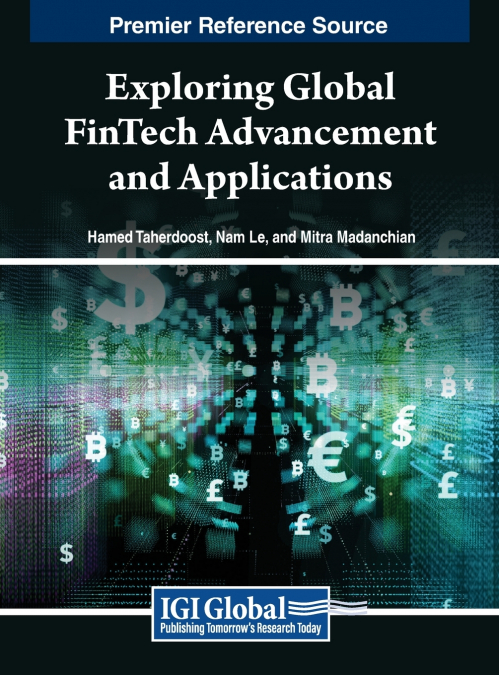
  • Exploring Global FinTech Advancement and Applications
    In the world of FinTech, scholars face an overwhelming dilemma; it is challenging to access comprehensive and up-to-date information across various regions with regards to timeliness. The transformative power of FinTech, driven by innovations such as blockchain, AI analytics, and mobile payment systems, has reshaped financial transactions, influenced economic growth, and spurre...
  • The Role of Financial Inclusion for Reaching Sustainable Development Goals
    In today’s world, financial inclusion has emerged as a critical tool for fostering inclusive economic growth and achieving sustainable development goals. The Role of Financial Inclusion for Reaching Sustainable Development Goals presents a comprehensive exploration of the subject, offering a vital resource for anyone seeking to grasp the intricacies of this dynamic and evolving...
  • The Role of Financial Inclusion for Reaching Sustainable Development Goals
    In today’s world, financial inclusion has emerged as a critical tool for fostering inclusive economic growth and achieving sustainable development goals. The Role of Financial Inclusion for Reaching Sustainable Development Goals presents a comprehensive exploration of the subject, offering a vital resource for anyone seeking to grasp the intricacies of this dynamic and evolving...
    Disponible

    274,99 €

  • The New Global Rulers
    Tim Büthe / Walter Mattli
    Global private regulations-who wins, who loses, and whyOver the past two decades, governments have delegated extensive regulatory authority to international private-sector organizations. This internationalization and privatization of rule making has been motivated not only by the economic benefits of common rules for global markets, but also by the realization that government r...
    Disponible

    40,19 €

  • Costos empresariales
    Omar Eduardo Castelblanco
    En el contexto financiero de las PYMES existen serias dificultades para identificar, agrupar, calcular y asignar los costos a los productos y servicios; esto impide adoptar decisiones para: a) estructurar un sistema de costeo que permita obtener el precio unitario en el portafolio, y b) ejecutar planes de mejora continua para el control y seguimiento, convirtiendo los egresos e...
    Disponible

    29,07 €