

 Librería Samer Atenea
 Kálamo Books
 Librería Elías (Asturias)
 Librería Kolima (Madrid)
 Librería Proteo (Málaga)
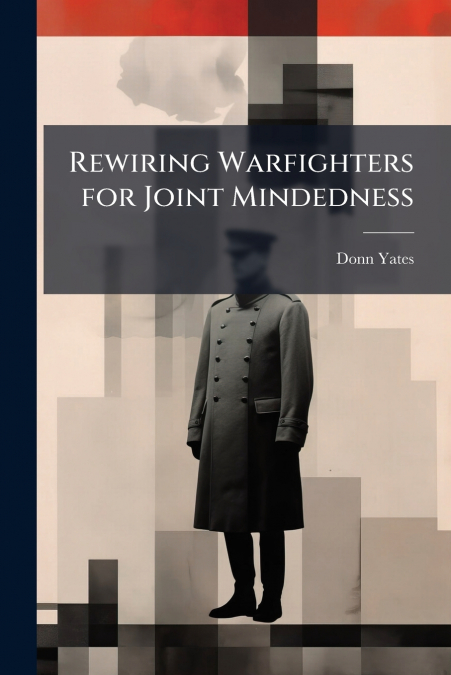
Despite the efforts of the Goldwaters Nichols Act of 1986, jointness continues to be a problem in the Department of Defense. Scholars point to both organizational and cultural problems as the root of the problem, but these explanations are incomplete. People comprise organization and people use culture as means of to explain identity, norms, and behavior. The individual level of analysis emerges as another explanation to the problem of jointness in order to complement the other two. In order to do this, the author uses the P2C framework as a means to develop joint-mindedness through the development of cognitive symmetry between officers from different services. P2C represents three elements: perspective, perception, and context. Cognitive symmetry occurs during the alignment of these three elements between individuals. Mistaken perspective, misperception, and faulty context create conditions for cognitive asymmetry which leads to problems with jointness. The current DOD Joint Qualification System (JQS) does not facilitate joint-mindedness. This system uses points and qualification levels to accredit prospective officers as joint qualified officers (JQO) but makes no provision to make them joint-minded. Additionally, the system gives the impression that joint qualification is a means for promotion to higher rank and not a method to inculcate jointness among the service branches. The author uses four Joint Environment Opportunities (JEO) for analysis of the current JQS: education, operations, staffwork, and training. The author evaluates each JEO against five criteria. The criteria are opportunity, frequency, perspective, perception, and context. From this analysis, education emerges as the best venue to develop joint-mindedness within the DOD. To facilitate this new approach, the author proposes three recommendations for joint education.This work has been selected by scholars as being culturally important, and is part of the knowledge base of civilization as we know it. This work was reproduced from the original artifact, and remains as true to the original work as possible. Therefore, you will see the original copyright references, library stamps (as most of these works have been housed in our most important libraries around the world), and other notations in the work.This work is in the public domain in the United States of America, and possibly other nations. Within the United States, you may freely copy and distribute this work, as no entity (individual or corporate) has a copyright on the body of the work.As a reproduction of a historical artifact, this work may contain missing or blurred pages, poor pictures, errant marks, etc. Scholars believe, and we concur, that this work is important enough to be preserved, reproduced, and made generally available to the public. We appreciate your support of the preservation process, and thank you for being an important part of keeping this knowledge alive and relevant.





