AA.VV
 Librería Samer Atenea
 Kálamo Books
 Librería Elías (Asturias)
 Librería Kolima (Madrid)
 Librería Proteo (Málaga)
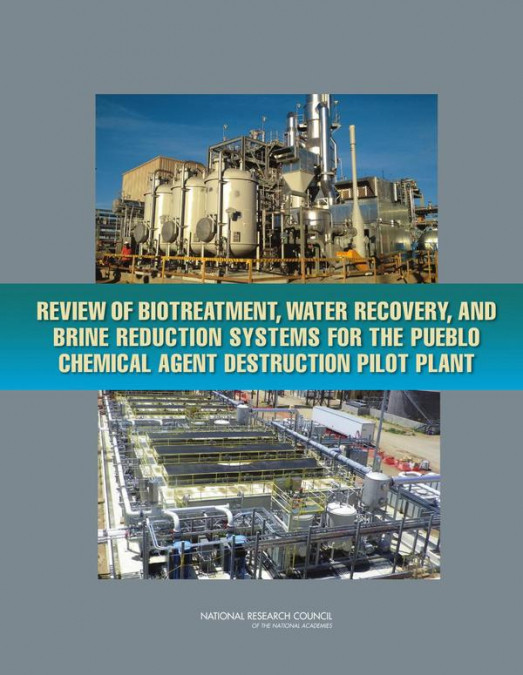
The Pueblo Chemical Depot (PCD) in Colorado is one of two sites that features U.S. stockpile of chemical weapons that need to be destroyed. The PCD features about 2,600 tons of mustard-including agent. The PCD also features a pilot plant, the Pueblo Chemical Agent Destruction Pilot Plant (PCAPP), which has been set up to destroy the agent and munition bodies using novel processes. The chemical neutralization or hydrolysis of the mustard agent produces a Schedule 2 compound called thiodiglycol (TDG) that must be destroyed. The PCAPP uses a combined water recovery system (WRS) and brine reduction system (BRS) to destroy TDG and make the water used in the chemical neutralization well water again.Since the PCAPP is using a novel process, the program executive officer for the Assembled Chemical Weapons Alternatives (ACWA) program asked the National Research Council (NRC) to initiate a study to review the PCAPP WRS-BRS that was already installed at PCAPP. 5 months into the study in October, 2012, the NRC was asked to also review the Biotreatment area (BTA). The Committee on Review of Biotreatment, Water Recovery, and Brine Reduction Systems for the Pueblo Chemical Agent Destruction Pilot Plant was thus tasked with evaluating the operability, life-expectancy, working quality, results of Biotreatment studies carried out prior to 1999 and 1999-2004, and the current design, systemization approached, and planned operation conditions for the Biotreatment process.Review of Biotreatment, Water Recovery, and Brine Reduction Systems for the Pueblo Chemical Agent Destruction Pilot Plant is the result of the committee’s investigation. The report includes diagrams of the Biotreatment area, the BRS, and WRS; a table of materials of construction, the various recommendations made by the committee; and more.