 Librería Samer Atenea
 Kálamo Books
 Librería Elías (Asturias)
 Librería Kolima (Madrid)
 Librería Proteo (Málaga)
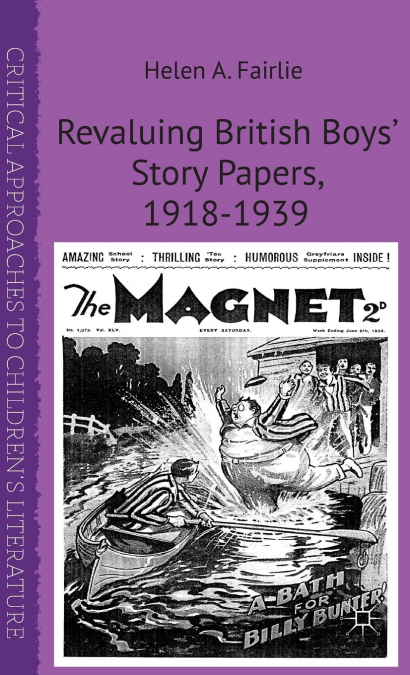
In most historical explorations of children’s literature, much attention is given to the late Victorian era, up to the outbreak of the First World War - which is widely seen as a golden age in publishing for children. Similarly, the 1950s are seen by most historians as the next great moment in children’s literature. But what exactly was happening in the years between the wars? What were children reading and enjoying? Why has this period been so neglected in children’s literature, and was publishing for children at the time really just ’an ocean of terrible trash’? This book offers some answers to these questions. Exploring in detail the nature and culture of publishing for children between the wars, it focuses on the phenomenon of the story paper, and in particular on story papers for boys - a publishing success which made the 1920s and 1930s a golden age in a very particular way. Exploring in detail the factors contributing to the success of the genre, this book interweaves historical, social/cultural and literary theoretical strands in order to interpret relations of power and author/producer-text-reader interactions, situated in cultural and historical contexts. It argues for the revaluing of the story paper in the inter-war years, giving the genre a pivotal role in the development of children’s literature.