
Inicio > Humanidades > Filosofía > Ética y filosofía moral > Rethinking the Just War Tradition
Rethinking the Just War Tradition

Rethinking the Just War Tradition


47,20 €
IVA incluido
Disponible
Editorial:
State University of New York Press
Año de edición:
2007
Materia
Ética y filosofía moral
ISBN:
9780791471562
47,20 €
IVA incluido
Disponible

Selecciona una librería:

  • Librería Samer Atenea

  • Kálamo Books
  • Librería Elías (Asturias)
  • Librería Kolima (Madrid)
  • Librería Proteo (Málaga)

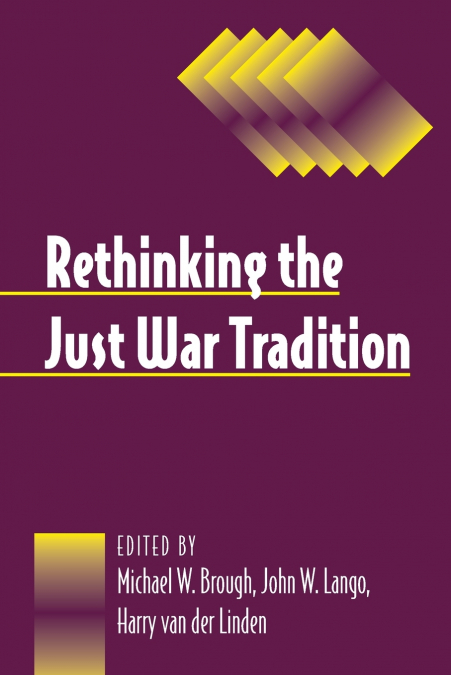
Contributors seek to promote reasoned debate about emerging security threats and potential military responses.The just war tradition is an evolving body of tenets for determining when resorting to war is just and how war may be justly executed. Rethinking the Just War Tradition provides a timely exploration in light of new security threats that have emerged since the end of the Cold War, including ongoing conflicts in the Middle East, threats of terror attacks, and genocidal conflicts within states. The contributors are philosophers, political scientists, a U.S. Army officer, and a senior analyst at the Center for Defense Information. They scrutinize some familiar themes in just war theory from fresh and original angles, and also explore altogether new territory. The diverse topics considered include war and the environment, justice in the ending of war, U.S. military hegemony, a general theory of just armed-conflict principles, supreme emergencies, the distinction between combatants and noncombatants, child soldiers, the moral equality of all soldiers, targeted assassination, preventive war, right authority, and armed humanitarian intervention. Clearly written and free of jargon, this book illustrates how the just war tradition can be rethought and applied today. 6
Artículos relacionados

  • Ka Ab Ba Building The Lighted Temple
    Dr Terri R. Nelson / Dr Terri RNelson
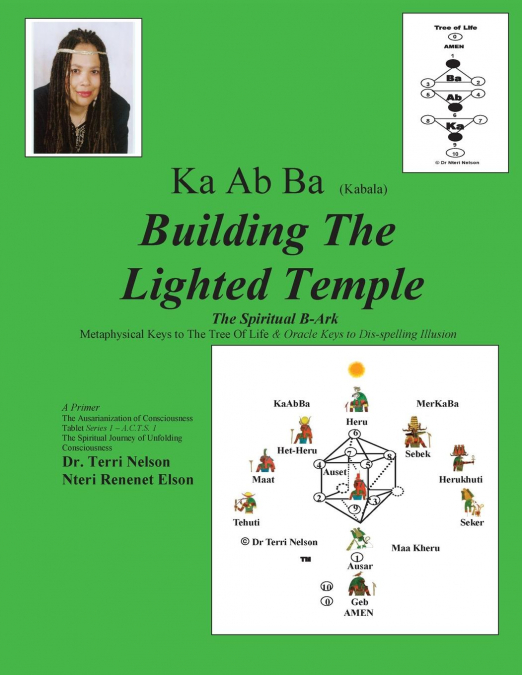
    The book KaAbBa Building The Lighted Temple/Metaphysical Keys to the Tree of Life draws a circle that is inclusive of the Afrikan origin of the Ancient Kemetic/Egyptian wisdom. It reveals the undeniable root and link of Ancient Africa to all the religious systems that would develop worldwide. This book is explosive in its power to convey the meaning of KaAbBa, the Medu Neter  (...
    Disponible

    37,41 €

  • Technoethics and the Evolving Knowledge Society
    Rocci Luppicini
    Recently, there has been a major push to rediscover the ethical dimension of technology across the sciences, social sciences, and humanities. Technoethics and the Evolving Knowledge Society: Ethical Issues in Technological Design, Research, Development, and Innovation examines human processes and practices connected to technology embedded within social, political, and moral sph...
  • Kant
    Immanuel Kant
    Kant’s Groundwork of the Metaphysics of Morals is one of the most important works in modern moral philosophy. It belongs beside Plato, Aristotle, Machiavelli, and Hobbes. Here Kant sets out to articulate and defend the Categorical Imperative - the fundamental principle that underlies moral reasoning - and to lay the foundation for a comprehensive account of justice and human vi...
  • On the Duty of Civil Disobedience
    HENRY DAVID THOREAU
    Civil Disobedience argues that citizens should not permit their governments to overrule their consciences, and that they have a duty to avoid allowing their acquiescence to enable the government to make them the agents of injustice. Thoreau was motivated in part by his disgust with slavery and the Mexican-American War, but the sentiments he expresses here are just as pertinent ...
  • Beyond Good and Evil
    Friedrich Nietzsche
    Nietzsche, though primarily a philosopher, wrote widely on art, philology, history, religion, tragedy, culture, and science.  In 1886, at the height of his powers, he published Beyond Good and Evil.  Here he examines much of the best of human thought--dogmatic philosophy, Judeo-Christian morality, science and democracy – and finds it lacking.  Rejecting “slave-morality” he pres...
  • Beyond Good and Evil
    Friedrich Nietzsche
    Nietzsche, though primarily a philosopher, wrote widely on art, philology, history, religion, tragedy, culture, and science.  In 1886, at the height of his powers, he published Beyond Good and Evil.  Here he examines much of the best of human thought--dogmatic philosophy, Judeo-Christian morality, science and democracy – and finds it lacking.  Rejecting “slave-morality” he pres...
    Disponible

    9,99 €