

 Librería Samer Atenea
 Kálamo Books
 Librería Elías (Asturias)
 Librería Kolima (Madrid)
 Librería Proteo (Málaga)
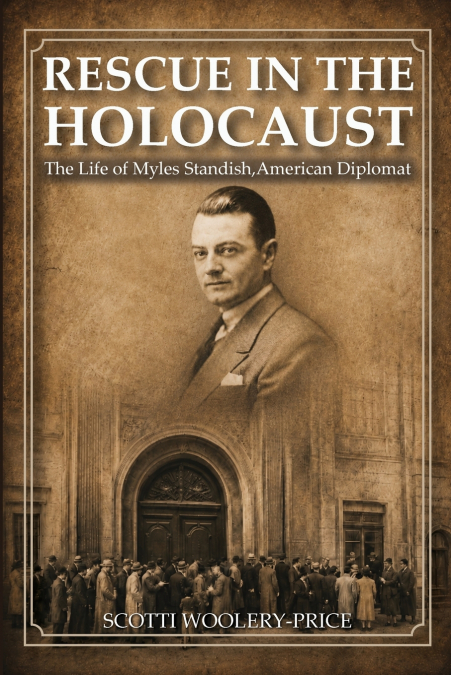
A forgotten American diplomat defied Washington to save thousands of lives during the Holocaust. This is his story, finally told.In the summer of 1940, a line of more than 2,500 refugees stretched around the block outside the American Consulate in Marseille. Jews, artists, doctors, and factory workers who had fled the Nazi advance stood for hours, clutching folders of paperwork that might, or might not, save their lives.Inside, a 31 year old American vice-consul named Myles Standish made a decision that would define the rest of his life: he would not let bureaucracy become a death sentence.Rescue in the Holocaust tells the true story of the man history nearly forgot, a State Department official who, working alongside Hiram 'Harry' Bingham IV, issued roughly 2,500 Affidavits in Lieu of Passport to stateless refugees and oversaw the approval of some 8,500 visas through the Marseille consulate, more than any other American post in Europe during that critical year. He worked with Varian Fry’s Emergency Rescue Committee to smuggle artists and intellectuals off Nazi death lists, hid refugees in the trunk of his own car to get them across the Spanish border, and defied direct orders from Washington, knowing it could end his career.It did. He was reassigned in 1941, resigned from the Foreign Service in 1942, and was never welcomed back. But by then, the quiet work of one man with a rubber stamp had already changed the fates of an untold number of families.Drawing on personal papers, State Department and War Refugee Board archives, U.S. Holocaust Museum records, family correspondence, and survivor testimony, author Scotti Woolery-Price reconstructs both the man and the moment, from his Bronx childhood and early diplomatic postings in Cuba and Manchester, through the desperate consulate years in occupied France, to his later work with the War Refugee Board, the United Nations, the Marshall Plan, and a little-known back channel between the Vatican and the newly formed state of Israel.Standish never sought recognition, and for decades he received almost none. Unlike Oskar Schindler or Raoul Wallenberg, his name rarely appears in Holocaust histories, yet the paper trail he left behind tells an equally extraordinary story of conscience under pressure.For readers of WWII history, Holocaust rescue narratives, and biographies of ordinary people who made an extraordinary choice, Rescue in the Holocaust asks a question that outlives its era: when the rules say one thing and a human life demands another, what does a person of conscience actually do?Myles Standish answered it. One signature. One stamp. One life at a time.






