
Inicio > Humanidades > Historia > Historia militar > REPORT ON THE JUNKER ALL-METAL SINGLE-SEATER MONOPLANE TYPE D.1., July 1919Reports on German Aircraft 15
REPORT ON THE JUNKER ALL-METAL SINGLE-SEATER MONOPLANE TYPE D.1., July 1919Reports on German Aircraft 15

REPORT ON THE JUNKER ALL-METAL SINGLE-SEATER MONOPLANE TYPE D.1., July 1919Reports on German Aircraft 15


18,53 €
IVA incluido
Disponible
Editorial:
Naval & Military Press
Año de edición:
2014
Materia
Historia militar
ISBN:
9781783310623
18,53 €
IVA incluido
Disponible

Selecciona una librería:

  • Librería Samer Atenea
  • Librería Aciertas (Toledo)
  • Kálamo Books
  • Librería Perelló (Valencia)
  • Librería Elías (Asturias)
  • Donde los libros
  • Librería Kolima (Madrid)
  • Librería Proteo (Málaga)

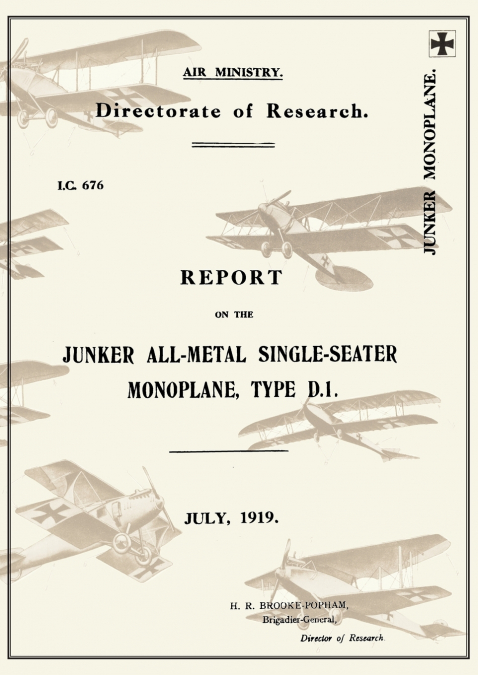
The Junkers D.I (factory designation J 9) was a fighter aircraft produced in Germany late in World War I, significant for becoming the first all-metal fighter to enter service.What really set the Junker D.I apart from any previous aircraft was it’s cantilevered low-wing design and corrugated duralumin skin. Duralumin, the same metal used for Zeppelin construction, was light yet strong. The Junkers monoplane was rigid, fast, and agile. The D.I was every fighter pilots’ dream. The design was a decade ahead of its time.The prototype, a private venture by Junkers designated the J 7, first flew on 17 September 1917. Demonstrated to the Idflieg early the following year, it proved impressive enough to result in an order for three additional aircraft for trials. However, the changes made by Junkers were significant enough for the firm to redesignate the next example the J 9, which was supplied to the Idflieg instead of the three J 7s ordered.During tests, the J 9 was felt to lack the manoeuvrability necessary for a front-line fighter, but was judged fit for a naval fighter, and a batch of 12 was ordered. These were to have been supplied to a naval unit by September 1918, but instead equipped the same unit redeployed to the Eastern Front after the Armistice. One survives in a French Museum.


Artículos relacionados

  • Waterloo Betrayed
    Stephen M. Beckett / Stephen MBeckett
    THIS BOOK HAS BEEN SUPERCEDEDSee Operations of the Armée du Nord : 1815, The Analysis for the definitive guide of French operations in 1815.   Discover why Napoleon really lost the Waterloo Campaign Napoleon was betrayed during 1815 There is no doubt of this. The Traitors admitted as much, and the Allied powers documented their acts. In the immediate aftermath of Napoleon's...
  • The Price They Paid
    Michael Putzel
    The Price They Paid is the stunning and dramatic true story of a legendary helicopter commander in Vietnam and the flight crews that followed him into the most intensive helicopter warfare ever-and how that brutal experience has changed their lives in the forty years since the war ended. ...
    Disponible

    11,07 €

  • Uniforms of Russian army during the Napoleonic war vol.17
    Aleksandr Vasilevich Viskovatov / Mark Conrad
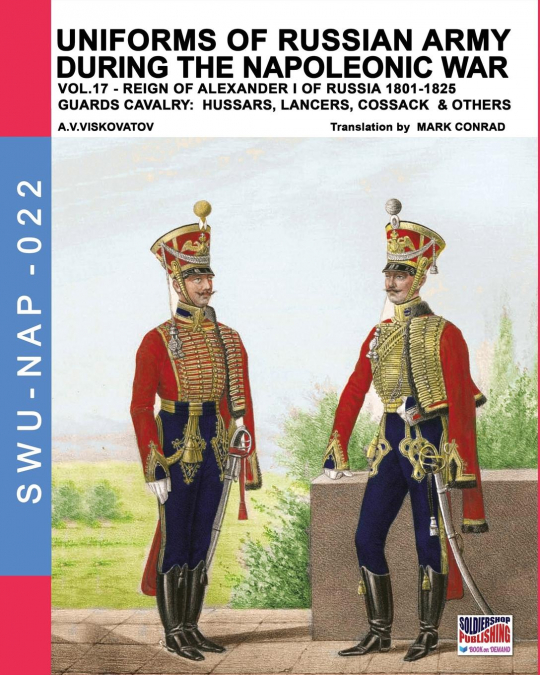
    This volume is related to the Russian Army during the zar Alexander I era, and are about the Guard cavalry regiments (part 1). Compiled at Saint Petersburg during the year from 1837 and 1851, the Historical Description of the Clothing and Arms of the Russian Army has had an enormous impact and great importance for the study on the history of Russian costume and uniformology dev...
    Disponible

    40,78 €

  • Cyber Warfare and Cyber Terrorism
    ...
  • Armed Robotic Systems Emergence
    Robert j. Bunker / Robert jBunker
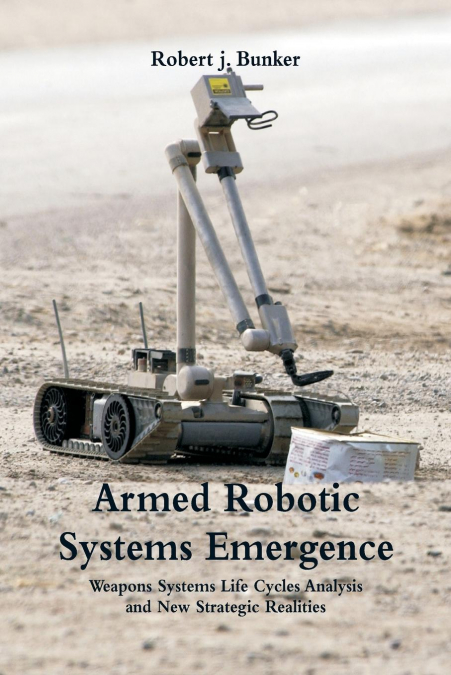
    The fielding of armed robotic systems--droids and drones that are teleoperated, semi-autonomous, and even autonomous--has been slowly but surely transitioning from pure science fiction into military reality on the battlefields of the early 21st century. These systems currently have no artificial intelligence (AI) whatsoever and, in most cases, are simply operated by soldiers (a...
    Disponible

    8,64 €

  • SNIPER ONE
    DAN MILLS
    ...
    Disponible

    18,71 €