
Inicio > Economía, finanzas, empresa y gestión > Economía > Macroeconomía > Repenser les economies africaines pour le developpement
Repenser les economies africaines pour le developpement

Repenser les economies africaines pour le developpement


62,71 €
IVA incluido
Disponible
Editorial:
African Books Collective
Año de edición:
2011
Materia
Macroeconomía
ISBN:
9782869783294
62,71 €
IVA incluido
Disponible

Selecciona una librería:

  • Librería Samer Atenea
  • Librería Aciertas (Toledo)
  • Kálamo Books
  • Librería Perelló (Valencia)
  • Librería Elías (Asturias)
  • Donde los libros
  • Librería Kolima (Madrid)
  • Librería Proteo (Málaga)

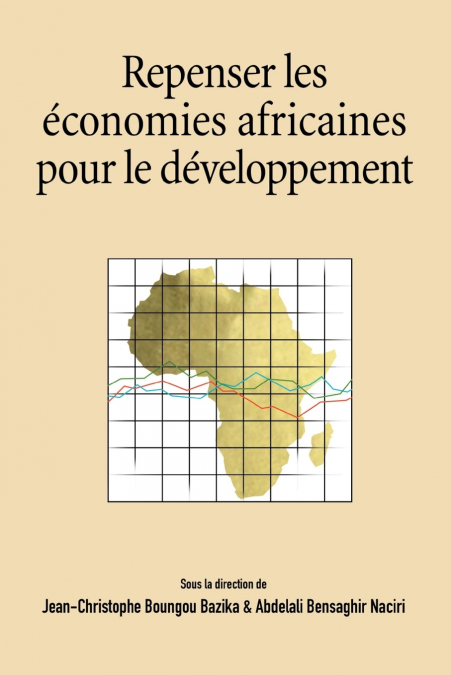
Re-thinking African Economies for Development is delivered in the particularly historic context of the fiftieth independence anniversary of most African countries. This moment, therefore, calls for an assessment and suggestions for new alternatives. African countries have been searching for models of development since attaining political independence. Taking cognizance of the fact that African economies are today stuck in an impasse, many innovative ideas are proffered by the contributors to this book for new development strategies. These ideas are essentially hinged upon the successful experience of countries in Asia and Latin America, and the need to reform the State and bring about development. African intellectuals are called upon in this book to rise up to their responsibility for the production of innovative knowledge that can be used by public and private sector decision makers to raise their communities out of poverty. In this publication, issues of industrialization and diversification of African economies are raised again to decry their limited specialization which exacerbates their vulnerability toward crises. This, to a large extent, is at the root of Africa’s marginal status in global trade. Special attention ought to be given to those thousands of micro-economy stakeholders who are actually the backbone of African economies. Regional integration is more and more seen as an imperative for economic development in the context of Africaís small sized countries that often fall prey to a great deal of political instability. The issue of financing of development is re-visited, and new ideas are put forth to better channel foreign direct investment and public revenue towards building a more viable monetary and financial system.
Artículos relacionados

  • Introduction to Dynamic Macroeconomic General Equilibrium Models
    José Luis Torres Chacon
    This book offers an introductory step-by-step course in Dynamic Stochastic General Equilibrium modelling. Modern macroeconomic analysis is increasingly concerned with the construction, calibration and/or estimation and simulation of Dynamic General Equilibrium (DGE) models. The book is intended for graduate students as an introductory course to DGE modelling and for those econo...
    Disponible

    61,40 €

  • International Education and the Next-Generation Workforce
    Wei Wang
    Education is the first stage in developing a viable, dynamic, and long-lived global economy. Unfortunately, in times of economic hardship, educational programs, teacher salaries, and extracurricular opportunities are often the first to be cut. International Education and the Next-Generation Workforce: Competition in the Global Economy presents a detailed discussion of present e...
  • Macroeconomic Policies of Developed Democracies
    Robert J Franzese Jr
    ...
  • End Of The Road
    Louis Holder
    This book is about the mismanagement of Western economies in pursuit of political power, which resulting devastation will have to be borne by future generations. The book establishes that postponement is no longer doable and lays out the hard choices ahead causing much misery and agony.Although not fully recognized because of masking by asset bubbles, which are spun/sold as in...
    Disponible

    16,42 €

  • The Darwin Economy
    Robert H. Frank
    What Charles Darwin can teach us about building a fairer societyWho was the greater economist-Adam Smith or Charles Darwin? The question seems absurd. Darwin, after all, was a naturalist, not an economist. But Robert Frank, New York Times economics columnist and best-selling author of The Economic Naturalist, predicts that within the next century Darwin will unseat Smith as the...
    Disponible

    22,42 €

  • Myth and Measurement
    Alan B. Krueger / David Card
    From David Card, winner of the Nobel Prize in Economics, and Alan Krueger, a provocative challenge to conventional wisdom about the minimum wageDavid Card and Alan B. Krueger have already made national news with their pathbreaking research on the minimum wage. Here they present a powerful new challenge to the conventional view that higher minimum wages reduce jobs for low-wage ...
    Disponible

    39,64 €