
Inicio > Humanidades > Arqueología > Religious Acculturation and Assimilation in Belgic Gaul and Aquitania from the Roman Conquest until the End of the Second Century CE
Religious Acculturation and Assimilation in Belgic Gaul and Aquitania from the Roman Conquest until the End of the Second Century CE

Religious Acculturation and Assimilation in Belgic Gaul and Aquitania from the Roman Conquest until the End of the Second Century CE

Religious Acculturation and Assimilation in Belgic Gaul and Aquitania from the Roman Conquest until the End of the Second Century CE

Alasdair Watson

128,38 €
IVA incluido
Disponible
Editorial:
British Archaeological Reports (Oxford) Ltd
Año de edición:
2007
Materia
Arqueología
ISBN:
9781407300368
128,38 €
IVA incluido
Disponible

Selecciona una librería:

  • Librería Samer Atenea
  • Librería Aciertas (Toledo)
  • Kálamo Books
  • Librería Perelló (Valencia)
  • Librería Elías (Asturias)
  • Donde los libros
  • Librería Kolima (Madrid)
  • Librería Proteo (Málaga)

The prevailing opinion regarding Gallo-Roman religion is that it was a fusion between the two religions. Scholars who dissent from this view can be divided into two different groups. On the one hand, scholars contend that, during a formative period of Gallo-Roman civilisation, there was a partial abandonment of the Gallic rites, that Roman religion came to be understood to be better as well as different, and that Gallo-Roman religion offered more spiritually as well as materially. On the other hand, other researchers hold that the Gallic deities continued to be worshipped, some under a Roman guise, others in their original pre-Roman form; however, they accept aniconism, atectonism and the reports that the Romans stopped human sacrifice and headhunting. This volume argues not only that the worship of Gallic deities continued, but also that Gallic religion already used man-made sanctuaries and anthropomorphic images before the Roman Conquest, that the disappearance of human sacrifice was wrongly attributed to the Romans and that the Romans never suppressed headhunting. In chapter one some conceptual problems, including those regarding terminology, presuppositions and errors are looked at. In the second chapter the archaeological and literary sources of information about Gallic religion and their reliability are examined. Using these sources, in the third chapter, Gallic deities are identified and the enigma of the pantheon set out by Caesar is decoded. In the fourth chapter the use of formal structures of worship and ritual by the Gauls is confirmed and the essential elements of such structures are analysed, with the argument being supported by a comparison of pre-Roman Celtic sanctuaries from both inside and outside the Roman Empire. In the fifth chapter the concept of sacrifice is examined from an anthropological perspective and this approach is applied to all Gallic sacrifices; the Gallic rituals of divination and circumambulation are also examined. The basis for the magico-religious significance and popularity of headhunting is established in the sixth chapter. Finally, in the seventh chapter, the Celtic belief in an Afterlife is defined and its attraction is demonstrated. In each chapter, the number of these Gallic beliefs and customs, which continued after the Roman Conquest, is examined and it is demonstrated that Gallic religion was not abandoned, that the Celtic sanctuary design was the basis for Gallo-Roman temple design and that Gallo-Roman religion continued to be Gallic as well as Roman.
Artículos relacionados

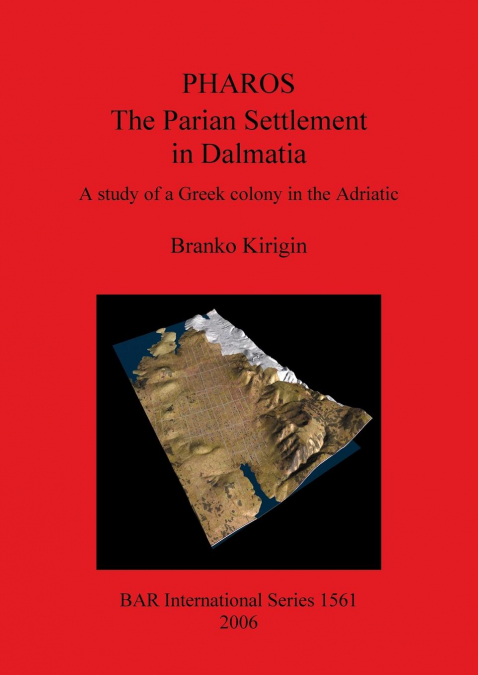
  • PHAROS
    Branko Kirigin
    This is the first detailed study in English of the Greek settlement of Pharos (Stari Grad) on the Croatian island of Hvar. This book presents life in Stari Grad (a Parian colony of the 4th c BC) and its nearby vicinity in the period occurring more than two millennia ago. The author employs methods used in prehistoric and classical archaeology, as well as data known from written...
    Disponible

    90,79 €

  • Paleolithic Zooarchaeology in Practice
    Understanding Paleolithic animal exploitation requires a multifaceted approach. Inferences may derive from research on paleoenvironments and taphonomy, the development of new methods for interpreting seasonality patterns, and ethnoarchaeological observations. A full understanding of Paleolithic economies also requires a multiregional perspective. This volume brings together a g...
    Disponible

    55,20 €

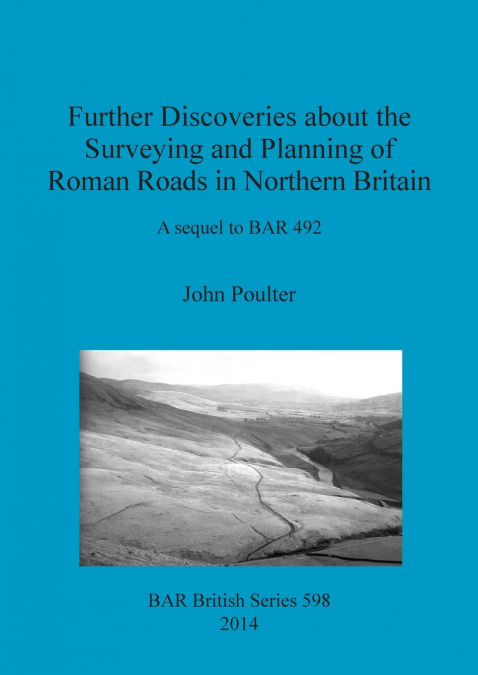
  • Further Discoveries about the Surveying and Planning of Roman Roads in Northern Britain
    John Poulter
    The research reported in this monograph follows on directly from the findings that were reported in BAR 492, in which, among many other discoveries, the author recognised that the courses of both Roman Dere Street and Hadrian’s Wall had been underpinned by frameworks of long-distance alignments. Stimulated by the detection of several more of these alignments across northern Eng...
    Disponible

    65,21 €

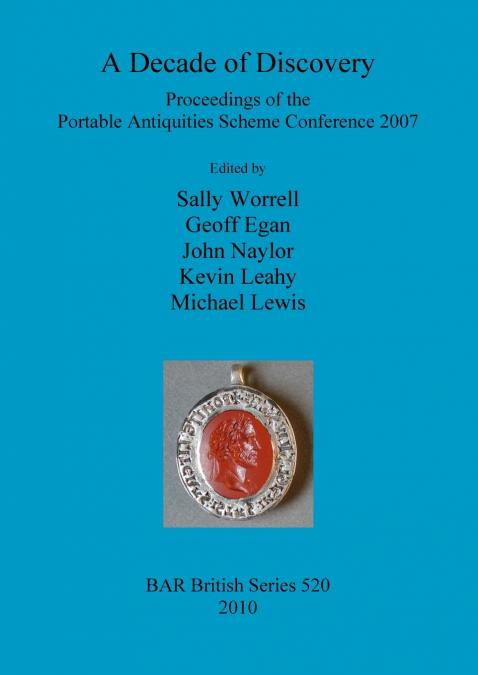
  • A Decade of Discovery
    Edited by Sally Worrell, Geoff Egan, John Naylor, Kevin Leahy and Michael Lewis.In 2007 the Portable Antiquities Scheme (PAS) marked its tenth anniversary by holding a conference at which speakers, both from within the Scheme and outside gave a series of papers that demonstrated the research potential of recording finds of archaeological objects made by members of the public. T...
    Disponible

    117,84 €

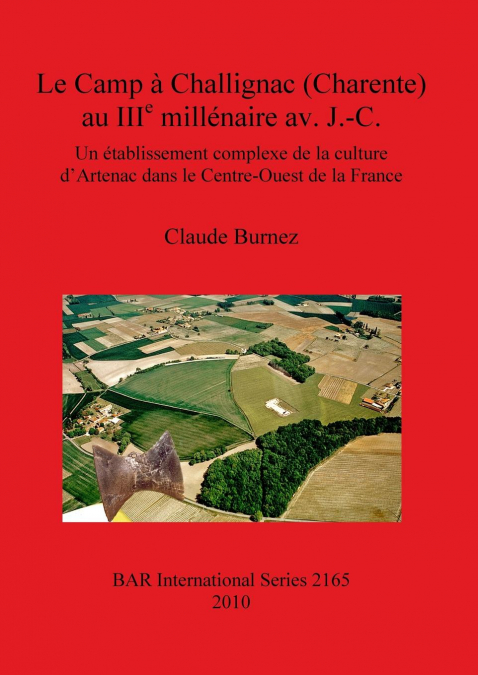
  • Le Camp à Challignac (Charente) au IIIe millénaire av. J.-C.
    Claude Burnez
    Un établissement complexe de la culture d’Artenac dans le Centre-Ouest de la FranceThis fortified enclosure has been known since the middle of the 19th century, but the size and the state of preservation (with the height of the rampart estimated optimistically at 10 metres!) suggested an attribution to the Gallo-Romans or a 'Camp des Anglais'. Extensive woodland covered...
    Disponible

    238,69 €

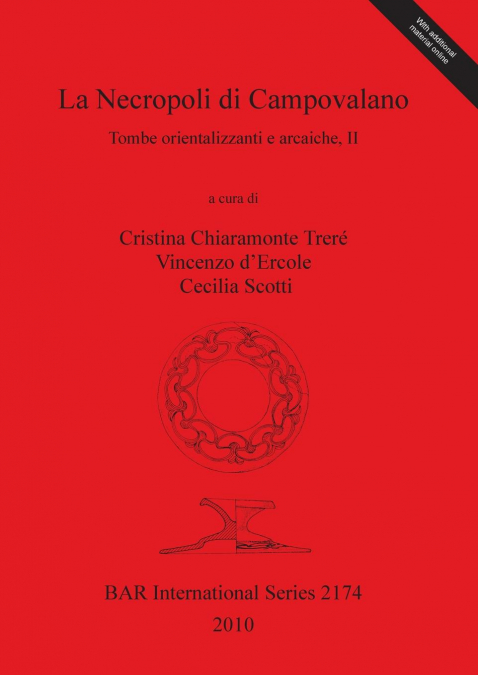
  • La Necropoli di Campovalano
    This volume, investigating the necropolis and sequences of 607 tombs, completes the publication of the site of Campovalano (predominately Late BA to 5th BC) in the region of Teramo, the northernmost province of Abruzzo, Italy (see BAR 1177, 2003). The finds include important oriental style archaic material.Contributions from: Giorgio Baratti, Carla Buoite, Cristina Chiaramonte ...
    Disponible

    220,16 €