
Inicio > Derecho > Teoría general del derecho > Regulating Artificial Intelligence
Regulating Artificial Intelligence

Regulating Artificial Intelligence


194,86 €
IVA incluido
Disponible
Editorial:
Springer Nature B.V.
Año de edición:
2020
Materia
Teoría general del derecho
ISBN:
9783030323639
194,86 €
IVA incluido
Disponible

Selecciona una librería:

  • Librería Samer Atenea
  • Librería Aciertas (Toledo)
  • Kálamo Books
  • Librería Perelló (Valencia)
  • Librería Elías (Asturias)
  • Donde los libros
  • Librería Kolima (Madrid)
  • Librería Proteo (Málaga)

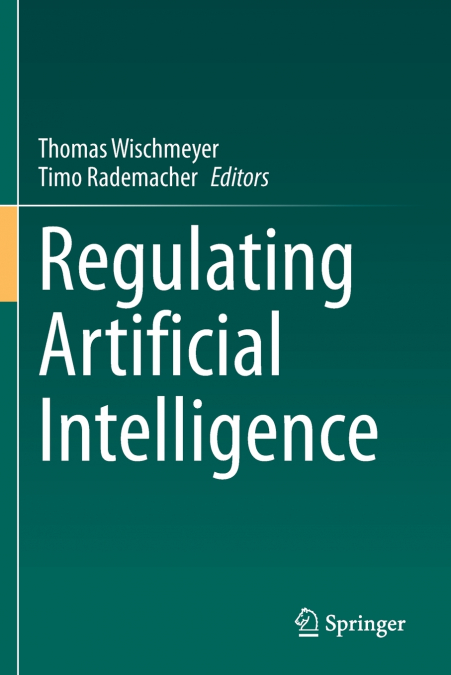
This book assesses the normative and practical challenges for artificial intelligence (AI) regulation, offers comprehensive information on the laws that currently shape or restrict the design or use of AI, and develops policy recommendations for those areas in which regulation is most urgently needed. By gathering contributions from scholars who are experts in their respective fields of legal research, it demonstrates that AI regulation is not a specialized sub-discipline, but affects the entire legal system and thus concerns all lawyers. Machine learning-based technology, which lies at the heart of what is commonly referred to as AI, is increasingly being employed to make policy and business decisions with broad social impacts, and therefore runs the risk of causing wide-scale damage. At the same time, AI technology is becoming more and more complex and difficult to understand, making it harder to determine whether or not it is being used in accordance with the law. In light of this situation, even tech enthusiasts are calling for stricter regulation of AI. Legislators, too, are stepping in and have begun to pass AI laws, including the prohibition of automated decision-making systems in Article 22 of the General Data Protection Regulation, the New York City AI transparency bill, and the 2017 amendments to the German Cartel Act and German Administrative Procedure Act. While the belief that something needs to be done is widely shared, there is far less clarity about what exactly can or should be done, or what effective regulation might look like.  The book is divided into two major parts, the first of which focuses on features common to most AI systems, and explores how they relate to the legal framework for data-driven technologies, which already exists in the form of (national and supra-national) constitutional law, EU data protection and competition law, and anti-discrimination law. In the second part, the book examines in detail a number of relevant sectors in which AI is increasingly shaping decision-making processes, ranging from the notorious social media and the legal, financial and healthcare industries, to fields like law enforcement and tax law, in which we can observe how regulation by AI is becoming a reality.

Artículos relacionados

  • EU General Data Protection Regulation (GDPR)
    IT Governance Privacy Team
    An in-depth guide to complying with the EU GDPR.Now in its second edition, EU GDPR – An Implementation and Compliance Guide is a clear and comprehensive guide to this new data protection law, providing a detailed commentary on the Regulation, and setting out the obligations of data  processors and controllers in clear and comprehensible terms.Read this book to learn: How the ...
    Disponible

    30,10 €

  • Banking Laws and Regulations in Nigeria
    Bello Mohammed Magaji
    Banking Law and Regulations in Nigeria: Selected Themes essentially deals with the laid down rules or code of conduct meant to control and set standards for banking business. Indeed, the main aim of the ongoing banking reforms in Nigeria, started in 2004, is to ensure banks’ conformity to the laid down banking rules and regulations. The eleven-chapter book contains vital and ri...
    Disponible

    41,17 €

  • States and the Interpretation of Treaties
    Dimitris Liakopoulos
    States and the Interpretation of Treaties opens with a provocative reconsideration of a debate on the subject of comparative international legal obligations by the United Nations’s International Law Commission. In this book, distinguished Tufts University legal scholar Dimitris Liakopoulos identifies and explores relevant considerations in the work of the Commission and offers ...
  • The role of customs in international treaties
    Dimitris Liakopoulos
    The Role of Customs in International Treaties concentrates on issues of friction between member states of the United Nations. In view of the role played by the United Nations in resolving international disputes, Dimitris Liakopoulos hypothesizes that 'practical guides' based on custom often catalyze the positions taken by states, courts, scholars, and other actors, constituting...
  • Debtor protection in American and European Union bankruptcy law
    Dimitris Liakopoulos
    In Debtor Protection in American and European Union Bankruptcy Law, international law scholar Dimitris Liakopulos raises a delicate issue at the foundations of the modern banking system by analyzing US bankruptcy law with a focus on the concept of automatic stay. His work identifies legal sources and authorities having repercussions in terms of operational protection. It then e...
  • Capital punishment in American courts
    James Biser Whisker / Kevin Spiker
    In the 400 years since the first known execution was carried out for treason in Virginia, American jurisdictions have debated both the appropriateness and methods of capital punishment. Over that time, courts have placed varying restrictions on its application, excluding categories of citizens (for example the insane or the underaged) and evaluating and excluding methods of exe...