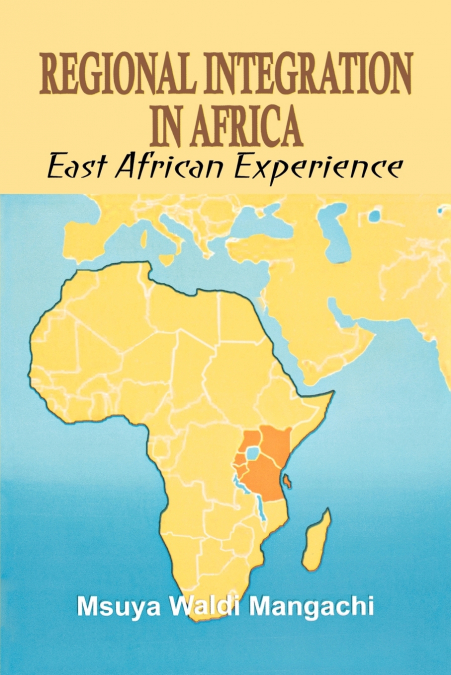

Regional Integration in Africa. East African Experience

Regional Integration in Africa. East African Experience

Msuya Waldi Mangachi

70,73 €
IVA incluido
Disponible
Editorial:
African Books Collective
Año de edición:
2011
ISBN:
9789788431022
70,73 €
IVA incluido
Disponible

Selecciona una librería:

  • Librería Samer Atenea
  • Librería Aciertas (Toledo)
  • Kálamo Books
  • Librería Perelló (Valencia)
  • Librería Elías (Asturias)
  • Donde los libros
  • Librería Kolima (Madrid)
  • Librería Proteo (Málaga)

The objective of this book is to investigate various initiatives to integrate the East African region from the colonial period to 2000, when the new East African Community (EAC) was formed. The analysis is focused on the process of integration from 1948 when formal institutions of cooperation were created under the East African High Commission (EAHC), and its transformation in 1961 into the East African Common Services Organisation (EACSO). The author argues that efforts made to integrate the British East African colonial territories of Tanganyika, Kenya, Uganda and Zanzibar, through these organisations, was largely aimed at consolidating colonial and imperial interests; the concentration of most assets and investments in Kenya resulting in inequitable sharing of benefits. He posits that the continuation of these inequalities were carried over to the East African Community in 1966 and led to its collapse, together with different developmental paths followed by the countries. He argues that the EAC formed in 2000 largely due to pressures of globalistion and trade liberalisation; and makes recommendations as to how the EAC can become a truly regional structure.
Artículos relacionados

  • The United Nations-A Hope or a Menace?
    Frank E. Holman
    '(...) it is easy to see that this new procedure of 'blank check' treaty-making, whereby a treaty covers all the people in the world and their manifold, social, economic and governmental rights and relationships, may easily result in treaty law superseding and destroying large segments of domestic law and even changing many fundamental features of our form of government. The pe...
  • The United Nations
    Vernon Orval Watts
    'UN officials call their private allies and agents 'Non-Governmental Organizations,' or NGOs. They know that, without these NGOs, the UN would be just another quiet and ineffectual bureaucracy, growing in size and power no faster than bureaucracy in general. Only with the help of thousands of private organization leaders scattered throughout the country can the UN put on progra...
  • The United Nations
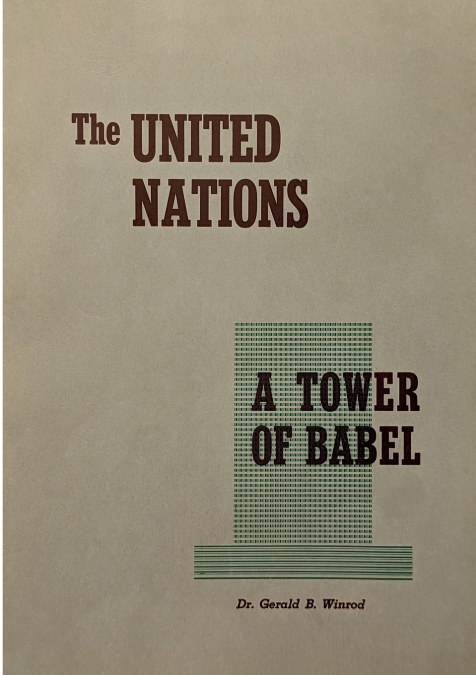
    Gerald B. Winrod
    'THE FIRST THING to rivet the attention of the visitor, upon entering the main lobby of the General Assembly Building at United Nations is a huge image of the Greek god Zeus, at the left of the door. This figment of pagan imagination, one of the most profligate of all the ancient deities, provides the only religious motif found on the premises. For the United Nations is an athe...
  • Governing International Watercourses
    Susanne Schmeier
    In this contribution to the academic and policy debates surrounding the management and governance of shared natural resources, the focus is placed on River Basin Organizations as the key institutions for managing internationally shared water resources. The book includes advide to policy makers based on worldwide analysis, and three detailed case studies from three continents: t...
  • Governing International Watercourses
    Susanne Schmeier
    In this contribution to the academic and policy debates surrounding the management and governance of shared natural resources, the focus is placed on River Basin Organizations as the key institutions for managing internationally shared water resources. The book includes advide to policy makers based on worldwide analysis, and three detailed case studies from three continents: t...
    Disponible

    103,80 €

  • The Southern African Region Historical Policies and the Land Redistribution Crisis in Zimbabwe
    Andrew Choga
    The land redistribution issue is a Southern African regional problem affecting present Zimbabwe and is very likely to affect South Africa and Namibia in the near future due to the historical racial based land allocation policies in these countries. Due to the need for raw materials and markets to sustain the industrial revolution, the colonization of Southern Africa was inevita...
    Disponible

    15,07 €