 Librería Samer Atenea
 Kálamo Books
 Librería Elías (Asturias)
 Librería Kolima (Madrid)
 Librería Proteo (Málaga)
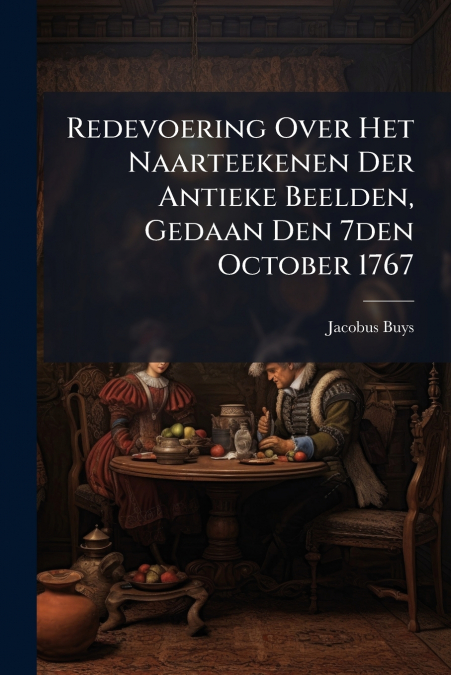
'Redevoering Over Het Naarteekenen Der Antieke Beelden, Gedaan Den 7den October 1767' is a discourse on drawing antique sculptures, delivered on October 7, 1767, by Jacobus Buys. This work provides insights into 18th-century art education and the classical artistic ideals that influenced the period. Buys’s lecture offers a detailed look at the methods and philosophies employed in teaching drawing through the study of ancient sculptures, reflecting the era’s deep appreciation for classical forms and its impact on contemporary art practices.The text explores the significance of accurately depicting antique statues and the value of such exercises in developing artistic skill and understanding. It highlights the importance of classical art as a foundation for artistic training and as a source of inspiration. This book is a valuable resource for those interested in art history, classical art, and the techniques of drawing as taught in the 18th century.This work has been selected by scholars as being culturally important, and is part of the knowledge base of civilization as we know it. This work was reproduced from the original artifact, and remains as true to the original work as possible. Therefore, you will see the original copyright references, library stamps (as most of these works have been housed in our most important libraries around the world), and other notations in the work.This work is in the public domain in the United States of America, and possibly other nations. Within the United States, you may freely copy and distribute this work, as no entity (individual or corporate) has a copyright on the body of the work.As a reproduction of a historical artifact, this work may contain missing or blurred pages, poor pictures, errant marks, etc. Scholars believe, and we concur, that this work is important enough to be preserved, reproduced, and made generally available to the public. We appreciate your support of the preservation process, and thank you for being an important part of keeping this knowledge alive and relevant.