 Librería Samer Atenea
 Kálamo Books
 Librería Elías (Asturias)
 Librería Kolima (Madrid)
 Librería Proteo (Málaga)
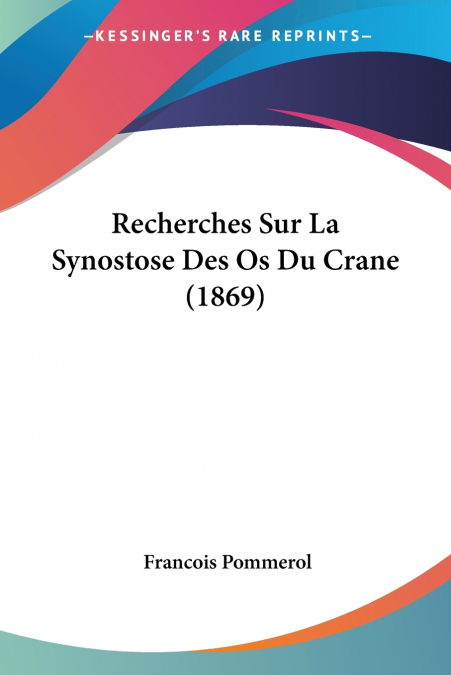
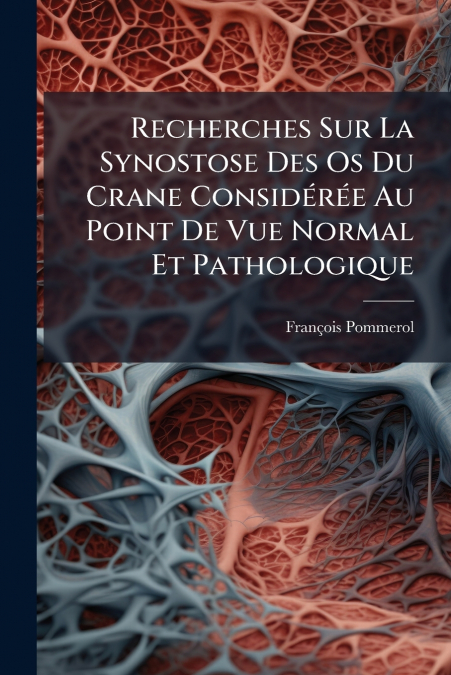
Recherches Sur La Synostose Des Os Du Crane Considérée Au Point De Vue Normal Et Pathologique Chez Les Différentes Races Humaines... explores the synostosis of the skull bones from both normal and pathological perspectives, examining its manifestations across different human races. This detailed study by François Pommerol delves into the anatomical variations and abnormalities related to cranial synostosis, offering insights into the structural development and potential disorders of the skull. This book provides valuable information for medical professionals, anthropologists, and researchers interested in understanding the complexities of cranial morphology and the factors influencing its development. The comparative analysis across various human populations enhances its significance, making it a key resource for those studying human anatomy and pathology.This work has been selected by scholars as being culturally important, and is part of the knowledge base of civilization as we know it. This work was reproduced from the original artifact, and remains as true to the original work as possible. Therefore, you will see the original copyright references, library stamps (as most of these works have been housed in our most important libraries around the world), and other notations in the work.This work is in the public domain in the United States of America, and possibly other nations. Within the United States, you may freely copy and distribute this work, as no entity (individual or corporate) has a copyright on the body of the work.As a reproduction of a historical artifact, this work may contain missing or blurred pages, poor pictures, errant marks, etc. Scholars believe, and we concur, that this work is important enough to be preserved, reproduced, and made generally available to the public. We appreciate your support of the preservation process, and thank you for being an important part of keeping this knowledge alive and relevant.