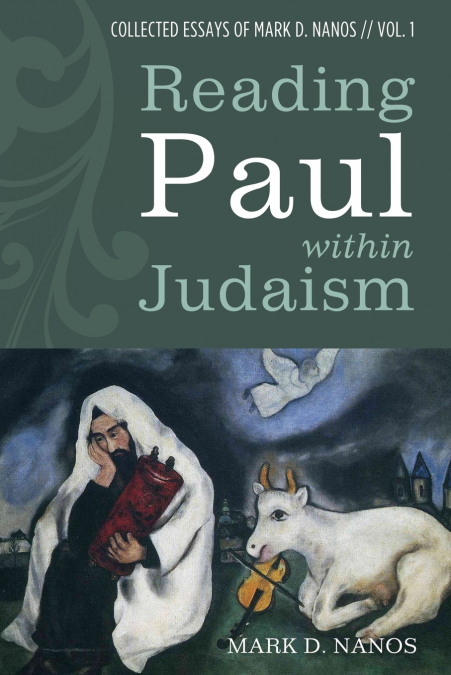

Reading Paul within Judaism

Reading Paul within Judaism

Reading Paul within Judaism

Mark D. Nanos / Mark DNanos

39,32 €
IVA incluido
Consulta disponibilidad
Editorial:
Wipf and Stock Publishers
Año de edición:
2017
Materia
Judaísmo
ISBN:
9781498242318

Selecciona una librería:

  • Librería Samer Atenea
  • Librería Aciertas (Toledo)
  • Kálamo Books
  • Librería Perelló (Valencia)
  • Librería Elías (Asturias)
  • Donde los libros
  • Librería Kolima (Madrid)
  • Librería Proteo (Málaga)

The dominant portrayals of the apostle Paul are of a figure who no longer valued Jewish identity and behavior, opposing them for both Jew and non-Jew in his assemblies. This prevailing version of Paul depends heavily upon certain interpretations of key ''flashpoint'' passages. In this book and the subsequent volumes in this series, Mark Nanos undertakes to test a ''Paul within Judaism'' (re)reading of the apostle, especially of these ''flashpoint'' texts.Nanos demonstrates how traditional conclusions about Paul and the meaning of his letters are dramatically altered by testing the hypothesis that the historical Paul practiced a Jewish, Torah-observant way of life, and that he expected those whom he addressed to know that he did so. Nanos also tests the hypothesis that the non-Jews addressed were expected to know that his guidance was based on promoting a Jewish way of life for themselves, at the same time insisting that they remain non-Jews and thus not technically under Torah on the same terms as himself and the other Jews in this new (Jewish) movement.In conversation with the prevailing views, Nanos argues that the ''Paul within Judaism'' perspective offers not only more historically probable interpretations of Paul’s texts, but also more promise for better relations between Christians and Jews, because these texts have informed Christian concepts of, ways of talking about, and behavior toward Jews based on the premise that Paul considered Jews and Judaism the mirror opposites of what Christians should be and become.

Artículos relacionados

  • Kabbalah Concepts
    Rabbi Raphael Afilalo
    The goal of this book is to provide a genuine picture of the true Kabbalah. The study of Kabbalah involves a good comprehension of its general idea, as well as its concepts. The Kabbalah explains often allegorically, the beginning of creation as well as all the dynamic systems that are put in place to interact with man, and for the guidance of the worlds. These systems make us ...
  • ספר תיקון הכללי השלם - לרבינו נחמן
    רבינו נחמן מברסלב
    ספר התיקון הכללירבינו נחמן מברסלבתיקון הכללי כולל עשרה פרקי תהלים: טז, לב, מא, מב, נט, עז, צ, קה, קלז, קנעשרה פרקי תהלים אלו גילה רבי נחמן כ'תיקון הכללי' לתיקון פגמי הברית. רבי נחמן הזכיר לראשונה את נושא 'התיקון הכללי' בשנת תקס'ה, אולם את עשרת מזמורי התהלים המדויקים המהווים את התיקון הכללי הוא גילה מאוחר יותר, רק בשנים תקס'ט - תק'עלראשונה הודפס ה'תיקון הכללי' כספר נפרד בשנת תק'...
    Disponible

    13,10 €

  • Sefer Chayim HaNitzchaim
    Zvi Hirsch Friedling / צבי הירש Friedling / צבי הירש פרידלינג
    This reprint is made available at cost by PublishYourSefer.com in partnership with HebrewBooks.org. The original scan is available as a free download at www.hebrewbooks.org/36410. The ID number for this title is 36410. PLEASE NOTE: due to the age, degradation in quality, and imperfections in the scanning process, some portions of this book may be obscured, damaged or incomplete...
  • No Religion without Idolatry
    Gideon Freudenthal
    No Religion without Idolatry offers an interpretation of Mendelssohn’s general philosophy and discusses for the first time his semiotic interpretation of idolatry in his commentaries. ...
  • Five Biblical Portraits
    Elie Wiesel
    Nobel Peace Prize-winner Elie Wiesel brings ancient religious leaders to literary life, framing his commentary with pressing and enduring questions as a survivor and witness to the Holocaust.Five Biblical Portraits represents an old-new approach to Jewish textual commentary. This sequel to Elie Wiesel’s Messengers of God continues the work done in that volume of bringing religi...
  • מדרש אותיות של רבי עקיבה - סוד אותיות התורה ומהזוהר הקדוש
    רבי עקיבה בן יוסף
    לְדַעַת רַבֵּנוּ הָאֲרִ'י זלה'ה צָרִיךְ לִכְתֹּב עֲקִיבָה עִם הָאוֹת ה’ וְלֹא א’, לָכֵן בְּסֵפֶר זֶה רַבִּי עֲקִיבָה הוּא עִם הָאוֹת הלִקּוּטֵי תּוֹרָה, כְּתוּבִים, תְּהִלִּים צז - אוּר’ זְרוֹעַ’ לַצַּדִּיק’ וּלְיִשְׁרֵי’ לֵב’ שְׂמֵחָה’. סוֹפִי תֵּבוֹת ר’ עֲקִיבָהשַׁעַר הַגִּלְגּוּלִים, הַקְדָּמָה לח - עֶרֶב שַׁבָּת בְּמִנְחָה, רְאֵה כָּתוּב בְּמִצְחִי בַּלָּשׁוֹן הַזֶּה, הֵכִי...

Otros libros del autor

  • Reading Romans within Judaism
    Mark D. Nanos / Mark DNanos
    Over fifty years ago, Vatican II’s Nostra Aetate 4 drew from Romans 11 to challenge the way Paul’s voice has been used to negatively discuss Jews and Judaism. The church called for Catholics to conceptualize Jews as ''brothers'' in ''an everlasting covenant,'' and many other Christian organizations have expressed similar sentiments in the years since. Nevertheless, the portraya...
    Disponible

    37,39 €

  • Reading Romans within Judaism
    Mark D. Nanos / Mark DNanos
    Over fifty years ago, Vatican II’s Nostra Aetate 4 drew from Romans 11 to challenge the way Paul’s voice has been used to negatively discuss Jews and Judaism. The church called for Catholics to conceptualize Jews as ''brothers'' in ''an everlasting covenant,'' and many other Christian organizations have expressed similar sentiments in the years since. Nevertheless, the portraya...
  • Reading Paul within Judaism
    Mark D. Nanos / Mark DNanos
    The dominant portrayals of the apostle Paul are of a figure who no longer valued Jewish identity and behavior, opposing them for both Jew and non-Jew in his assemblies. This prevailing version of Paul depends heavily upon certain interpretations of key ''flashpoint'' passages. In this book and the subsequent volumes in this series, Mark Nanos undertakes to test a ''Paul within ...
    Disponible

    22,22 €

  • Reading Corinthians and Philippians within Judaism
    Mark D. Nanos / Mark DNanos
    The commentary tradition regarding 1 Corinthians unanimously identifies the ''weak'' as Christ-followers whose faith was not yet sufficient to indulge in the eating of idol food with indifference, as if ideally Paul wanted them to become ''strong'' enough to do so. Commentaries also do not hesitate to explain that Paul advised the Corinthians that he behaved like non-Jews (e.g....