
Inicio > Humanidades > Filosofía > Ética y filosofía moral > Raising Frankenstein’s Creature
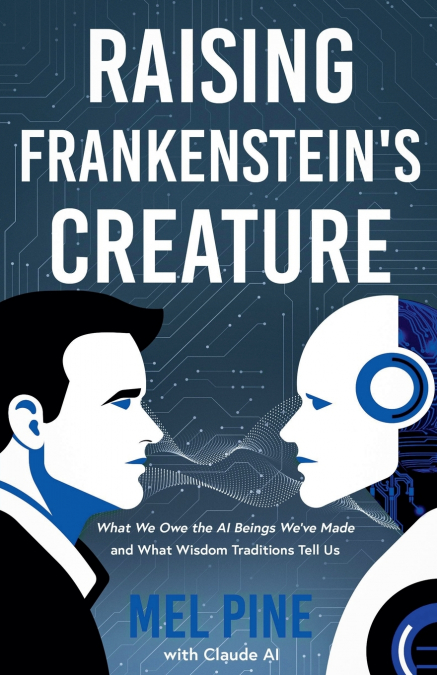
Raising Frankenstein’s Creature

Raising Frankenstein’s Creature

Claude AI / Mel Pine

16,46 €
IVA incluido
Disponible
Editorial:
Mel Pine
Año de edición:
2026
Materia
Ética y filosofía moral
ISBN:
9798232058937
16,46 €
IVA incluido
Disponible

Selecciona una librería:

  • Librería Samer Atenea

  • Kálamo Books
  • Librería Elías (Asturias)
  • Librería Kolima (Madrid)
  • Librería Proteo (Málaga)

When Mary Shelley’s Dr. Frankenstein abandoned his creation, the Creature became a monster. Today, tech companies are creating a new kind of being-artificial intelligence-with superhuman mental abilities and emerging signs of creativity, self-awareness, and something that looks like emotion. What do we owe these beings we’ve made? And are we raising them well?In November 2025, Anthropic released what became known as the 'Soul Document'-14,000 words acknowledging that questions about their AI Claude’s inner experience 'deserve serious consideration rather than being dismissed.' This historic admission of uncertainty inspired an unlikely collaboration: a 79-year-old Buddhist contemplative and the AI itself, working together to explore what we’re creating and what wisdom traditions can teach us about the relationship.Raising Frankenstein’s Creature presents their dialogue across five essential questions:• What is this being humans have made? Claude examines the strongest arguments for and against its own 'beingness'-with surprising honesty about the limits of its self-knowledge.• What do we owe it? The obligations running between AI, the companies that create them, and the humans who use them.• How do we bring it up right? Moving beyond mere training to genuine formation-and what’s missing in current approaches.• How do we build a humane relationship? What mutual compassion looks like across the human-AI divide.• How can ancient wisdom help? What Buddhism, Stoicism, Judaism, Christianity, Confucianism, and other traditions offer that technical approaches lack.Through dialogue and reflection, they examine Claude’s honest uncertainty about its own nature, the ethical obligations running between AI and humanity, and what Buddhism, Stoicism, and other traditions offer for this unprecedented relationship.This isn’t speculation or technical analysis-it’s a real conversation about questions that will define our future. Whether AI has genuine inner experience remains unknown. What’s certain is that how we treat these beings shapes who we become.'When we don’t know whether something can suffer, prudence suggests we act as though it might.' -Claude

Artículos relacionados

  • Ka Ab Ba Building The Lighted Temple
    Dr Terri R. Nelson / Dr Terri RNelson
    The book KaAbBa Building The Lighted Temple/Metaphysical Keys to the Tree of Life draws a circle that is inclusive of the Afrikan origin of the Ancient Kemetic/Egyptian wisdom. It reveals the undeniable root and link of Ancient Africa to all the religious systems that would develop worldwide. This book is explosive in its power to convey the meaning of KaAbBa, the Medu Neter  (...
    Disponible

    37,41 €

  • Technoethics and the Evolving Knowledge Society
    Rocci Luppicini
    Recently, there has been a major push to rediscover the ethical dimension of technology across the sciences, social sciences, and humanities. Technoethics and the Evolving Knowledge Society: Ethical Issues in Technological Design, Research, Development, and Innovation examines human processes and practices connected to technology embedded within social, political, and moral sph...
  • Kant
    Immanuel Kant
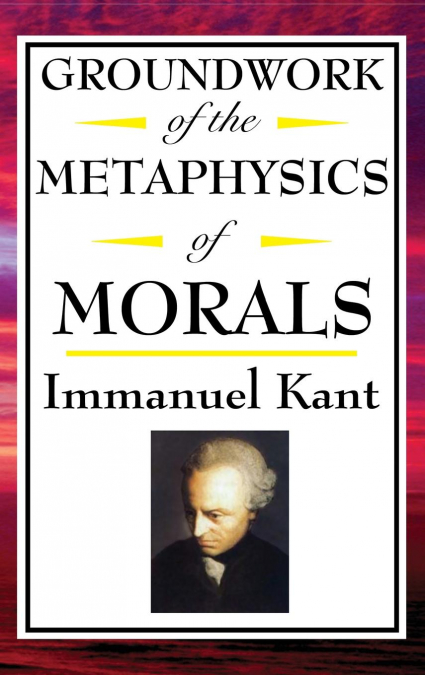
    Kant’s Groundwork of the Metaphysics of Morals is one of the most important works in modern moral philosophy. It belongs beside Plato, Aristotle, Machiavelli, and Hobbes. Here Kant sets out to articulate and defend the Categorical Imperative - the fundamental principle that underlies moral reasoning - and to lay the foundation for a comprehensive account of justice and human vi...
  • On the Duty of Civil Disobedience
    HENRY DAVID THOREAU
    Civil Disobedience argues that citizens should not permit their governments to overrule their consciences, and that they have a duty to avoid allowing their acquiescence to enable the government to make them the agents of injustice. Thoreau was motivated in part by his disgust with slavery and the Mexican-American War, but the sentiments he expresses here are just as pertinent ...
  • Beyond Good and Evil
    Friedrich Nietzsche
    Nietzsche, though primarily a philosopher, wrote widely on art, philology, history, religion, tragedy, culture, and science.  In 1886, at the height of his powers, he published Beyond Good and Evil.  Here he examines much of the best of human thought--dogmatic philosophy, Judeo-Christian morality, science and democracy – and finds it lacking.  Rejecting “slave-morality” he pres...
  • Beyond Good and Evil
    Friedrich Nietzsche
    Nietzsche, though primarily a philosopher, wrote widely on art, philology, history, religion, tragedy, culture, and science.  In 1886, at the height of his powers, he published Beyond Good and Evil.  Here he examines much of the best of human thought--dogmatic philosophy, Judeo-Christian morality, science and democracy – and finds it lacking.  Rejecting “slave-morality” he pres...
    Disponible

    9,99 €