 Librería Samer Atenea
 Kálamo Books
 Librería Elías (Asturias)
 Librería Kolima (Madrid)
 Librería Proteo (Málaga)
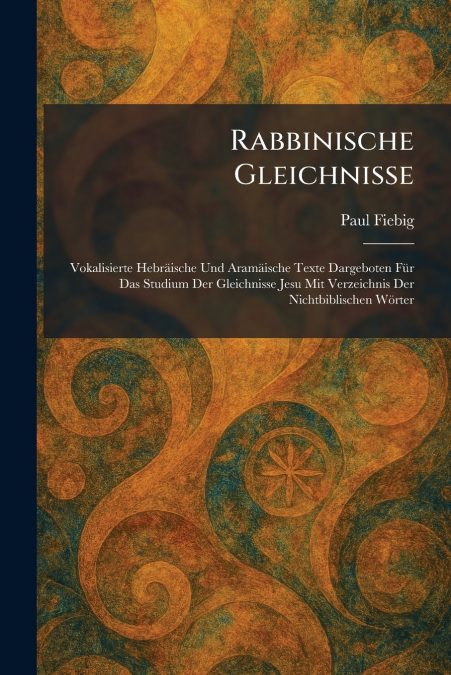
'Rabbinische Gleichnisse' bietet eine fundierte Zusammenstellung vokalisierter hebräischer und aramäischer Texte, die speziell für das vergleichende Studium der Gleichnisse Jesu konzipiert wurden. Der Theologe Paul Fiebig präsentiert in diesem Werk eine sorgfältige Auswahl rabbinischer Erzählungen und Parabeln, die das literarische und kulturelle Umfeld der neutestamentlichen Verkündigung beleuchten. Durch die Bereitstellung der Originaltexte mit Vokalisation wird dem Leser ein direkter Zugang zu den sprachlichen Nuancen der jüdischen Lehrmedien ermöglicht.Dieses Werk dient als essentielles Hilfsmittel für die neutestamentliche Exegese und die Erforschung der jüdischen Wurzeln des Christentums. Ein besonderes Merkmal ist das enthaltene Verzeichnis der nichtbiblischen Wörter, das die sprachwissenschaftliche Analyse vertieft und den Wortschatz der rabbinischen Literatur erschlieÃt. Die Sammlung verdeutlicht die formalen und inhaltlichen Parallelen zwischen der rabbinischen Tradition und den Evangelien, was sie zu einer wertvollen Quelle für Wissenschaftler, Studenten und Interessierte an der biblischen Hermeneutik macht.This work has been selected by scholars as being culturally important, and is part of the knowledge base of civilization as we know it. This work was reproduced from the original artifact, and remains as true to the original work as possible. Therefore, you may see the original copyright references, library stamps (as most of these works have been housed in our most important libraries around the world), and other notations in the work.This work is in the public domain in the United States of America, and possibly other nations. Within the United States, you may freely copy and distribute this work, as no entity (individual or corporate) has a copyright on the body of the work.As a reproduction of a historical artifact, this work may contain missing or blurred pages, poor pictures, errant marks, etc. Scholars believe, and we concur, that this work is important enough to be preserved, reproduced, and made generally available to the public. We appreciate your support of the preservation process, and thank you for being an important part of keeping this knowledge alive and relevant.