Inicio > Humanidades > Filosofía > Questions of Form
Questions of Form

Questions of Form

Joelle Proust

86,11 €
IVA incluido
Disponible
Editorial:
Univ of Chicago behalf of Minnesota Univ Pres
Año de edición:
1989
Materia
Filosofía
ISBN:
9780816617616
86,11 €
IVA incluido
Disponible

Selecciona una librería:

  • Librería Samer Atenea
  • Librería Aciertas (Toledo)
  • Kálamo Books
  • Librería Perelló (Valencia)
  • Librería Elías (Asturias)
  • Donde los libros
  • Librería Kolima (Madrid)
  • Librería Proteo (Málaga)

Questions of Form was first published in 1989. Minnesota Archive Editions uses digital technology to make long-unavailable books once again accessible, and are published unaltered from the original University of Minnesota Press editions. In Questions on Form, Joelle Proust traces the concept of the analytic proposition from Kant’s development of the notion down to its place in the work of Rudolf Carnap, a founder of logical empiricism and a key figure in contemporary analytic philosophy. Using a method known in France as topique comparative,she provides a rigorous exposition of analyticity, situating it within four major philosophical systems-those of Kant, Bolzano, Frege, and Carnap-and clearly delineating its development from one system to the next. Proust takes as her point of departure Kant’s distinction between analytic and synthetic judgments. Though she makes clear that Kant drew on Locke, Hume, and Leibniz, she argues that his notion of analyticity was innovative, not simply an elaboration of something already found in their work. She shows that the analytic proposition unexpectedly (given its modest status in Kant) came to play an important part in efforts to convert problems considered 'transcendental' into questions of belonging to formal logic. Ultimately, her comparison of their systems reveals that the concept of the analytic, however specific its rile in each, remains linked to a foundationalist strategy-in effect, to the transcendentalist questions Kant used when he reinterpreted the findings of his empiricist predecessors. Hence, this book’s provocative claim: today’s so-called logical empiricism owes much more to Kant’s notion of science than to Hume’s.

Artículos relacionados

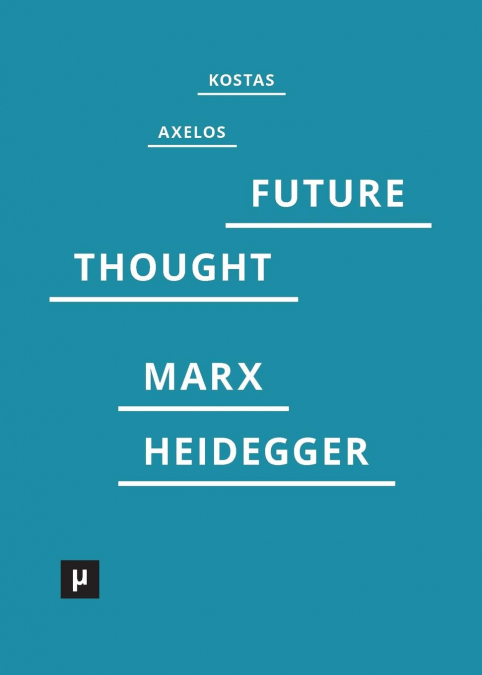
  • Introduction to a Future Way of Thought
    Kostas Axelos / Kenneth Mills
    'Technologists only change the world in various ways in generalized indifference; the point is to think the world and interpret the changes in its unfathomability, to perceive and experience the difference binding being to the nothing.'Anticipating the age of planetary technology Kostas Axelos, a Greek-French philosopher, approaches the technological question in this book, firs...
    Disponible

    18,58 €

  • Capsule
    John Kenneth Press
    Join John and Adam as they wander the mean streets of Japan on a psychedelic fueled search for identity. While fun for the average reader, this book could also serve as a philosphy textbook because of its ordered exploration of sources of identity. Ultimately this trip through nationalist attacks, sex, and drugs, will take you to a better understanding of yourself and your pl...
    Disponible

    11,51 €

  • If you look at it long enough...
    Paul Hallam
    Originally written for an academic journal, If you look at it long enough... is primarily a personal account of Paul Hallam’s recollections of “self-abuse” through the consumption of porn over several decades. Challenging the familiar form of an “academic essay,” this autobiographical narrative raises several questions in relation to our contemporary morals related to sex in ge...
    Disponible

    11,30 €

  • The Teachers of Gurdjieff
    Rafael Lafort / Rafael Lefort
    When The Teachers of Gurdjieff was first published more than 50 years ago, it made a considerable stir. George Ivanovich Gurdjieff had been one of the most famous mystics in the West in the first half of the 20th century - a teaching master who had many fashionable and influential pupils. He had a striking appearance and manner of teaching, and his teaching proved to be very in...
    Disponible

    20,45 €

  • Manifesto of the Communist Party
    Karl Marx
    The Communist Manifesto was first published on February 21, and it is one of the world’s most influential political tracts. Commissioned by the Communist League and written by communist theorists Karl Marx and Friedrich Engels, it laid out the League’s purposes and program. The Manifesto suggested a course of action for a proletarian (working class) revolution to overthrow the ...
  • The Art of Literature
    Arthur Schopenhauer
    Collected here are eight short essays, On Authorship, On Style, On the Study of Latin, On Men of Learning, On Thinking for Ones Self, On Criticism, On Reputation, On Genius, by the world renowned philosopher Arthur Achopenhauer. ...

Otros libros del autor

  • Metacognitive Diversity
    Joëlle Proust
    Metacognition refers to our awareness of our own mental processes, such as perceiving, remembering, learning, and problem solving. It is a fascinating area of research for psychologists, neuroscientists, anthropologists, sociologists and philosophers.This book explores the variability of metacognitive skills across cultures, since a person’s decision to allocate effort, motiva...
  • Philosophy of Metacognition
    Joëlle Proust
    Does metacognition, i.e. the capacity to form epistemic self-evaluations about one’s current cognitive performance, derive from a mindreading capacity, or does it rely, at least in part, on sui generis informational processes? In The Philosophy of Metacognition Joëlle Proust provides apowerful defense of the second position. Drawing on discussions of empirical evidence from com...