Inicio > Humanidades > Filosofía > Ética y filosofía moral > Qualitative Freedom - Autonomy in Cosmopolitan Responsibility
Qualitative Freedom - Autonomy in Cosmopolitan Responsibility

Qualitative Freedom - Autonomy in Cosmopolitan Responsibility

Claus Dierksmeier / Richard Fincham

47,43 €
IVA incluido
Disponible
Editorial:
Springer Nature B.V.
Año de edición:
2019
Materia
Ética y filosofía moral
ISBN:
9783030047245
47,43 €
IVA incluido
Disponible

Selecciona una librería:

  • Librería Samer Atenea
  • Librería Aciertas (Toledo)
  • Kálamo Books
  • Librería Perelló (Valencia)
  • Librería Elías (Asturias)
  • Donde los libros
  • Librería Kolima (Madrid)
  • Librería Proteo (Málaga)

In the light of growing political and religious fundamentalism, this open access book defends the idea of freedom as paramount for the attempt to find common ethical ground in the age of globality. The book sets out to examine as yet unexhausted ways to boost the resilience of the principle of liberalism. Critically reviewing the last 200 years of the philosophy of freedom, it revises the principle of liberty in order to revive it. It discusses many different aspects that fall under its three main topics: the metaphysics of freedom, quantitative freedom and qualitative freedom.Open societies worldwide have come under increasing pressure in the last decades. The belief that politics and markets fare best when guided by the principle of liberty presently faces multiple challenges such as terrorism, climate warming, inequality, populism, and financial crises. In the view of its critics, the idea of freedom no longer offers adequate guidance to meet these challenges andshould be partially corrected or even entirely replaced by countervailing values. Against the reduction of freedom to the merely quantitative question as to how much liberties individuals call their own, this book draws attention to the qualitative concerns which and whose opportunities society should foster. It argues that, correctly understood, the idea of liberty commits us to defend as well as advance the freedom of each and every world citizen.

Artículos relacionados

  • Ka Ab Ba Building The Lighted Temple
    Dr Terri R. Nelson / Dr Terri RNelson
    The book KaAbBa Building The Lighted Temple/Metaphysical Keys to the Tree of Life draws a circle that is inclusive of the Afrikan origin of the Ancient Kemetic/Egyptian wisdom. It reveals the undeniable root and link of Ancient Africa to all the religious systems that would develop worldwide. This book is explosive in its power to convey the meaning of KaAbBa, the Medu Neter  (...
    Disponible

    37,41 €

  • Technoethics and the Evolving Knowledge Society
    Rocci Luppicini
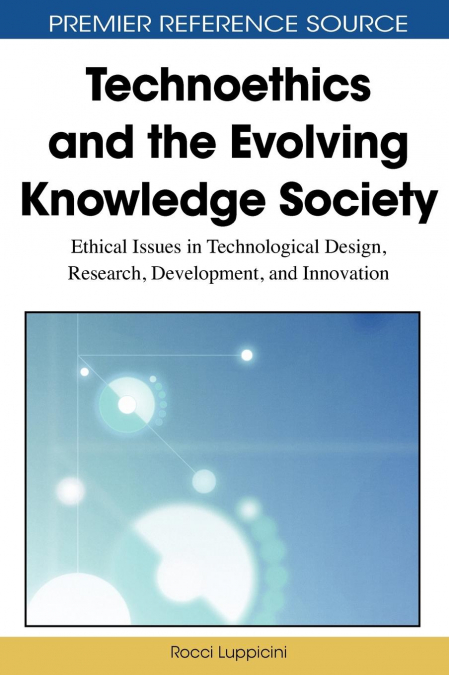
    Recently, there has been a major push to rediscover the ethical dimension of technology across the sciences, social sciences, and humanities. Technoethics and the Evolving Knowledge Society: Ethical Issues in Technological Design, Research, Development, and Innovation examines human processes and practices connected to technology embedded within social, political, and moral sph...
  • Kant
    Immanuel Kant
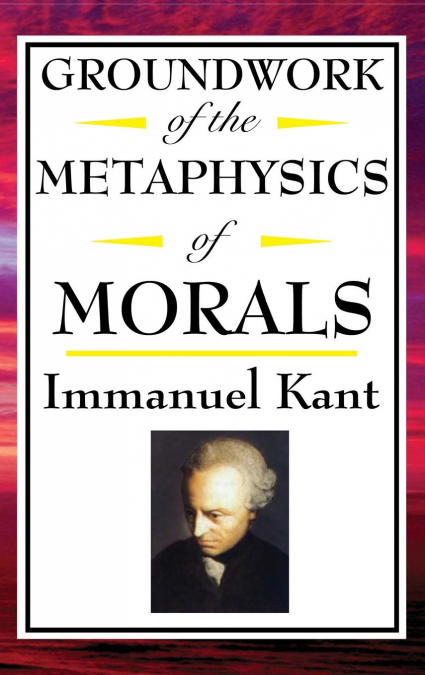
    Kant’s Groundwork of the Metaphysics of Morals is one of the most important works in modern moral philosophy. It belongs beside Plato, Aristotle, Machiavelli, and Hobbes. Here Kant sets out to articulate and defend the Categorical Imperative - the fundamental principle that underlies moral reasoning - and to lay the foundation for a comprehensive account of justice and human vi...
  • On the Duty of Civil Disobedience
    HENRY DAVID THOREAU
    Civil Disobedience argues that citizens should not permit their governments to overrule their consciences, and that they have a duty to avoid allowing their acquiescence to enable the government to make them the agents of injustice. Thoreau was motivated in part by his disgust with slavery and the Mexican-American War, but the sentiments he expresses here are just as pertinent ...
  • Beyond Good and Evil
    Friedrich Nietzsche
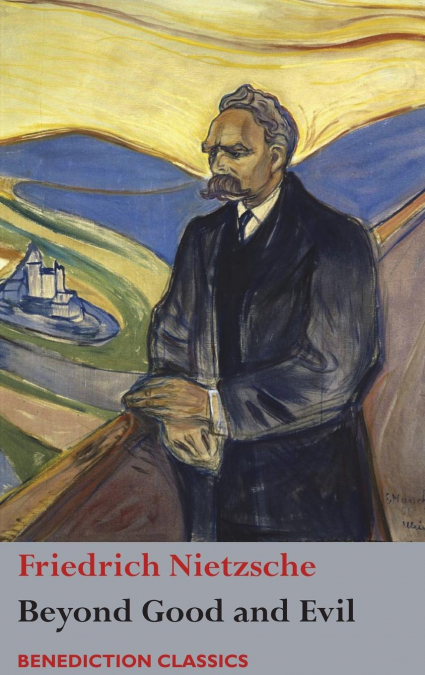
    Nietzsche, though primarily a philosopher, wrote widely on art, philology, history, religion, tragedy, culture, and science.  In 1886, at the height of his powers, he published Beyond Good and Evil.  Here he examines much of the best of human thought--dogmatic philosophy, Judeo-Christian morality, science and democracy – and finds it lacking.  Rejecting “slave-morality” he pres...
  • Beyond Good and Evil
    Friedrich Nietzsche
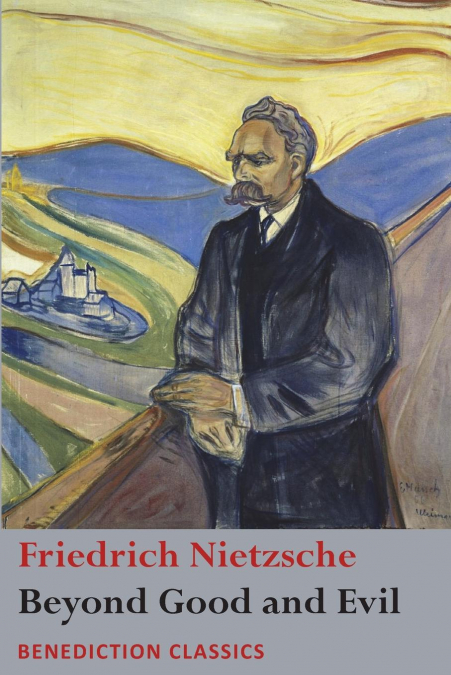
    Nietzsche, though primarily a philosopher, wrote widely on art, philology, history, religion, tragedy, culture, and science.  In 1886, at the height of his powers, he published Beyond Good and Evil.  Here he examines much of the best of human thought--dogmatic philosophy, Judeo-Christian morality, science and democracy – and finds it lacking.  Rejecting “slave-morality” he pres...
    Disponible

    9,99 €

Otros libros del autor

  • Qualitative Freedom - Autonomy in Cosmopolitan Responsibility
    Claus Dierksmeier / Richard Fincham
    In the light of growing political and religious fundamentalism, this open access book defends the idea of freedom as paramount for the attempt to find common ethical ground in the age of globality. The book sets out to examine as yet unexhausted ways to boost the resilience of the principle of liberalism. Critically reviewing the last 200 years of the philosophy of freedom, it ...