
Public Response to Alerts and Warnings Using Social Media

Public Response to Alerts and Warnings Using Social Media

AA.VV

34,32 €
IVA incluido
Disponible
Editorial:
National Academies Press
Año de edición:
2013
ISBN:
9780309290333
34,32 €
IVA incluido
Disponible

Selecciona una librería:

  • Librería Samer Atenea
  • Librería Aciertas (Toledo)
  • Kálamo Books
  • Librería Perelló (Valencia)
  • Librería Elías (Asturias)
  • Donde los libros
  • Librería Kolima (Madrid)
  • Librería Proteo (Málaga)

Following an earlier NRC workshop on public response to alerts and warnings delivered to mobile devices, a related workshop was held on February 28 and 29, 2012 to look at the role of social media in disaster response. This was one of the first workshops convened to look systematically at the use of social media for alerts and warnings—an event that brought together social science researchers, technologists, emergency management professionals, and other experts on how the public and emergency managers use social media in disasters.In addition to exploring how officials monitor social media, as well as the resulting privacy considerations, the workshop focused on such topics as: what is known about how the public responds to alerts and warnings; the implications of what is known about such public responses for the use of social media to provide alerts and warnings to the public; and approaches to enhancing the situational awareness of emergency managers.Public Response to Alerts and Warnings Using Social Media: Report of a Workshop on Current Knowledge and Research Gaps summarizes presentations made by invited speakers, other remarks by workshop participants, and discussions during parallel breakout sessions. It also points to potential topics for future research, as well as possible areas for future research investment, and it describes some of the challenges facing disaster managers who are seeking to incorporate social media into regular practice.

Artículos relacionados

  • Introducción a la lingüística computacional
    Juli Bernal / Ruth Yanira Rubio
    La lingüística computacional se inició en Estados Unidos en los años 50 con el objetivo de crear un traductor automático para la traducción de textos desde diferentes idiomas al inglés, esto con el interés de crear herramientas para los conflictos bélicos que facilitaran la comunicación y permitieran descifrar mensajes ocultos en las comunicaciones de los adversarios. La lingüí...
    Disponible

    7,80 €

  • Sistemas digitales, principios, análisis y diseño
    Héctor A. Flórez Fernández
    Se ofrece al lector una exposición clara y suficiente de, los conceptos básicos de los sistemas digitales combinacionales y secuenciales, además, presenta conceptos básicos de microprocesadores. En este documento se puede obtener el conocimiento y habilidad necesaria para resolver diseños de electrónica digital con base en los fundamentos del mimo; el documento evidencia una ex...
    Disponible

    11,39 €

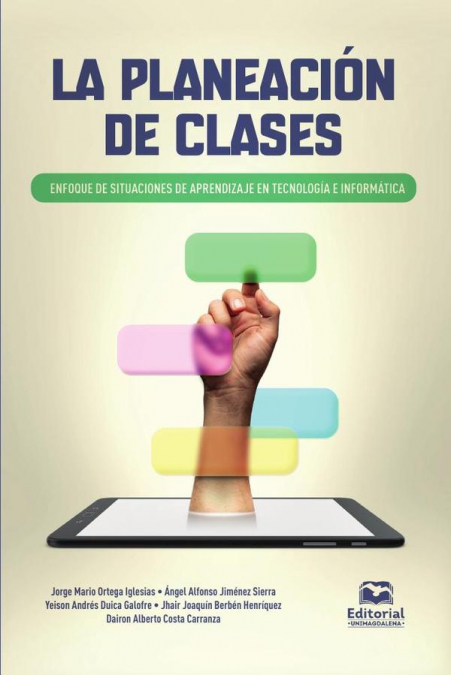
  • La planeación de clases
    Ángel Alfonso Jiménez Sierra / Dairon Alberto Costa Carranza / Jhair Joaquín Berbén Hernríquez / Jorge Mario Ortega Iglesias / Yeison Andrés Duica Galofre
    El libro ofrece orientaciones prácticas para la planificación efectiva de las sesiones de enseñanza en el área de Tecnología e Informática, dirigidas a estudiantes de educación en formación inicial y a profesores en ejercicio. Su objetivo principal es brindar las herramientas necesarias para diseñar y ejecutar un proceso de planificación de clases a partir de situaciones de apr...
    Disponible

    15,08 €

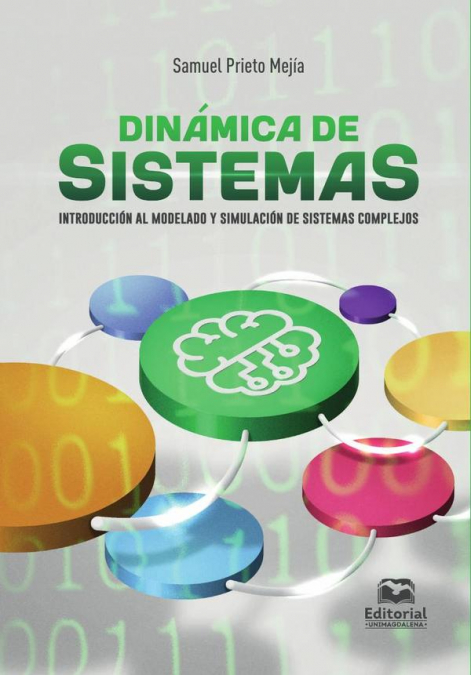
  • Dinámica de sistemas
    Samuel Prieto Mejía
    Este libro está destinado a estudiantes de Ingeniería de Sistemas y ofrece una sólida base para abordar problemas complejos mediante la tecnología computacional. Dividido en diecisiete capítulos, abarca desde los fundamentos de la dinámica de sistemas hasta la aplicación de modelos en casos de estudio como la isla de Borneo y el parque Yellowstone. Se exploran compañías de mode...
    Disponible

    23,87 €

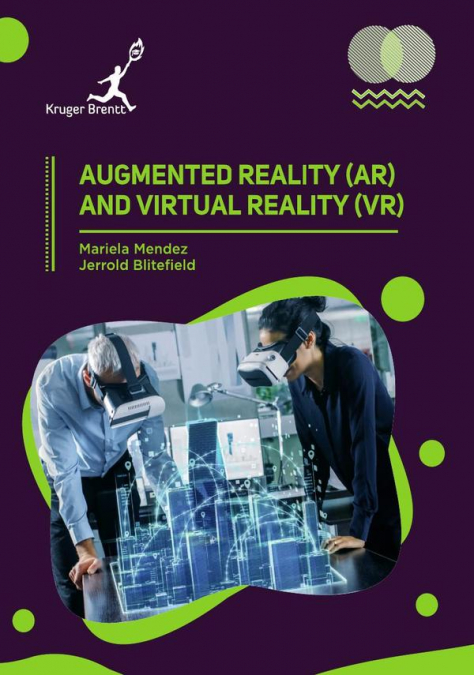
  • Augmented Reality (AR) and Virtual Reality (VR)
    Mariela Mendez
    1.Introduction to AR and VR Technologies: Provide a comprehensive overview of augmented reality (AR) and virtual reality (VR) including their definitions key components and underlying technologies. Differentiate between AR and VR experiences discussing their applications advantages and limitations.2.Hardware and Software Platforms: Explore the hardware devices and software plat...
    Disponible

    150,80 €

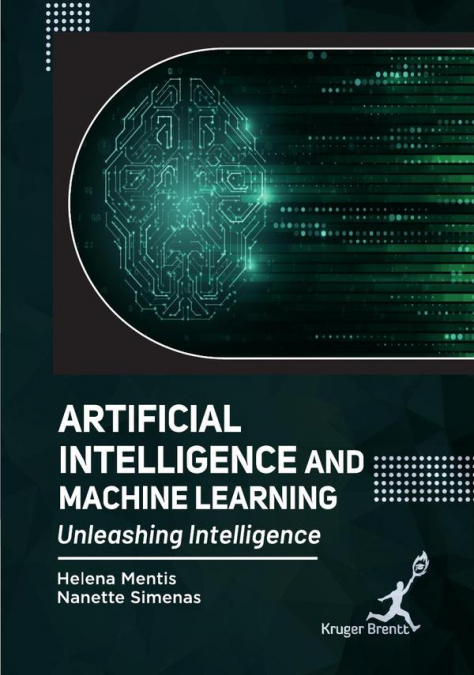
  • Artificial Intelligence and Machine Learning: Unleashing Intelligence
    Helena Mentis
    Foundations of Artificial Intelligence (AI) and Machine Learning (ML): Provide a comprehensive overview of the fundamental concepts theories and principles of artificial intelligence and machine learning including their historical development basic algorithms and applications across various domains. Algorithms and Techniques: Explore a wide range of AI and ML algorithms and tec...
    Disponible

    134,68 €