
Inicio > Sociedad y ciencias sociales > Psicología > Psychological Issues in Eyewitness Identification
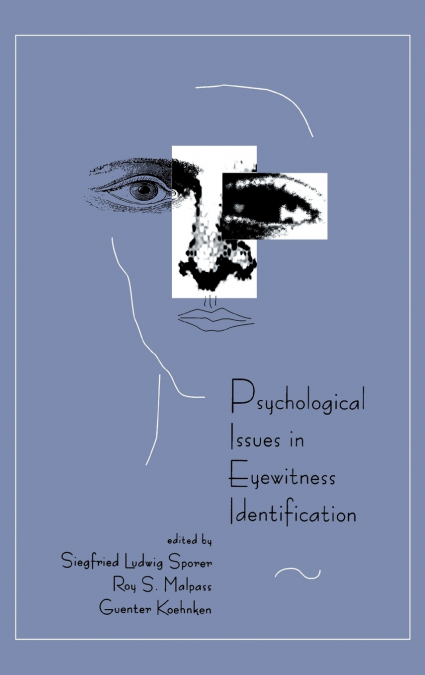
Psychological Issues in Eyewitness Identification

Psychological Issues in Eyewitness Identification


227,08 €
IVA incluido
Consulta disponibilidad
Editorial:
Taylor & Francis Ltd
Año de edición:
1995
Materia
Psicología
ISBN:
9780805811988

Selecciona una librería:

  • Librería Samer Atenea
  • Librería Aciertas (Toledo)
  • Kálamo Books
  • Librería Perelló (Valencia)
  • Librería Elías (Asturias)
  • Donde los libros
  • Librería Kolima (Madrid)
  • Librería Proteo (Málaga)

Why do police officers, investigators, prosecutors, judges, and others with an interest in eliciting accurate memory-based testimony need to inform themselves of the research literature in experimental psychology that addresses the question of witness memory? The answer is straightforward, from the perspective of a simple cost/benefit analysis. As with so many matters in the administration of public funds, effectiveness holds important rewards. Those who investigate crimes and decide which line of investigation to pursue and which line to postpone or set aside, necessarily make judgments about the likely guilt of suspects based on the information at hand. If they can make these judgments with a high degree of accuracy, everyone benefits. For many cases eyewitness identification is an important component of evidence, prosecution, and plea negotiation. If witness identification is correctly implemented, investigators and prosecutors can make their judgments effectively, and focus their resources more efficiently. A major component of effectiveness requires avoiding expending scarce resources on erroneous prosecutions. It is in everyone’s interest to make the best use of the memory of witnesses: to preserve it without changing it; to render it maximally accessible; to provide an environment in which witnesses feel free to report their recollections; and to accurately assess the probable validity of the witness’s report, regardless of the witness’s certainty or doubts about its accuracy. This volume gathers evidence from various research domains on eyewitness testimony. Although many of the studies discussed deal with eyewitness identification, it is noteworthy that many of them also touch upon other areas of concern to eyewitness researchers, including chapters on: *voice recognition by humans and computers, with particularly detailed instructions on conducting voice 'lineup,' *differential aspects of recognition memory in children, *elderly eyewitness’ memory, *problems of cross-racial identification, *psychological aspects of facial image reconstruction techniques, *person descriptions, *particular benefits of reinstating context as a means to improve eyewitness memory, *problems associated with various research paradigms in the eyewitness arena, and *recommendations on how to conduct lineups and photospreads and their proper evaluation. Differentiated from other literature on this topic by its non-technical language and accessibility to non-professionals, this volume covers a great deal of ground, raises a host of questions, settles some others, and points the way to more effective use and evaluation of what eyewitnesses have to say.
Artículos relacionados

  • Drinkers of Infinity
    Arthur Koestler
    This selection of essays, book-reviews, broadcast talks and papers delivered to learned societies reflects the extraordinary breadth of Arthur Koestler’s interests. From the trial of Galileo to the pleasures of canoeing down the Loire, from a detailed examination of the ‘memory’ of flatworms to an equally detailed examination of the futility of quarantining dogs, the author wri...
    Disponible

    17,24 €

  • Gordy the Rabbit has ADHD
    Jessie Shepherd
    Often when people are given a mental health disorder diagnosis the weaknesses are clear and overwhelmingly emphasized, while the strengths are ignored or forgotten. The mental health children's book series 'What Mental Disorder?' challenges the stigma against therapy and diagnosis. It enlists the reader to view the character as a whole being and not as a mental issu...
    Disponible

    16,30 €

  • The Paradoxical Ego
    Eugene Halliday / Zhu Kabere
    Three particular themes are basic to this study. First, that the human race and its environment are involved in a slowly progressive process of revelation and understanding of its inherent features; and that we are all participating in this ongoing evolutionary cycle. Second, and closely related to the first tenet, man is not separable from his environment. We all share in this...
    Disponible

    14,56 €

  • On Being Human and When a Man Comes to Himself
    Woodrow Wilson
    Before he became the 28th President of the United States (1913-21), the 34th Governor of New Jersey (1911-13), or even the 13th President of Princeton University (1902-10), Woodrow Wilson (1856-1924) was a scholar and professor. In 1885, he received his Ph.D. in history and political science from Johns Hopkins University, and in 1897, he was granted tenure at Princeton Universi...
    Disponible

    6,28 €

  • Bridge Over The River Why
    David Cooper / Deborah Cooper
    'In Bridge Over the River Why, the Coopers have succeeded in a dual task documenting their own journey through the grief of losing their son Eli by suicide, while at the same time providing a valuable resource for anyone who has had to face the same terrible tragedy. They start with the premise that 'doing and feeling' are the key components of moving forward and have a core me...
  • Extraordinary Leadership
    Cher Holton
    This transformational leadership book, grounded in state-of-the-art research and proven by real-life application in the trenches, moves beyond traditional leadership theories to introduce you to seven incredible Core Abilities and shows you how to connect with them to become an Extraordinary Leader who can bring out the very best in your people.All the techniques in the world w...
    Disponible

    23,85 €