 Librería Samer Atenea
 Kálamo Books
 Librería Elías (Asturias)
 Librería Kolima (Madrid)
 Librería Proteo (Málaga)
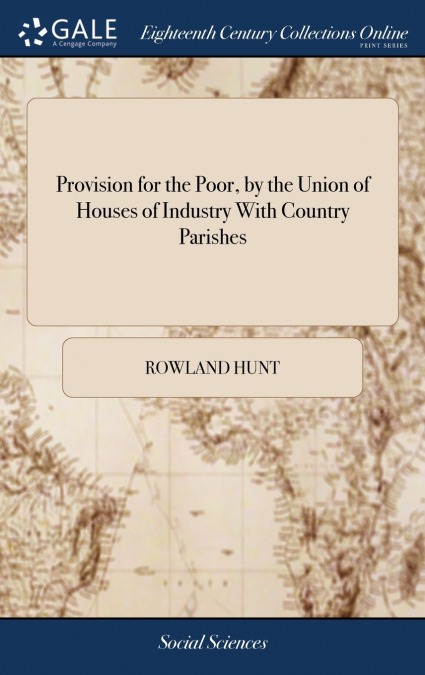
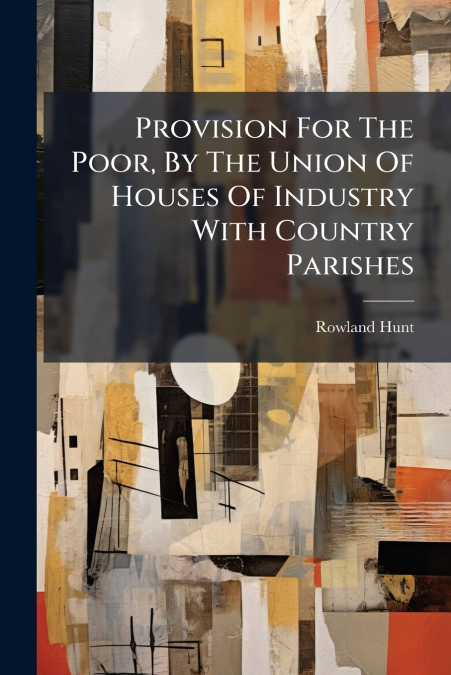
In 'Provision For The Poor, By The Union Of Houses Of Industry With Country Parishes,' Rowland Hunt addresses a Member of Parliament regarding the pressing issue of poverty and its potential solutions. This letter advocates for a strategic alliance between workhouses and rural parishes to provide effective relief and opportunities for the impoverished. Hunt’s proposal aims to reform the existing system by integrating industry with social welfare at the local level. This work offers valuable insights into the historical context of poverty management and social policy during a pivotal era of reform. Scholars and readers interested in the history of social welfare, the evolution of poor laws, and the development of institutional responses to poverty will find Hunt’s perspectives both informative and relevant. The letter serves as a primary source document, shedding light on the debates and proposed reforms of the time.This work has been selected by scholars as being culturally important, and is part of the knowledge base of civilization as we know it. This work was reproduced from the original artifact, and remains as true to the original work as possible. Therefore, you will see the original copyright references, library stamps (as most of these works have been housed in our most important libraries around the world), and other notations in the work.This work is in the public domain in the United States of America, and possibly other nations. Within the United States, you may freely copy and distribute this work, as no entity (individual or corporate) has a copyright on the body of the work.As a reproduction of a historical artifact, this work may contain missing or blurred pages, poor pictures, errant marks, etc. Scholars believe, and we concur, that this work is important enough to be preserved, reproduced, and made generally available to the public. We appreciate your support of the preservation process, and thank you for being an important part of keeping this knowledge alive and relevant.