
Inicio > Derecho > Teoría general del derecho > Protection juridique du consommateur d’aliments et libéralisme économique dans les pays en développement
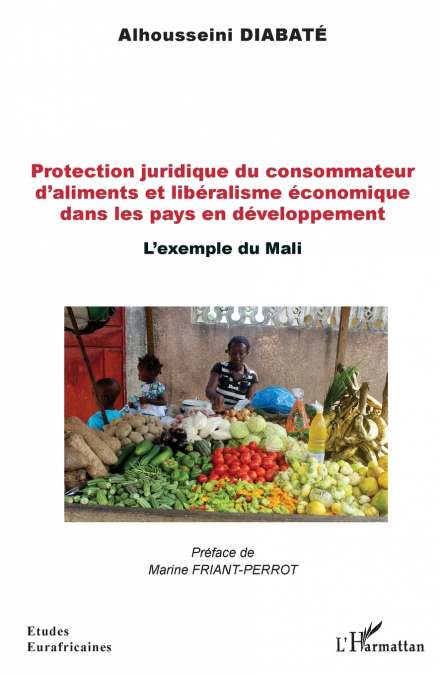
Protection juridique du consommateur d’aliments et libéralisme économique dans les pays en développement

Protection juridique du consommateur d’aliments et libéralisme économique dans les pays en développement

Diabate alhousseini

61,48 €
IVA incluido
Disponible
Editorial:
Editions L’Harmattan
Año de edición:
2020
Materia
Teoría general del derecho
ISBN:
9782343191836
61,48 €
IVA incluido
Disponible

Selecciona una librería:

  • Librería Samer Atenea

  • Kálamo Books
  • Librería Elías (Asturias)
  • Librería Kolima (Madrid)
  • Librería Proteo (Málaga)

L’auteur fait le constat selon lequel les consommateurs des pays en développement ont difficilement accès à l’aliment. A la source de cette difficulté se trouvent le droit du commerce international et les choix de la mondialisation, plus orientés vers le développement du libre-échange et la protection des intérêts économiques et financiers des acteurs de la mondialisation que vers l’accès des consommateurs à l’aliment. Ainsi, la construction d’espaces juridiques, à l’échelle régionale et mondiale, dominés par la loi du marché, participe à l’affaiblissement du rôle de l’Etat dans la détermination des politiques agricoles et alimentaires pour préserver l’accès des consommateurs à l’aliment.

Artículos relacionados

  • EU General Data Protection Regulation (GDPR)
    IT Governance Privacy Team
    An in-depth guide to complying with the EU GDPR.Now in its second edition, EU GDPR – An Implementation and Compliance Guide is a clear and comprehensive guide to this new data protection law, providing a detailed commentary on the Regulation, and setting out the obligations of data  processors and controllers in clear and comprehensible terms.Read this book to learn: How the ...
    Disponible

    33,34 €

  • Banking Laws and Regulations in Nigeria
    Bello Mohammed Magaji
    Banking Law and Regulations in Nigeria: Selected Themes essentially deals with the laid down rules or code of conduct meant to control and set standards for banking business. Indeed, the main aim of the ongoing banking reforms in Nigeria, started in 2004, is to ensure banks’ conformity to the laid down banking rules and regulations. The eleven-chapter book contains vital and ri...
    Disponible

    46,32 €

  • States and the Interpretation of Treaties
    Dimitris Liakopoulos
    States and the Interpretation of Treaties opens with a provocative reconsideration of a debate on the subject of comparative international legal obligations by the United Nations’s International Law Commission. In this book, distinguished Tufts University legal scholar Dimitris Liakopoulos identifies and explores relevant considerations in the work of the Commission and offers ...
  • The role of customs in international treaties
    Dimitris Liakopoulos
    The Role of Customs in International Treaties concentrates on issues of friction between member states of the United Nations. In view of the role played by the United Nations in resolving international disputes, Dimitris Liakopoulos hypothesizes that 'practical guides' based on custom often catalyze the positions taken by states, courts, scholars, and other actors, constituting...
  • Debtor protection in American and European Union bankruptcy law
    Dimitris Liakopoulos
    In Debtor Protection in American and European Union Bankruptcy Law, international law scholar Dimitris Liakopulos raises a delicate issue at the foundations of the modern banking system by analyzing US bankruptcy law with a focus on the concept of automatic stay. His work identifies legal sources and authorities having repercussions in terms of operational protection. It then e...
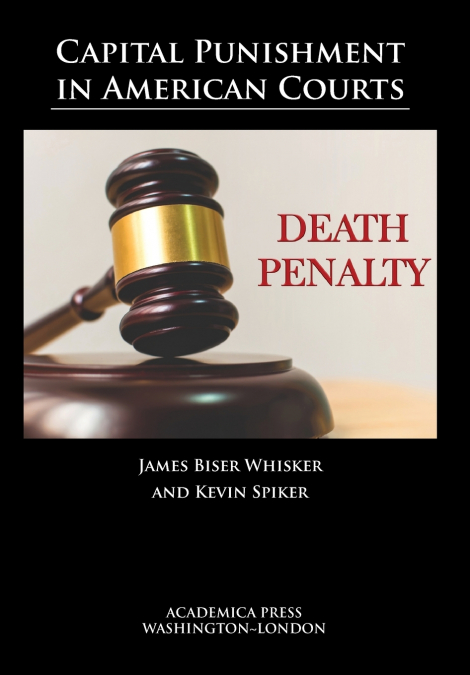
  • Capital punishment in American courts
    James Biser Whisker / Kevin Spiker
    In the 400 years since the first known execution was carried out for treason in Virginia, American jurisdictions have debated both the appropriateness and methods of capital punishment. Over that time, courts have placed varying restrictions on its application, excluding categories of citizens (for example the insane or the underaged) and evaluating and excluding methods of exe...