

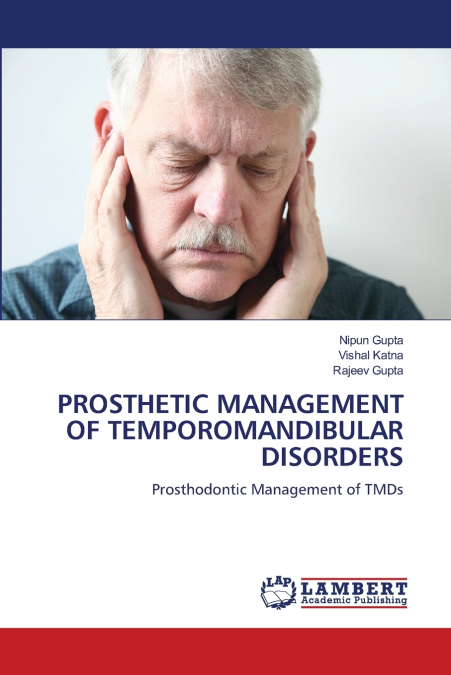
Nipun Gupta / Rajeev Gupta / Vishal Katna
 Librería Samer Atenea
 Kálamo Books
 Librería Elías (Asturias)
 Librería Kolima (Madrid)
 Librería Proteo (Málaga)
The temporomandibular joint (TMJ) is a specialised ginglymoarthrodial synovial joint that permits rotational and translational movements essential for mastication, speech, and swallowing. It consists of the mandibular condyle, temporal bone, fibrocartilaginous articular disc, synovial membrane, capsule, and supporting ligaments, functioning as a coordinated bicondylar unit. The joint undergoes continuous developmental and adaptive changes throughout life, while synovial fluid and masticatory muscles maintain normal biomechanics. Temporomandibular disorders (TMDs) are multifactorial conditions involving the TMJ, masticatory muscles, and associated structures, presenting with pain, joint sounds, restricted mandibular movement, and functional impairment. Current evidence highlights psychosocial, behavioural, neuromuscular, hormonal, traumatic, and parafunctional factors as major contributors. Diagnosis is based on detailed history, clinical examination, and imaging when required. Management primarily involves conservative, evidence-based therapies, with prosthodontic rehabilitation aimed at restoring function, comfort, stability, and long-term oral health.





