Property Rights and Poverty

Property Rights and Poverty

Property Rights and Poverty

Thomas A. Horne / Thomas AHorne

64,10 €
IVA incluido
Disponible
Editorial:
Longleaf on behalf of Univ of N. Carolina Press
Año de edición:
2011
ISBN:
9780807857342
64,10 €
IVA incluido
Disponible

Selecciona una librería:

  • Librería Samer Atenea
  • Librería Aciertas (Toledo)
  • Kálamo Books
  • Librería Perelló (Valencia)
  • Librería Elías (Asturias)
  • Donde los libros
  • Librería Kolima (Madrid)
  • Librería Proteo (Málaga)

Focusing primarily on British political thought from the mid-1600s to the mid-1800s, Thomas Horne examines the philosophical links between property rights and welfare rights. He demonstrates that the defense of property did not preclude a rationale for aiding the poor. In doing so, he provides valuable insights into the origins of both classical liberalism and the contemporary welfare state.Horne first considers the writings of Hugo Grotius, the Dutch philosopher and jurist who laid out the terms for the debate over owning property as a natural right. Like later natural law theorists, Grotius was concerned with the question of how God’s grant of the earth to all humanity could be reconciled with the idea of owning private property. Horne continues by surveying the writings of a wide range of political thinkers--John Locke, David Hume, Jeremy Bentham, and many others--in order to follow the progress of the property rights debate in England through the seventeenth, eighteenth, and early nineteenth centuries.According to Horne, virtually every defense of property rights written during this period carried with it a self-limiting feature that took into account the welfare rights of those without property. Thus, while British political thought typically defended individual property rights as consistent with--even demanded by--natural law, it also insisted that all individuals had a right, under some circumstances, to the use of resources necessary for their welfare. The right to exclude and the right to be included were not understood as necessarily contradictory or antagonistic aspects of a just property arrangement. Instead, the problem posed by the tradition of property theory presented here was how to recognize both property rights and welfare rights in a single legal code.Originally published in 1990.A UNC Press Enduring Edition -- UNC Press Enduring Editions use the latest in digital technology to make available again books from our distinguished backlist that were previously out of print. These editions are published unaltered from the original, and are presented in affordable paperback formats, bringing readers both historical and cultural value.
Artículos relacionados

  • Manual for Transfers of Rights of Occupa
    Zebron Steven Gondwe
    In Tanzania, transfers of rights of occupancy frequently encounter procedural problems, and as regards land transfers, existing legal structures are inadequate. Case law in this area remains insufficiently documented, is contradictory, and there is a dearth of adequate information to guide practitioners through existing precedents. By way of response to these limiations, this m...
    Disponible

    59,32 €

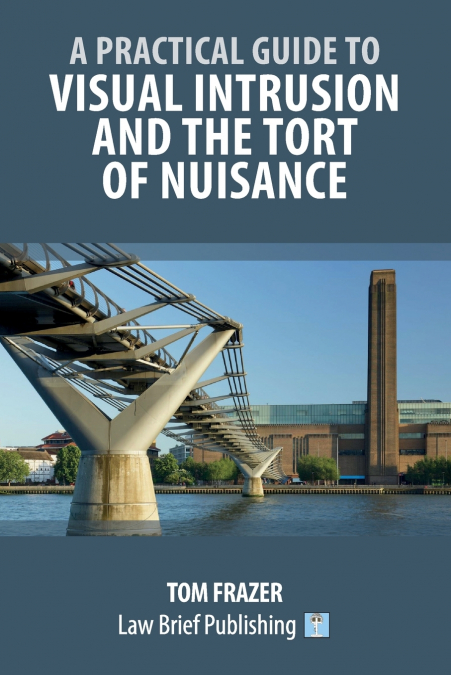
  • A Practical Guide to Visual Intrusion and the Tort of Nuisance
    Tom Frazer
    Following the Supreme Court’s landmark decision in Fearn v Board of Trustees of the Tate Gallery, ’visual intrusion’ is now established as an act that can give rise to liability in the tort of nuisance. The facts of that case, in which the gallery’s use of its viewing platform was found to interfere with the property rights of its residential neighbours, are unlikely to reoccur...
    Disponible

    97,24 €

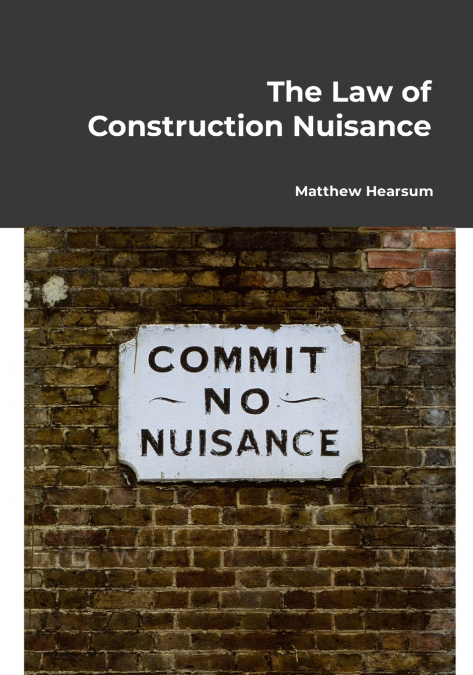
  • The Law of Construction Nuisance
    Matthew Hearsum
    Construction works are a common cause of disputes between owners of neighbouring land. These disputes range from noise and vibration caused by the works to claims for physical damage arising from withdrawal of support and breach of restrictive covenants prohibiting nuisance or annoyance.The purpose of this book if to bring together, in one volume, the relevant legal principles ...
    Disponible

    54,19 €

  • Commentaries on American Law, Volume IV (in four volumes)
    James Kent
    '''It requires great experience, as well as the command of a perspicuous diction, to frame a law in such clear and precise terms as to secure it from ambiguous expressions, and from all doubt and criticisms upon its meaning.'-James Kent, Commentaries on American Law Volume I (1826)Commentaries on American Law Volume IV (1860) by James Kent is the tenth edition and originally pu...
    Disponible

    35,97 €

  • Property
    Henry E. Smith / Thomas W. Merrill
    The Oxford Introductions to U.S. Law: Property provides both a bird’s eye overview of property law and an introduction to how property law affects larger concerns with individual autonomy, personhood, and economic organization. Written by two authorities on property law, this book gives students of property a coherent account of how property law works, with an emphasis on descr...
    Disponible

    36,59 €

  • Fire Safety Law
    V. Charles Ward
    This book provides building-owners, managers, individual leaseholders, mortgage-lenders, landlords, and anyone involved in the purchase or sale of a flat situated within a multi-occupied block, with practical, yet comprehensive information regarding the subject of fire safety and the associated responsibilities, obligations and rights. ...