Private Religion at Amarna

Private Religion at Amarna

Private Religion at Amarna

Anna Stevens

179,67 €
IVA incluido
Disponible
Editorial:
British Archaeological Reports (Oxford) Ltd
Año de edición:
2006
Materia
Historia antigua: hasta c. 500 e. c.
ISBN:
9781407300009
Páginas:
224
Encuadernación:
Rústica
179,67 €
IVA incluido
Disponible

Selecciona una librería:

  • Librería Samer Atenea
  • Librería Aciertas (Toledo)
  • Kálamo Books
  • Librería Perelló (Valencia)
  • Librería Elías (Asturias)
  • Donde los libros
  • Librería Kolima (Madrid)
  • Librería Proteo (Málaga)

In this study the author approaches the realm of ‘private religion’ in Egypt some 3,300 years ago. The two broad research questions that frame this study are: What was the structure of the private religious landscape at Amarna (Central Egypt, on the Nile), and what were the ideas that shaped this landscape? The starting point is a corpus of objects and structures from settlement remains at one site, Amarna, the location of Egypt’s capital for a brief period (c.350 – 330 BCE) towards the end of the Eighteenth Dynasty. At the height of its occupation, Amarna was the administrative, political and religious centre of Egypt. (Estimates of the city ’s population at this time range between 20,000 and 50,000 people.) This publication is divided into three parts.Part I places the study in context. The history of the Amarna period, the layout of the site and its excavation history are summarized. Part 2 explores the issue of how to define private religion and identify its material remnants: the inventory of the material evidence – objects, architectural emplacements and buildings. It is hoped that the dissemination of this material will assist others researching similar topics, making available unpublished evidence from most of the main phases of excavation at the site. Part 3 explores the design, manufacture and acquisition of the material components of religion, and considers the forms of the conduct in which they were used. Also examined are the transcendental forces involved: the royal family and Aten, and ‘traditional ’ deities and spirits, including private ancestors. Part 3 also considers the shape of the religious cityscape, and the questions of who was participating in religion, and what was done with the material when it was no longer in use. The study concludes with a discussion of the motivating factors that underlay religious conduct, and which open a small window onto the ideas that shaped the religious landscape more broadly.
Artículos relacionados

  • Iron Age Societies in the Severn-Cotswolds
    Tom Moore
    The central theme of this study is an examination of the processes of change in Iron Age social organisation and identity on a regional scale using the Severn-Cotswolds area in England as a case study. It aims to provide a coherent narrative of the period in the region based on the wealth of current data now available, providing a basic storyboard against which future studies c...
    Disponible

    144,57 €

  • Somewhere Beyond The Sea Les îles bretonnes (France)
    The Seminar on the Archaeology of Western France, which focused on the islands of Brittany, was held on 1 April 2014 at the University of Rennes 1. The desire to organize this seminar arose spontaneously from the dynamism which currently animates archaeological research on island spaces of the western seaboard of France. Indeed, the seminar took place during a pivotal period of...
    Disponible

    86,11 €

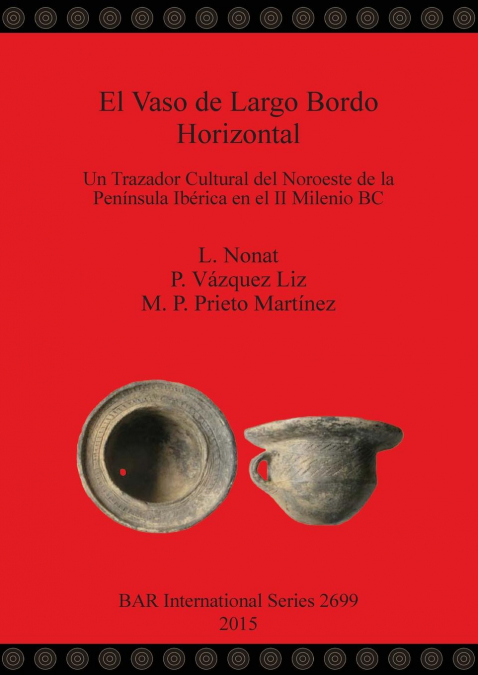
  • El Vaso de Largo Bordo Horizontal
    L. Nonat / LNonat / M. P. Prieto Martínez / MPPrieto Martínez / P. Vázquez Liz / PVázquez Liz
    In this paper the authors study a specific type of pottery from the northwest Iberian Peninsula, known as the Wide Horizontal Rim (WHR) vessel. One of its distinctive aspects is precisely the fact that it is exclusively found in this region, which now comprises the Spanish region of Galicia and northern Portugal, as far south as the River Duero. This type of pottery, of which t...
    Disponible

    115,71 €

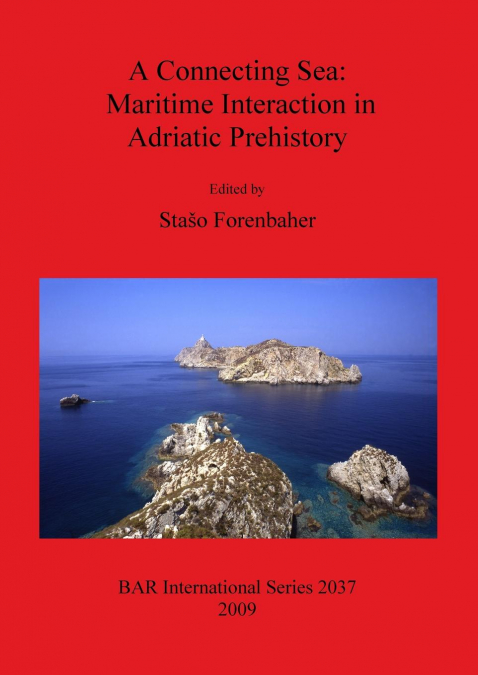
  • A Connecting Sea
    Stašo Forenbaher
    This book includes papers stemming from a session at the EAA conference held in Zadar in September 2007.                          ...
    Disponible

    79,97 €

  • The Roman Pottery Production Site at Wickham Barn, Chiltington, East Sussex
    Chris Butler / Malcolm Lyne
    The excavations undertaken at Chiltington in East Sussex revealed two Roman pottery kilns, as well as remains from prehistory and from medieval period.The kilns are well documented, and all the finds were examined and catalogued. Three phases were identified. The pottery produced on the site indicate a strong New Forest influence. ...
    Disponible

    55,62 €

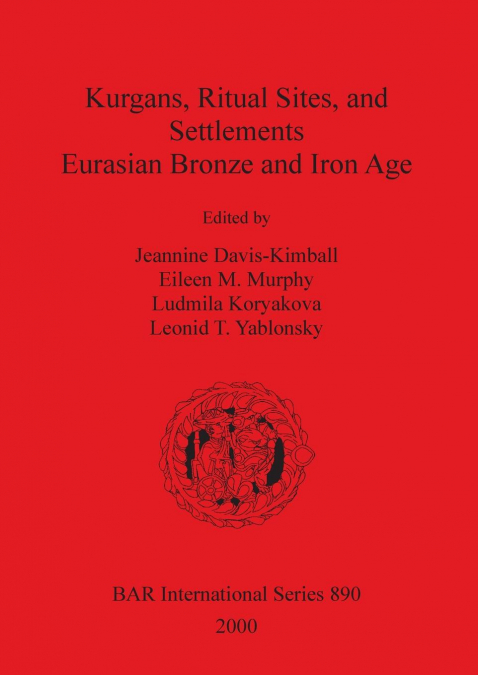
  • Kurgans, Ritual Sites, and Settlements
    Edited by: Jeannine Davis-Kimball, Eileen M. Murphy, Ludmila Koryakova and Leonid T. YablonskyThis richly illustrated volume adds immensely to the small but growing corpus of Eurasian Archaeology published in the English language. Comprised of thirty articles, the authors have focused on the Bronze Age, continuing to include the first millennium BC Early Iron Age, with a termin...
    Disponible

    158,26 €