Preventing Conflict in the Post-Communist World

Preventing Conflict in the Post-Communist World


38,04 €
IVA incluido
Disponible
Editorial:
Bloomsbury Publishing plc
Año de edición:
1995
Materia
Diplomacia
ISBN:
9780815713852
38,04 €
IVA incluido
Disponible

Selecciona una librería:

  • Librería Samer Atenea
  • Librería Aciertas (Toledo)
  • Kálamo Books
  • Librería Perelló (Valencia)
  • Librería Elías (Asturias)
  • Donde los libros
  • Librería Kolima (Madrid)
  • Librería Proteo (Málaga)

'Western politicians, pundits, and the public were wholly unprepared for the violent conflicts erupting in eastern and central Europe and the former Soviet Union after the end of the Cold War. The governments emerging from communism lack both the authoritarian control to suppress domestic differences and the democratic power to manage them.Old conflicts resurfaced and new ones were kindled in virulent form from Bosnia to Chechnya. The stability of governments and the status quo of borders have been thrown into question. Actual and threatened disintegration of states in the area is widespread. No reference points have emerged to replace the cold war paradigm. Nor is there a way of knowing which conflicts can be contained within accepted borders and which may spill over. The prospect not only of widening conflict, but also of new precedents challenging old certainties of international life, causes deep concern in western Europe and the United States.Europe has many experienced international organizations under whose umbrella states organize to achieve common purposes. This book asks how they have performed that function. How are these organizations attempting to deal with the many forms of internal conflict that are both the cause and the result of the end of communism and the East-West confrontation? Despite significant organizational and financial resources, the results have been meager. The authors show how difficult it is to achieve effective joint action on a sustained basis. They contend that a concerted effort to discover how to achieve joint action is the necessary next step in mobilizing international organizations for preventing ethno-national conflict.In addition to the editors, the contributors are Diana Chigas, Jarat Chopra, Michael W. Doyle, Keitha Sapsin Fine, David S. Huntington, Christophe Kamp, Jean E. Manas, Elizabeth McClintock, John Pinder, Wolfgang H. Reinicke, Reinhardt Rummel, Melanie H. Stein, Shashi Tharoor, Thomas'

Artículos relacionados

  • How Statesmen Think
    Robert Jervis
    Robert Jervis has been a pioneering leader in the study of the psychology of international politics for more than four decades. How Statesmen Think presents his most important ideas on the subject from across his career. This collection of revised and updated essays applies, elaborates, and modifies his pathbreaking work. The result is an indispensable book for students and sch...
    Disponible

    43,09 €

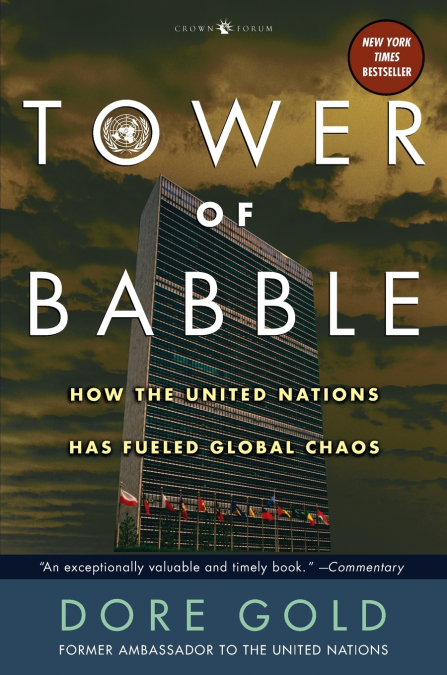
  • Tower of Babble
    Dore Gold
    ...
    Disponible

    16,40 €

  • The Diplomatic Relations of the United States with Haiti, 1776-1891
    Rayford W. Logan
    The relations of the United States with Haiti have been different from American relations with any other nation; they have been vital and at times even dramatic. They climaxed in 1891 when the United States failed to make Haiti lease her Mole St. Nicolas. This failure constitutes an amazing episode in American diplomatic hostory. Recounting the story of Haiti’s struggle for ind...
    Disponible

    76,25 €

  • Diplomacy. the Written Art
    Ozichi Alimole
    The author seeks to redefine written diplomacy in its true meaning: the art of learning to write in a particular kind of language and mood. He seeks to refocus attention on the significance of diplomatic communication as one of the defining characteristics of diplomacy. A wide variety of correspondence encountered by diplomats is explained, with an analysis of each form of corr...
    Disponible

    57,94 €

  • West Africa’s Trouble Spots and the Impe
    Osita Agbu
    This monograph highlights the necessity for taking preventive measures in the form of peace-building as a sustainable and long-term solution to conflicts in West Africa, with a special focus on the Mano River Union countries. Apart from the Mano River Union countries, efforts at resolving other conflicts in say, Guinea Bissau, Senegal, Côte d’Ivoire and Nigeria, have suffered f...
    Disponible

    58,17 €

  • The Evolution Of UAE Foreign Policy
    GEW Intelligence Unit
    The research background of this book focuses on the historical evolution and strategic development of the United Arab Emirates’ (UAE) foreign policy from its formation to the present day.u2029The research methodology proposed in this book includes a historical analysis of the UAE’s foreign policy, examining key events and strategies that have shaped its current principles and g...
    Disponible

    28,96 €