
Inicio > Humanidades > Arqueología > Prehistoria Reciente y territorio en la Depresión de Vera y el río Almanzora (Almería)
Prehistoria Reciente y territorio en la Depresión de Vera y el río Almanzora (Almería)

Prehistoria Reciente y territorio en la Depresión de Vera y el río Almanzora (Almería)

Prehistoria Reciente y territorio en la Depresión de Vera y el río Almanzora (Almería)

Francisco Pérez Caamaño

140,06 €
IVA incluido
Disponible
Editorial:
British Archaeological Reports (Oxford) Ltd
Año de edición:
2019
Materia
Arqueología
ISBN:
9781407316949
140,06 €
IVA incluido
Disponible

Selecciona una librería:

  • Librería Samer Atenea
  • Librería Aciertas (Toledo)
  • Kálamo Books
  • Librería Perelló (Valencia)
  • Librería Elías (Asturias)
  • Donde los libros
  • Librería Kolima (Madrid)
  • Librería Proteo (Málaga)

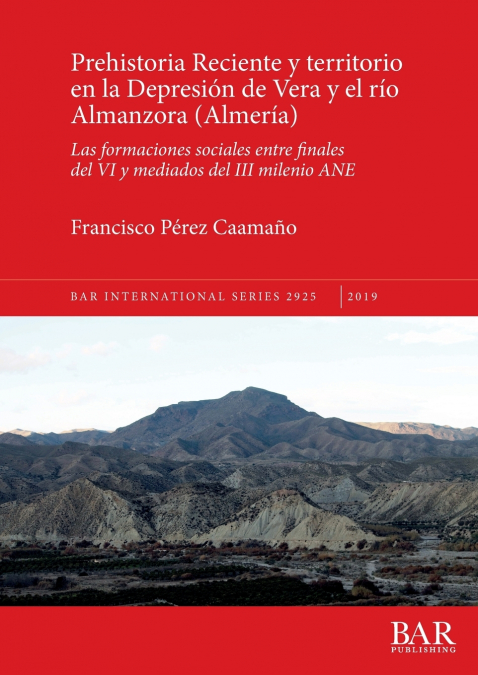
El libro propone, basado en el materialismo histórico, la existencia y desarrollo de un modo de producción comunal como funcionamiento básico entre las formaciones sociales que poblaron el territorio de la Depresión de Vera y la Cuenca del río Almanzora (Almería) entre finales del VI y mediados del III milenio ANE. El modo de producción comunal se combinó con una organización social tribal para extenderse sobre el territorio. La reproducción social se organizó a partir de comunidades domésticas donde las relaciones parentales regulaban la fuerza de trabajo y el acceso al producto a partir de una reciprocidad generalizada que mantenía como norma básica la igualdad en la participación en el trabajo y el acceso a lo producido. Sin embargo, la progresiva fragmentación del sujeto colectivo generará una extensión de la fuerza de trabajo donde la reciprocidad irá pasando de generalizada a negativa, restringida cada vez más a grupos domésticos organizados a partir de lo que denominamos unidades territoriales A comienzos del III milenio ANE los mecanismos de fragmentación social parecen iniciar un colapso y algunas comunidades domésticas parecen desarrollarse por encima de otras, con lo que la degradación del modo de producción comunal se hace evidente, y con ella la conflictividad social.This book, with a theoretical grounding in historical materialism, proposes the existence and development of a communal mode of production as a basic element of the social structures of the groups populating the territory of la Depresión de Vera and la Cuenca del río Almanzora (Almería) between the end of the 6th and the middle of the 3rd millennium BCE. This mode of production, combined with a tribal social organisation, extended itself over the territory. Cultural reproduction was organised through domestic communities in which parental relationships regulated the labour force and access to products via a generalised reciprocity. This ensured, as a basic rule, equality of participation in work and access to what that work produced. However, the progressive fragmentation of the collective subject would generate an extension of the labour force, in which that reciprocity would turn from generalised to negative, and increasingly be restricted to domestic groups organised into what we would call territorial units. At the beginning of the 3rd millennium BCE, social fragmentation mechanisms seem to initiate a collapse and some domestic communities seem to develop over and above others, so that the degradation of the communal mode of production becomes evident, together with accompanying social unrest.
Artículos relacionados

  • PHAROS
    Branko Kirigin
    This is the first detailed study in English of the Greek settlement of Pharos (Stari Grad) on the Croatian island of Hvar. This book presents life in Stari Grad (a Parian colony of the 4th c BC) and its nearby vicinity in the period occurring more than two millennia ago. The author employs methods used in prehistoric and classical archaeology, as well as data known from written...
    Disponible

    90,79 €

  • Paleolithic Zooarchaeology in Practice
    Understanding Paleolithic animal exploitation requires a multifaceted approach. Inferences may derive from research on paleoenvironments and taphonomy, the development of new methods for interpreting seasonality patterns, and ethnoarchaeological observations. A full understanding of Paleolithic economies also requires a multiregional perspective. This volume brings together a g...
    Disponible

    55,20 €

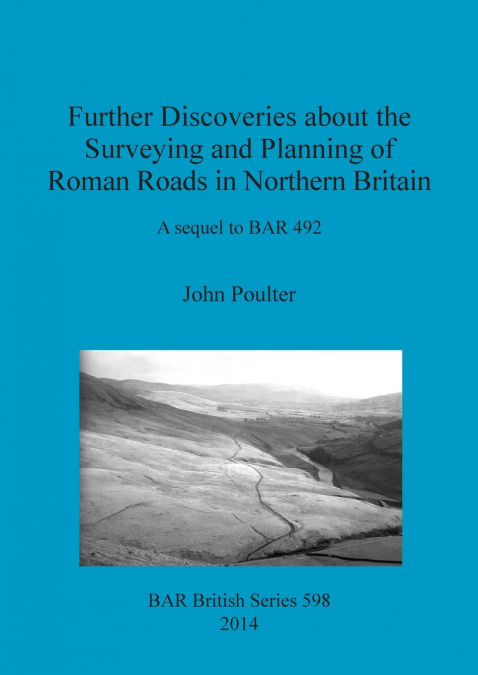
  • Further Discoveries about the Surveying and Planning of Roman Roads in Northern Britain
    John Poulter
    The research reported in this monograph follows on directly from the findings that were reported in BAR 492, in which, among many other discoveries, the author recognised that the courses of both Roman Dere Street and Hadrian’s Wall had been underpinned by frameworks of long-distance alignments. Stimulated by the detection of several more of these alignments across northern Eng...
    Disponible

    65,21 €

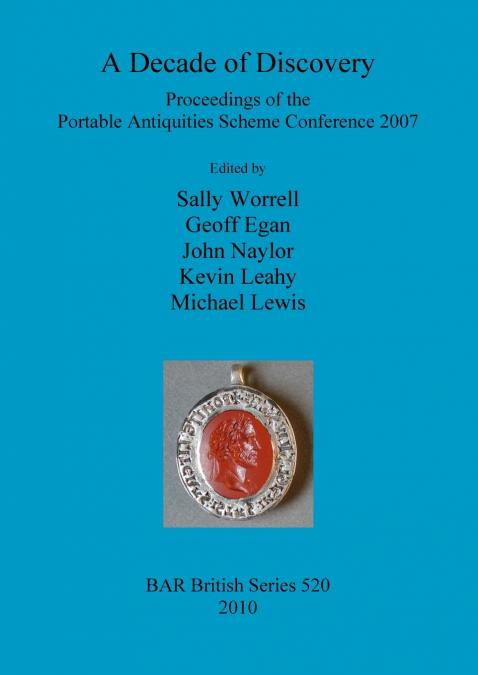
  • A Decade of Discovery
    Edited by Sally Worrell, Geoff Egan, John Naylor, Kevin Leahy and Michael Lewis.In 2007 the Portable Antiquities Scheme (PAS) marked its tenth anniversary by holding a conference at which speakers, both from within the Scheme and outside gave a series of papers that demonstrated the research potential of recording finds of archaeological objects made by members of the public. T...
    Disponible

    117,84 €

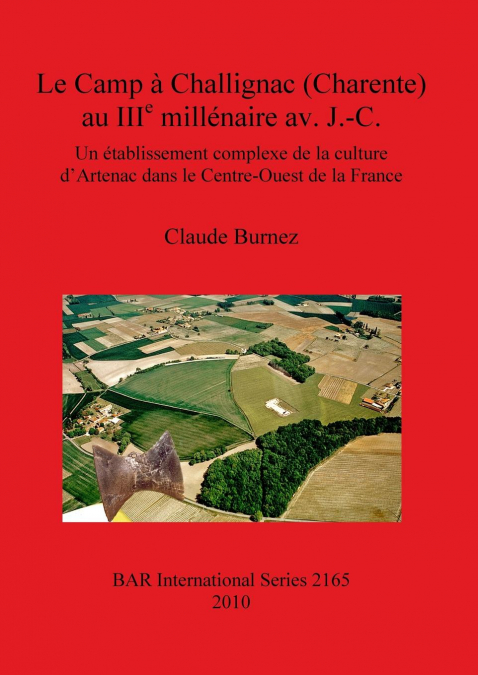
  • Le Camp à Challignac (Charente) au IIIe millénaire av. J.-C.
    Claude Burnez
    Un établissement complexe de la culture d’Artenac dans le Centre-Ouest de la FranceThis fortified enclosure has been known since the middle of the 19th century, but the size and the state of preservation (with the height of the rampart estimated optimistically at 10 metres!) suggested an attribution to the Gallo-Romans or a 'Camp des Anglais'. Extensive woodland covered...
    Disponible

    238,69 €

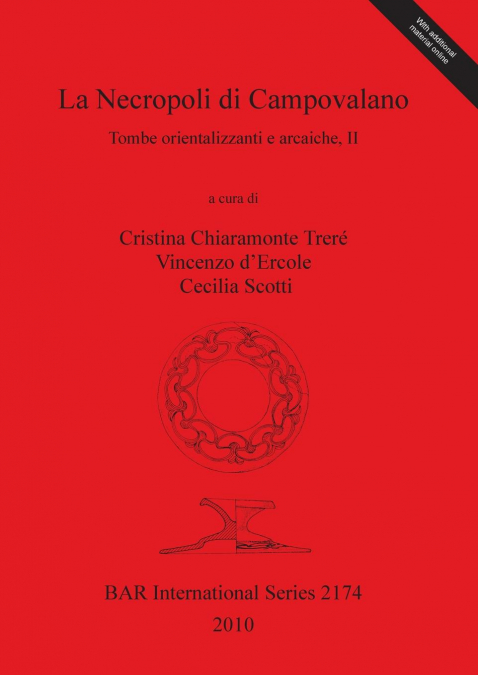
  • La Necropoli di Campovalano
    This volume, investigating the necropolis and sequences of 607 tombs, completes the publication of the site of Campovalano (predominately Late BA to 5th BC) in the region of Teramo, the northernmost province of Abruzzo, Italy (see BAR 1177, 2003). The finds include important oriental style archaic material.Contributions from: Giorgio Baratti, Carla Buoite, Cristina Chiaramonte ...
    Disponible

    220,16 €