Inicio > Sociedad y ciencias sociales > Sociedad y cultura: general > Grupos sociales > Estudios de género, grupos de género > Preferenze delle ostetriche rispetto alle perturienti in merito alle posizioni del parto
Preferenze delle ostetriche rispetto alle perturienti in merito alle posizioni del parto

Preferenze delle ostetriche rispetto alle perturienti in merito alle posizioni del parto

Lydia Mwanzia

54,49 €
IVA incluido
Consulta disponibilidad
Editorial:
KS OmniScriptum Publishing
Año de edición:
2023
Materia
Estudios de género, grupos de género
ISBN:
9786206549161

Selecciona una librería:

  • Librería Desdémona
  • Librería Samer Atenea
  • Librería Aciertas (Toledo)
  • Kálamo Books
  • Librería Perelló (Valencia)
  • Librería Elías (Asturias)
  • Donde los libros
  • Librería Kolima (Madrid)
  • Librería Proteo (Málaga)

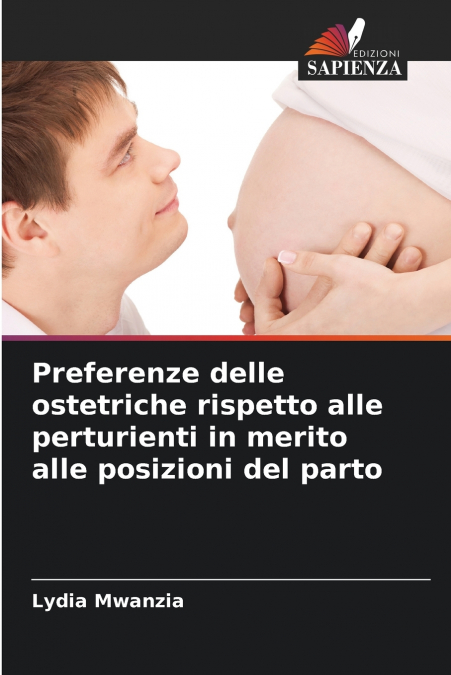
L’esperienza della nascita umana è uno degli eventi più significativi della vita di una donna che porta un figlio. Il parto naturale è considerato un diritto della donna e sta diventando sempre più un argomento di interesse durante i corsi pre-parto. La posizione assunta dalla partoriente è quindi un aspetto importante del processo di parto che è stato oggetto di molte discussioni. Le posizioni del parto o della fase di spinta del travaglio e il relativo esito del travaglio sono stati oggetto di un notevole dibattito negli ultimi due decenni. In tutto il mondo, le donne hanno utilizzato posizioni supine e non supine durante il parto. Le donne possono scegliere liberamente il luogo del parto e, in una certa misura, l’assistente al parto, ma il loro ruolo nella scelta consapevole della posizione del parto non è stato chiaramente definito. Nella maggior parte delle società non industrializzate, le posizioni non supine sono ancora preferite dalle donne, con l’inginocchiamento e l’accovacciamento come posizioni di parto preferite durante i parti tradizionali in casa. Tuttavia, nei Paesi africani, compresa l’Africa orientale, le posizioni supine sono ancora utilizzate in modo dominante nella pratica ostetrica durante i parti sia in casa che in ospedale.

Artículos relacionados

  • Contemporary Global Perspectives on Gender Economics
    Susanne Moore
    The rise of women in the workforce has led to many campaigns for wage equality and the impartial treatment of both sexes as they pursue careers previously designated as either a man’s or a woman’s job. The impact of these campaigns has been felt, but a sense of gender stereotyping still affects not only the social and cultural well-being of the modern organization, but the driv...
    Disponible

    256,04 €

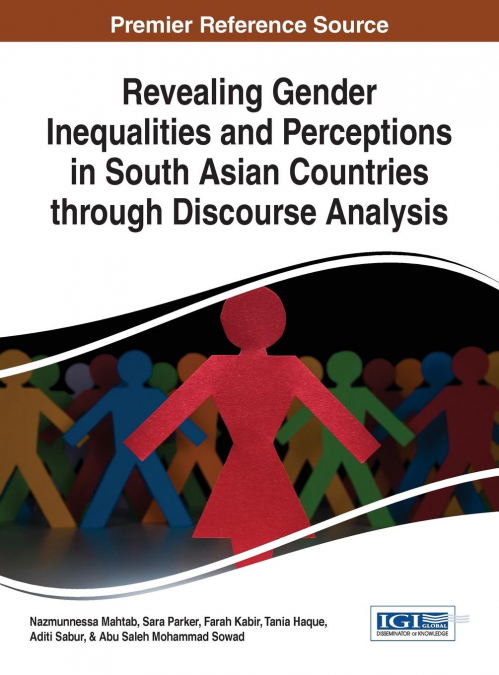
  • Revealing Gender Inequalities and Perceptions in South Asian Countries through Discourse Analysis
    Misconceptions regarding gender identity and issues of inequality that women around the world face have become a predominant concern for not only the citizens impacted, but global political leaders, administrators, and human rights activists. Revealing Gender Inequalities and Perceptions in South Asian Countries through Discourse Analysis explores how an analysis of language us...
    Disponible

    242,72 €

  • Handen som gungar vaggan
    Jonas Nilsson
    'Den feministiska rörelsen lärde kvinnor att se sig själva som offer för förtryckande patriarkat... En självpåtagen offerroll är inte ett recept för lycka', menar den konservativa aktivisten och författaren Phyllis Schalfy och denna tes är genomgående även i denna debattbok. Författaren beskriver här hur kvinnor biologiskt, socialt och evolutionärt fungerar - något som den agen...
  • Language and Gender in the Military
    Edith A. Disler
    In the thirty-year history of the study of language and gender, theory and application have branched incrementally like the reaches of a family tree. The study of language and gender has progressed from an eye-opening review of differences between the 'language' of women and men to observations that language served to preserve 'domination' of one sex over another and on to a cr...
  • Online Intersex Communities
    Brian Still
    Once referred to as hermaphrodites, intersex persons are born with a sexual anatomy or physiology inconsistent with social expectations of what constitutes a normal male or female. Of course, this definition of intersexuality, like all definitions, is rhetorically charged. In other words, intersexuality does not have meaning in and of itself that can be separated from the cultu...
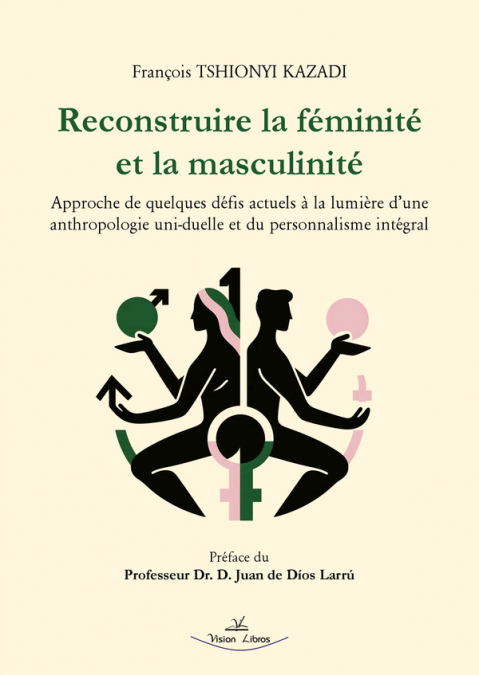
  • Reconstruire la Féminité et la Masculinité
    François Tshionyi Kazadi
    Qui aurait raison d’imaginer une humanité exclusivement masculine ou exclusivement féminine ? Pareille tendance serait contre-nature et contredirait à coup sûr l’optimisme originaire selon lequel le Créateur, après la création de la femme, aux côtés de l’homme, vit que tout était très bon. Le débat contemporain sur l’identité humaine ou l’identité sexuelle est tellement provoca...

Otros libros del autor

  • Hebammen vs. Geburtshelferinnen - Präferenzen bei der Geburtsposition
    Lydia Mwanzia
    Die menschliche Geburt ist eines der wichtigsten Ereignisse im Leben einer Frau, die ein Kind zur Welt bringt. Die natürliche Geburt wird als das Recht der Frau angesehen und ist zunehmend ein Thema in Geburtsvorbereitungskursen. Die Position, die die Gebärende einnimmt, ist daher ein wichtiger Aspekt des Geburtsvorgangs, der viel diskutiert wird. Die Geburts- oder Presswehenpo...
  • Préférences des sages-femmes et des patientes en matière de positions d’accouchement
    Lydia Mwanzia
    L’expérience de la naissance est l’un des événements les plus importants de la vie d’une femme qui porte un enfant. L’accouchement naturel est considéré comme un droit de la femme et devient de plus en plus un sujet d’intérêt lors des cours de préparation à l’accouchement. La position adoptée par la parturiente est donc un aspect important du processus d’accouchement qui a fait...
  • Preferências das parteiras em relação às posições de parto das parturientes
    Lydia Mwanzia
    A experiência do nascimento humano é um dos acontecimentos mais significativos da vida de uma mulher grávida. O parto natural tem sido visto como um direito da mulher e está a tornar-se cada vez mais um tópico de interesse durante as aulas pré-natais. A posição assumida pela parturiente é, portanto, um aspeto importante do processo de nascimento que tem sido objeto de muita dis...