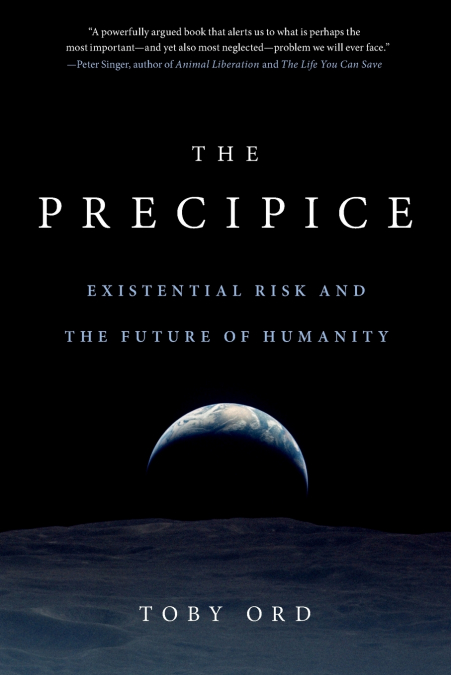

Precipice

Precipice

Toby Ord

16,52 €
IVA incluido
Disponible
Editorial:
Hachette Book Group
Año de edición:
2021
Materia
Ética y filosofía moral
ISBN:
9780316484923
16,52 €
IVA incluido
Disponible

Selecciona una librería:

  • Librería Samer Atenea

  • Kálamo Books
  • Librería Elías (Asturias)
  • Librería Kolima (Madrid)
  • Librería Proteo (Málaga)

This urgent and eye-opening book makes the case that protecting humanity’s future is the central challenge of our time. If all goes well, human history is just beginning. Our species could survive for billions of years - enough time to end disease, poverty, and injustice, and to flourish in ways unimaginable today. But this vast future is at risk. With the advent of nuclear weapons, humanity entered a new age, where we face existential catastrophes - those from which we could never come back. Since then, these dangers have only multiplied, from climate change to engineered pathogens and artificial intelligence. If we do not act fast to reach a place of safety, it will soon be too late. Drawing on over a decade of research, The Precipice explores the cutting-edge science behind the risks we face. It puts them in the context of the greater story of humanity: showing how ending these risks is among the most pressing moral issues of our time. And it points the way forward, to the actions and strategies that can safeguard humanity. An Oxford philosopher committed to putting ideas into action, Toby Ord has advised the US National Intelligence Council, the UK Prime Minister’s Office, and the World Bank on the biggest questions facing humanity. In The Precipice, he offers a startling reassessment of human history, the future we are failing to protect, and the steps we must take to ensure that our generation is not the last. 'A book that seems made for the present moment.' --New Yorker
Artículos relacionados

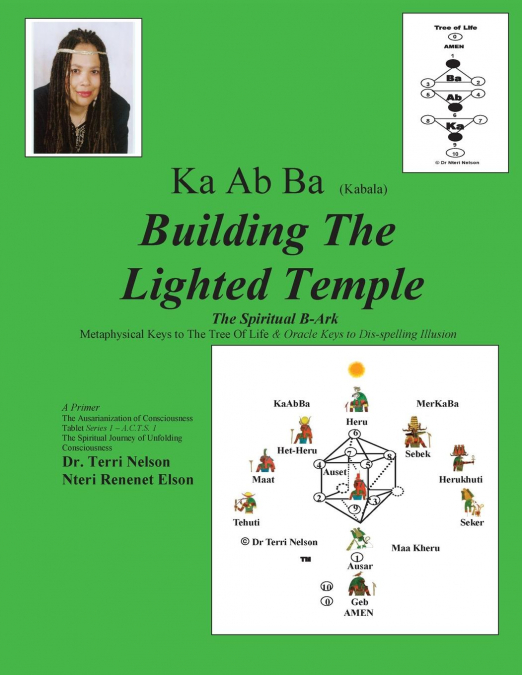
  • Ka Ab Ba Building The Lighted Temple
    Dr Terri R. Nelson / Dr Terri RNelson
    The book KaAbBa Building The Lighted Temple/Metaphysical Keys to the Tree of Life draws a circle that is inclusive of the Afrikan origin of the Ancient Kemetic/Egyptian wisdom. It reveals the undeniable root and link of Ancient Africa to all the religious systems that would develop worldwide. This book is explosive in its power to convey the meaning of KaAbBa, the Medu Neter  (...
    Disponible

    37,41 €

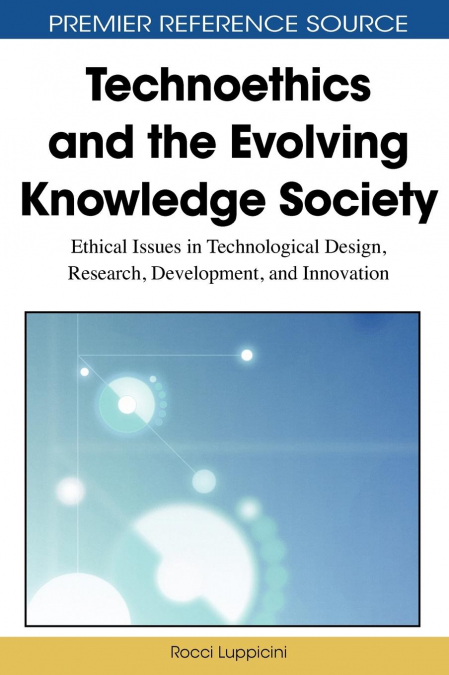
  • Technoethics and the Evolving Knowledge Society
    Rocci Luppicini
    Recently, there has been a major push to rediscover the ethical dimension of technology across the sciences, social sciences, and humanities. Technoethics and the Evolving Knowledge Society: Ethical Issues in Technological Design, Research, Development, and Innovation examines human processes and practices connected to technology embedded within social, political, and moral sph...
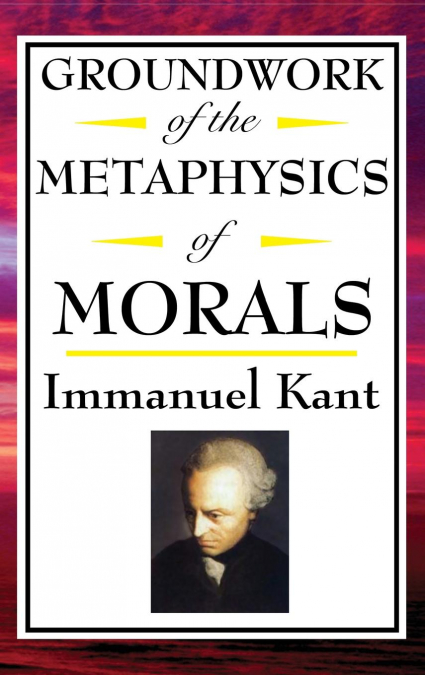
  • Kant
    Immanuel Kant
    Kant’s Groundwork of the Metaphysics of Morals is one of the most important works in modern moral philosophy. It belongs beside Plato, Aristotle, Machiavelli, and Hobbes. Here Kant sets out to articulate and defend the Categorical Imperative - the fundamental principle that underlies moral reasoning - and to lay the foundation for a comprehensive account of justice and human vi...
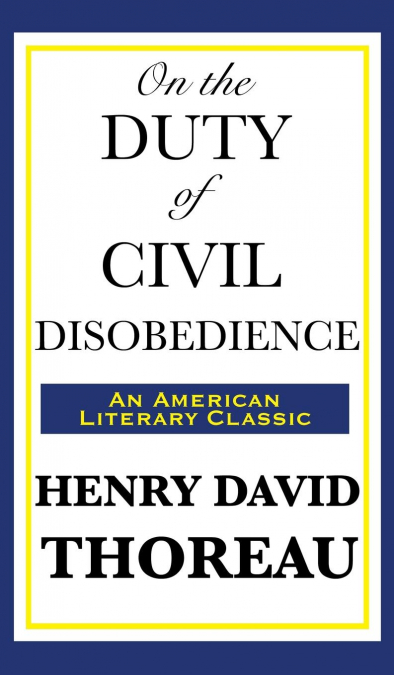
  • On the Duty of Civil Disobedience
    HENRY DAVID THOREAU
    Civil Disobedience argues that citizens should not permit their governments to overrule their consciences, and that they have a duty to avoid allowing their acquiescence to enable the government to make them the agents of injustice. Thoreau was motivated in part by his disgust with slavery and the Mexican-American War, but the sentiments he expresses here are just as pertinent ...
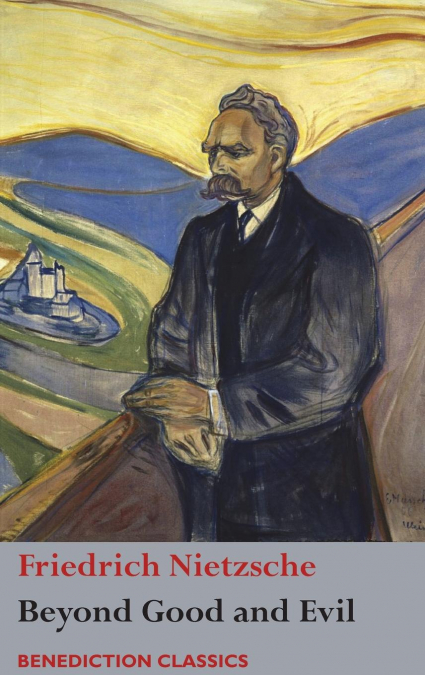
  • Beyond Good and Evil
    Friedrich Nietzsche
    Nietzsche, though primarily a philosopher, wrote widely on art, philology, history, religion, tragedy, culture, and science.  In 1886, at the height of his powers, he published Beyond Good and Evil.  Here he examines much of the best of human thought--dogmatic philosophy, Judeo-Christian morality, science and democracy – and finds it lacking.  Rejecting “slave-morality” he pres...
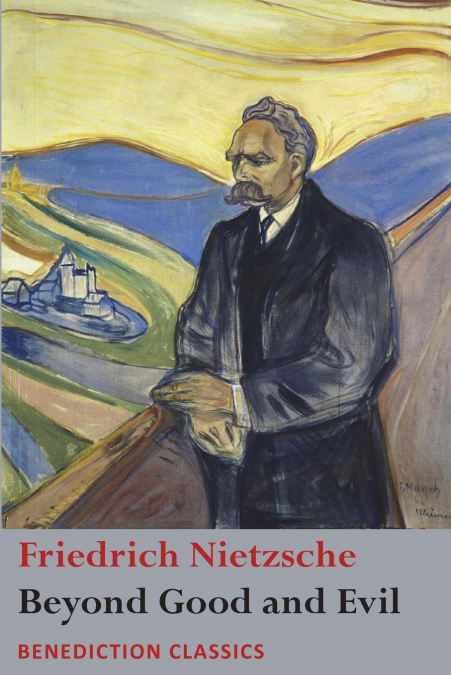
  • Beyond Good and Evil
    Friedrich Nietzsche
    Nietzsche, though primarily a philosopher, wrote widely on art, philology, history, religion, tragedy, culture, and science.  In 1886, at the height of his powers, he published Beyond Good and Evil.  Here he examines much of the best of human thought--dogmatic philosophy, Judeo-Christian morality, science and democracy – and finds it lacking.  Rejecting “slave-morality” he pres...
    Disponible

    9,99 €