Pragmatism

Pragmatism

William James

28,34 €
IVA incluido
Consulta disponibilidad
Editorial:
Bibliotech Press
Año de edición:
2018
Materia
Política y gobierno
ISBN:
9781618953629

Selecciona una librería:

  • Librería Samer Atenea
  • Librería Aciertas (Toledo)
  • Kálamo Books
  • Librería Perelló (Valencia)
  • Librería Elías (Asturias)
  • Donde los libros
  • Librería Kolima (Madrid)
  • Librería Proteo (Málaga)

Pragmatism was a philosophical tradition that originated in the United States around 1870. The most important of the ‘classical pragmatists’ were Charles Sanders Peirce (1839–1914), William James (1842–1910) and John Dewey (1859–1952). The influence of pragmatism declined during the first two thirds of the twentieth century, but it has undergone a revival since the 1970s with philosophers being increasingly willing to use the writings and ideas of the classical pragmatists, and also a number of thinkers, such as Richard Rorty, Hilary Putnam and Robert Brandom developing philosophical views that represent later stages of the pragmatist tradition. The core of pragmatism was the pragmatist maxim, a rule for clarifying the contents of hypotheses by tracing their ‘practical consequences’. In the work of Peirce and James, the most influential application of the pragmatist maxim was to the concept of truth. But the pragmatists have also tended to share a distinctive epistemological outlook, a fallibilist anti-Cartesian approach to the norms that govern inquiry.For much of the twentieth century, pragmatism was largely in eclipse. Few philosophers were familiar with the works of classical pragmatists such as Charles Sanders Pierce and William James, and pragmatist ideas were not at the centre of debate. John Dewey, who had been a dominant philosophical figure in the 1920s, was no longer a central figure. Analytical philosophers and their students had a central role in philosophy. It was not until the 1970s that interest in the writings of the Pragmatists became widespread and pragmatist ideas were recognized as able to make a major contribution to philosophy.
Artículos relacionados

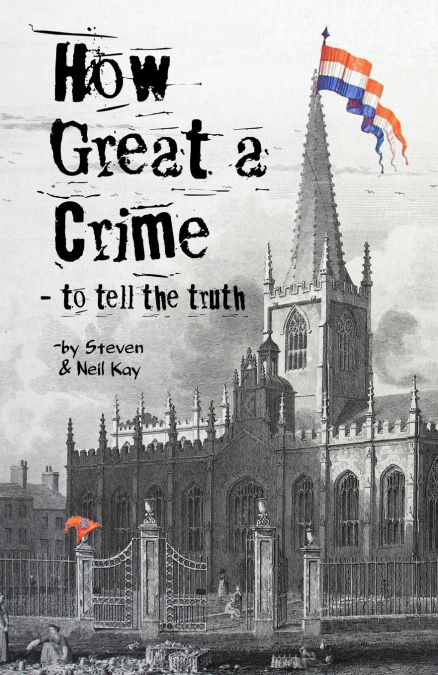
  • How Great a Crime - to tell the truth
    Neil Kay / Steven Kay
    Joseph Gales was one of the all-time great Sheffielders – forget Joe Cocker, Jessica Ennis-Hill, Sean Bean or Michael Palin. These are all minnows compared to Joseph Gales – and their stories are boring besides that of the Galeses. The Galeses story has been forgotten and has not been brought together in one place before – it is not just something dredged up from history – an i...
    Disponible

    10,33 €

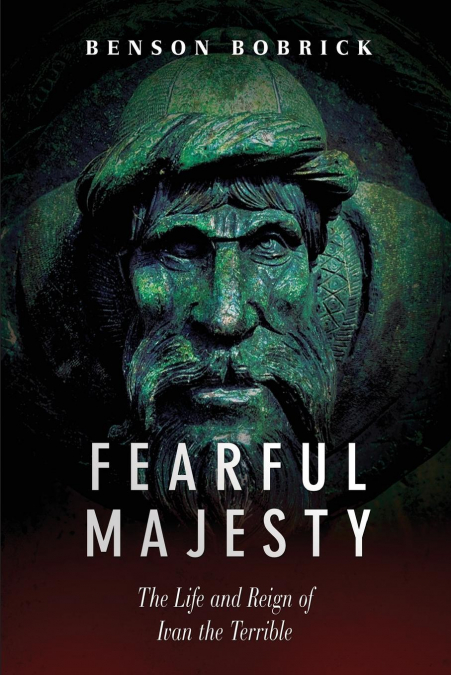
  • Fearful Majesty
    Benson Bobrick
    Ivan the Terrible - the name evokes the legend of a cruel and dangerously insane tyrant. Fearful Majesty explores that legend and exposes the man, his nature, and his time.This acclaimed biography of one of Russia’s most important and tyrannical rulers is not only a rich, readable biography, it is also surprisingly timely, revealing how many of the issues Russia faces today hav...
    Disponible

    19,27 €

  • Economic Optimization of Innovation & Risk
    Robert Shuler
    A Theory of Crash Rate for Private & Public Projects with Critical or non-Critical systems.Analyzing & managing risk has been a quest for 5000 years, and is essential to everything from water supplies, finance, and agriculture to computers and space travel. At last there is a quantitative theory and a simple equation that allows you to: - choose your failure rate - get there...
    Disponible

    13,02 €

  • The System
    Lincoln Steffens
    The 'muckraker' Lincoln Steffens dug deep into business criminality and political corruption in a powerful series of articles written for McClure's magazine. Establishment newspapers and 'System' politicians dismissed his work as just another example of the decrepit modern journalism that could never pass for genuine writing. But Steffens' dogged quest for truth and justice set...
    Disponible

    23,66 €

  • Digital Activism in Asia Reader
    The digital turn might as well be marked as an Asian turn. From flash-mobs in Taiwan to feminist mobilisations in India, from hybrid media strategies of Syrian activists to cultural protests in Thailand, we see the emergence of political acts that transform the citizen from being a beneficiary of change to becoming an agent of change. In co-shaping these changes, what the digit...
    Disponible

    22,19 €

  • The New Freedom
    Woodrow Wilson
    In 1912, Woodrow Wilson was the Democratic nominee for President of the United States. He campaigned against the Republican incumbent, William Howard Taft, and Taft’s predecessor, Theodore Roosevelt, who had split off from the Republican Party to form his own Progressive, or Bull Moose, Party. Much of the campaign focused on the US economy, particularly the candidates’ views of...
    Disponible

    8,67 €

Otros libros del autor

  • The Varieties of Religious Experience
    William James
    First published in 1902, “The Varieties of Religious Experience” is William James’ philosophical and psychological examination of the nature of religion in human civilization. Based on James’s own Gifford Lectures given at the University of Edinburgh in Scotland between 1901 and 1902, James argues that “Scientific theories are organically conditioned just as much as religious e...
    Disponible

    15,59 €

  • Pragmatism
    William James
    Pragmatism (1907) by William James presents a philosophy that judges ideas by their practical consequences rather than by abstract principles. James argues that the meaning and truth of any belief lie in how it works in real life-whether it helps us navigate experience, solve problems, or make sense of the world.He challenges rigid, absolutist systems of philosophy and defends ...
    Disponible

    14,18 €

  • Pragmatism
    William James
    Pragmatism (1907) by William James presents a philosophy that judges ideas by their practical consequences rather than by abstract principles. James argues that the meaning and truth of any belief lie in how it works in real life-whether it helps us navigate experience, solve problems, or make sense of the world.He challenges rigid, absolutist systems of philosophy and defends ...
  • The Principles of Psychology
    William James
    In The Principles of Psychology, Vol. II, William James continues his masterful inquiry into the workings of the human mind. With depth and clarity, he examines will, belief, attention, and the self-offering a profound synthesis of philosophy and science that remains a cornerstone of psychological thought. ...
    Disponible

    26,72 €

  • The Principles of Psychology
    William James
    In The Principles of Psychology, Vol. I, William James lays the foundation for modern psychology. Blending philosophy and science, he explores consciousness, habit, and emotion with vivid insight and human warmth. A landmark work that reshaped how we understand the mind and the stream of thought itself. ...
    Disponible

    27,98 €

  • A Pluralistic Universe
    William James
    A Pluralistic Universe by William James argues for a reality composed of many interacting, independent perspectives rather than a single, unified whole. James challenges the dominant monistic views of his time, advocating for a more nuanced understanding of experience that embraces the diversity and complexity of the world.James critiques philosophical systems that attempt to r...
    Disponible

    18,80 €