Powering Autonomous Sensors

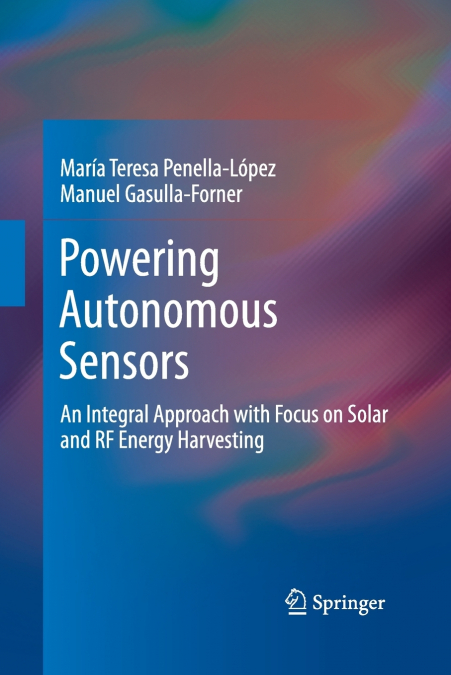
Powering Autonomous Sensors

Manuel Gasulla-Forner / María Teresa Penella-López

134,52 €
IVA incluido
Disponible
Editorial:
Springer Nature B.V.
Año de edición:
2014
ISBN:
9789400793910
134,52 €
IVA incluido
Disponible

Selecciona una librería:

  • Librería Samer Atenea
  • Librería Aciertas (Toledo)
  • Kálamo Books
  • Librería Perelló (Valencia)
  • Librería Elías (Asturias)
  • Donde los libros
  • Librería Kolima (Madrid)
  • Librería Proteo (Málaga)

Autonomous sensors transmit data and power their electronics without using cables. They can be found in e.g. wireless sensor networks (WSNs) or remote acquisition systems. Although primary batteries provide a simple design for powering autonomous sensors, they present several limitations such as limited capacity and power density, and difficulty in predicting their condition and state of charge. An alternative is to extract energy from the ambient (energy harvesting). However, the reduced dimensions of most autonomous sensors lead to a low level of available power from the energy transducer. Thus, efficient methods and circuits to manage and gather the energy are a must. An integral approach for powering autonomous sensors by considering both primary batteries and energy harvesters is presented. Two rather different forms of energy harvesting are also dealt with: optical (or solar) and radiofrequency (RF). Optical energy provides high energy density, especially outdoors, whereas RF remote powering is possibly the most feasible option for autonomous sensors embedded into the soil or within structures. Throughout different chapters, devices such as primary and secondary batteries, supercapacitors, and energy transducers are extensively reviewed. Then, circuits and methods found in the literature used to efficiently extract and gather the energy are presented. Finally, new proposals based on the authors’ own research are analyzed and tested. Every chapter is written to be rather independent, with each incorporating the relevant literature references. Powering Autonomous Sensors is intended for a wide audience working on or interested in the powering of autonomous sensors. Researchers and engineers can find a broad introduction to basic topics in this interesting and emerging area as well as further insights on the topics of solar and RF harvesting and of circuits and methods to maximize the power extracted from energy transducers.
Artículos relacionados

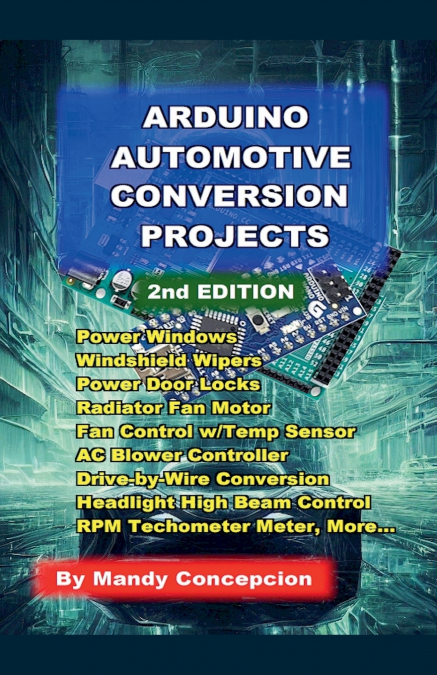
  • Arduino Automotive Conversion Projects
    Mandy Concepcion
    Arduino Automotive Conversion Projects This work has been a labor of love. It is meant to compliment and broaden the working knowledge of the automotive driver/enthusiast and DIY Technician. The idea is to provide the way to perform vehicle conversions for those who want to learn these systems or those that need it. Often times the specific component is discontinued and non-rep...
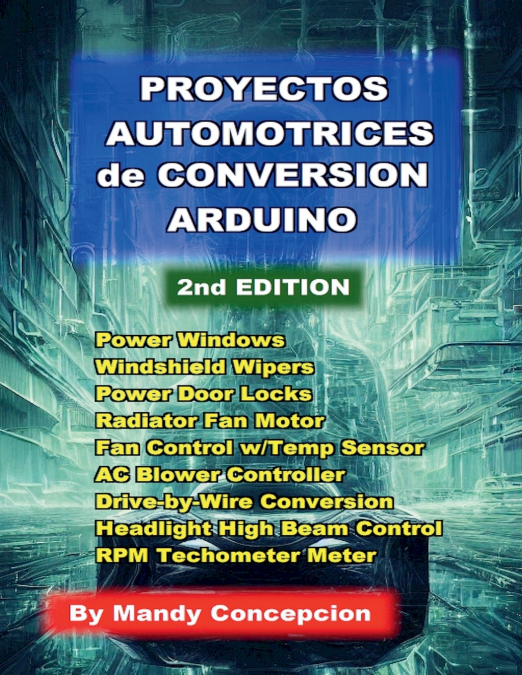
  • Proyectos Automotrices de Conversión Arduino
    Mandy Concepcion
    Este trabajo ha sido una labor de amor. Está destinado a complementar y ampliar el conocimiento práctico del conductor/entusiasta automotriz y del técnico DIY. La idea es proporcionar la manera de realizar conversiones de vehículos para aquellos que quieren aprender estos sistemas o aquellos que lo necesitan. A menudo, el componente específico está descontinuado y no se puede r...
  • Circuit Simulation Methods and Algorithms
    Jan Ogrodzki / Ogrodzki Jan
    ...
  • Electrical Machines
    S. K. Sahdev
    An extensive and easy-to-read guide covering the fundamental concepts of electrical machines, highlighting transformers, motors, generators and magnetic circuits. It provides in-depth discussion on construction, working principles and applications of various electrical machines. The design of transformers, functioning of generators and performance of induction motors are explai...
    Disponible

    137,56 €

  • Proceedings of the 4th International Symposium on New Energy and Electrical Technology
    The book bring together leading experts in the field of energy science and technology to share cutting-edge research and advancements in areas such as renewable energy sources, smart grid technology, and power management solutions. Through these contributions, readers will gain valuable insights into the future of energy technology and be inspired to further their own research ...
  • Electronics for Scientists
    Daniel Santavicca
    Electronics for Scientists provides a practical and concise introduction to electrical circuits, signals, and instrumentation for undergraduate students in the physical sciences ...
    Disponible

    65,52 €

Otros libros del autor

  • Powering Autonomous Sensors
    Manuel Gasulla-Forner / María Teresa Penella-López
    AbstractChapter 1 - IntroductionChapter2 - LoadChapter3 - Ambient Energy SourcesChapter4 - Energy StorageChapter5 - Solar Energy HarvestingChapter6 - RF Energy Harvesting ...