Powerful Gods and Ancient Sites in Egypt

Powerful Gods and Ancient Sites in Egypt

STACY DALTON

28,34 €
IVA incluido
Disponible
Editorial:
DTTV PUBLICATIONS
Año de edición:
2022
Materia
Historia antigua: hasta c. 500 e. c.
ISBN:
9798201963118
28,34 €
IVA incluido
Disponible

Selecciona una librería:

  • Librería Samer Atenea
  • Librería Aciertas (Toledo)
  • Kálamo Books
  • Librería Perelló (Valencia)
  • Librería Elías (Asturias)
  • Donde los libros
  • Librería Kolima (Madrid)
  • Librería Proteo (Málaga)

Egypt is a land of ancient wonders. From the pyramids to the Sphinx, Egypt has been home to many great civilizations. It’s also known for its temples and tombs.These ancient sites were not just places where people lived and worked; they were also places where people would worship their Gods to please them. The Egyptians believed that their gods lived in heaven on top of mountains or under oceans, so they built temples to bring them closer together with these gods."Heliopolis" is Greek, meaning "City of the Sun." the city of Heliopolis was the center of worship for the sun god, Ra. It was located in the Nile delta. The local name for this city was On or Iwn.In ancient times it was an important religious and educational center; it served as a significant temple to Ra and housed one of three Egyptian universities—the other was Memphis and Thinis—where students studied subjects like philosophy, astronomy, theology, and healing arts. The Valley of the Kings (or Theban Necropolis) is a valley in Egypt. It’s where pharaohs were buried, so it’s essential to the history of Egypt. There are over 60 tombs in this area, including several that have not been fully excavated yet. The Valley of the Kings is one of UNESCO’s World Heritage Sites and is open to visitors daily!Memphis was the capital of Egypt during the Old Kingdom, Middle Kingdom, and the New Kingdom. During these periods, Memphis was also the religious center of ancient Egypt. Its importance can be attributed to its strategic position along important trade routes between Upper and Lower Egypt.The city was first established by Menes (Narmer), who united Upper and Lower Egypt into one kingdom around 3100 BCE. He chose the site due to its strategic location on a north-south trade route connecting Thebes with Avaris; it would later serve as an important center for foreign affairs in later years as well. The city flourished under various kings during this period—namely Ahmose I, who moved his capital from Thebes to Memphis after defeating Nubia during his reign (ca 1550–1525 BCE); Thutmose III, who expanded it further upon becoming king; Hatshepsut, who established temples there while building new ones at Deir el-Bahri; Rameses II whose temple complex included four obelisks weighing over 200 tons each; Ramses III who built another temple at Medinet Habu near Aswan where he inscribed texts detailing military campaigns against Corfu Island in Crete (modern-day Greece).In ancient times, the people would worship the Gods by building a temple. It was their way of showing that they loved and respected their gods. Temples were built in honor of the god related to that place. For example, a temple for Ra (sun god) will be built close to where there is plenty of sunlight so he can shine on his followers daily. Temples usually have columns around them but only from one side; this was done because the Egyptians believed that if they built it from all four sides, it would block out some of Ra’s light which could anger him and make him hurt them or even kill them! The inside temples were made with beautiful decorations like paintings on walls showing what happens after death or statues made out of stone showing how someone looks when they die peacefully (hint: very old looking).The primary purpose for building these temples was because they served three primary purposes: worshiping your god(s), learning about them (libraries were often included), and performing rituals/prayers whenever you needed something important done quickly (for example, curing sicknesses).
Artículos relacionados

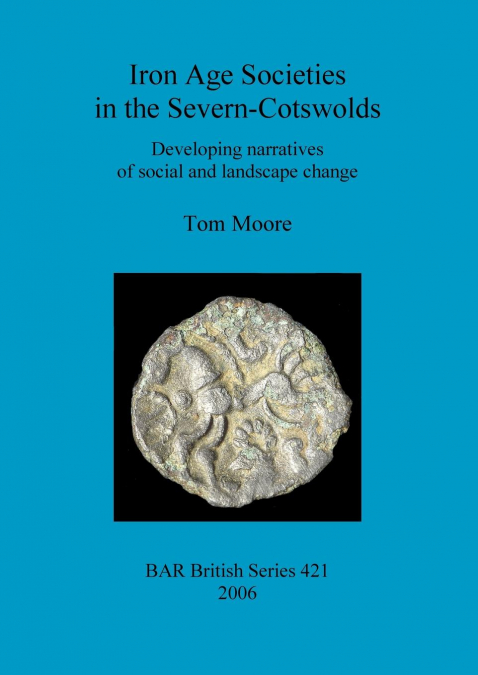
  • Iron Age Societies in the Severn-Cotswolds
    Tom Moore
    The central theme of this study is an examination of the processes of change in Iron Age social organisation and identity on a regional scale using the Severn-Cotswolds area in England as a case study. It aims to provide a coherent narrative of the period in the region based on the wealth of current data now available, providing a basic storyboard against which future studies c...
    Disponible

    144,57 €

  • Somewhere Beyond The Sea Les îles bretonnes (France)
    The Seminar on the Archaeology of Western France, which focused on the islands of Brittany, was held on 1 April 2014 at the University of Rennes 1. The desire to organize this seminar arose spontaneously from the dynamism which currently animates archaeological research on island spaces of the western seaboard of France. Indeed, the seminar took place during a pivotal period of...
    Disponible

    86,11 €

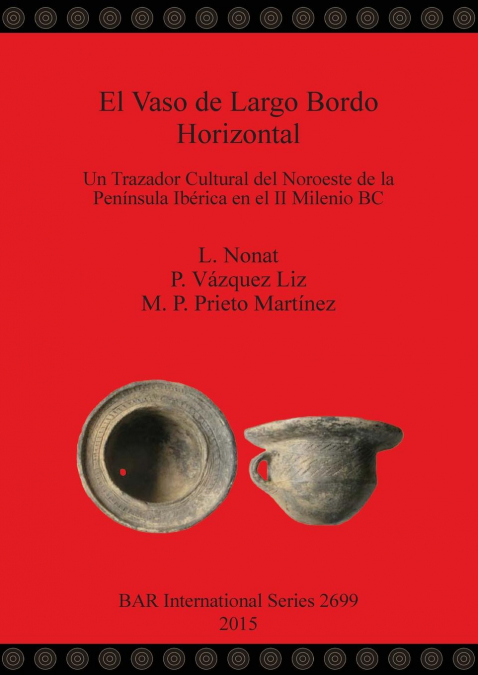
  • El Vaso de Largo Bordo Horizontal
    L. Nonat / LNonat / M. P. Prieto Martínez / MPPrieto Martínez / P. Vázquez Liz / PVázquez Liz
    In this paper the authors study a specific type of pottery from the northwest Iberian Peninsula, known as the Wide Horizontal Rim (WHR) vessel. One of its distinctive aspects is precisely the fact that it is exclusively found in this region, which now comprises the Spanish region of Galicia and northern Portugal, as far south as the River Duero. This type of pottery, of which t...
    Disponible

    115,71 €

  • A Connecting Sea
    Stašo Forenbaher
    This book includes papers stemming from a session at the EAA conference held in Zadar in September 2007.                          ...
    Disponible

    79,97 €

  • The Roman Pottery Production Site at Wickham Barn, Chiltington, East Sussex
    Chris Butler / Malcolm Lyne
    The excavations undertaken at Chiltington in East Sussex revealed two Roman pottery kilns, as well as remains from prehistory and from medieval period.The kilns are well documented, and all the finds were examined and catalogued. Three phases were identified. The pottery produced on the site indicate a strong New Forest influence. ...
    Disponible

    55,62 €

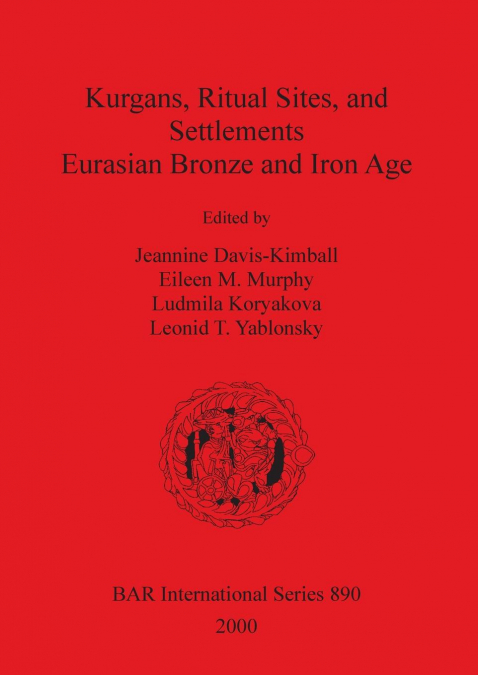
  • Kurgans, Ritual Sites, and Settlements
    Edited by: Jeannine Davis-Kimball, Eileen M. Murphy, Ludmila Koryakova and Leonid T. YablonskyThis richly illustrated volume adds immensely to the small but growing corpus of Eurasian Archaeology published in the English language. Comprised of thirty articles, the authors have focused on the Bronze Age, continuing to include the first millennium BC Early Iron Age, with a termin...
    Disponible

    158,26 €

Otros libros del autor

  • The Ancient Egyptian Bok of the Duat
    STACY DALTON
    Every morning, a fearful monster called apep lurked beneath the place of sunrise, ready to swallow up the solar disk. This "Great Devil" was impossible to destroy, even for the Sun-god. However, by reciting morning after morning the powerful spell that Thoth provided him with, he could paralyze all of Apep’s limbs and rise upon this World. Since the "great gods," though benevol...
    Disponible

    16,88 €

  • The Ancient Egyptian Old Kingdom
    STACY DALTON
    The Old Kingdom of Egypt (circa 2613-2181 BC) is otherwise called the ’Age of the Pyramids’ or ’Age of the Pyramid Builders’ as it incorporated the great fourth Dynasty when King Sneferu idealized the craft of pyramid building, and the pyramids of Giza were developed under the rulers Khufu, Khafre, and Menkaure. The verifiable records of this period, the fourth, sixth Dynasties...
    Disponible

    13,41 €

  • The Ancient Egyptian Middle Kingdom
    STACY DALTON
    The Middle Kingdom (2040-1782 BCE) is viewed as antiquated Egypt’s Classical Age, during which the way of life delivered a portion of its most major show-stoppers and writing. Researchers stay partitioned on which lines comprise the Middle Kingdom of Egypt, with some contending for the last 50% of the eleventh through the twelfth, some the twelfth to fourteenth, and some the tw...
    Disponible

    14,52 €

  • The Ancient Egyptian New Kingdom
    STACY DALTON
    The 18th, 19th, and first 20th Dynasties guided Egypt to its climax of power. Still, throughout the latter portion of the 20th Dynasty (identified as the Ramessid Age), that influence began to decline as the priests of Amun obtained more unimaginable resources and authority, and the situation of the pharaohs depreciated. The temple’s capacity can best recognize the Cult of Amun...
    Disponible

    13,38 €