
Inicio > Derecho > Derecho internacional > Poverty and Fundamental Rights
Poverty and Fundamental Rights

Poverty and Fundamental Rights

David Bilchitz

113,62 €
IVA incluido
Disponible
Editorial:
Oxford University Press
Año de edición:
2008
Materia
Derecho internacional
ISBN:
9780199552160
113,62 €
IVA incluido
Disponible

Selecciona una librería:

  • Librería Samer Atenea
  • Librería Aciertas (Toledo)
  • Kálamo Books
  • Librería Perelló (Valencia)
  • Librería Elías (Asturias)
  • Donde los libros
  • Librería Kolima (Madrid)
  • Librería Proteo (Málaga)

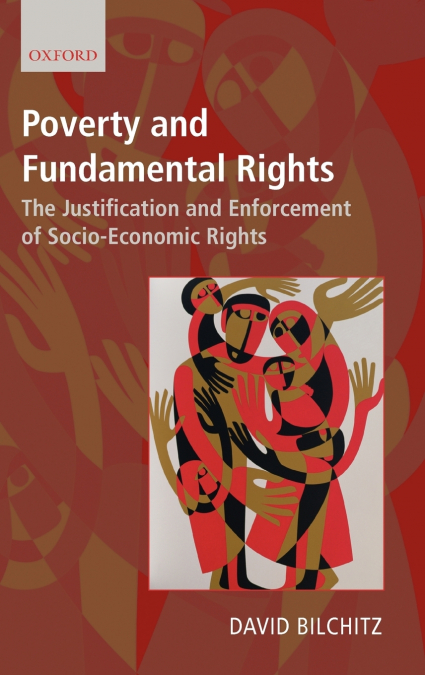
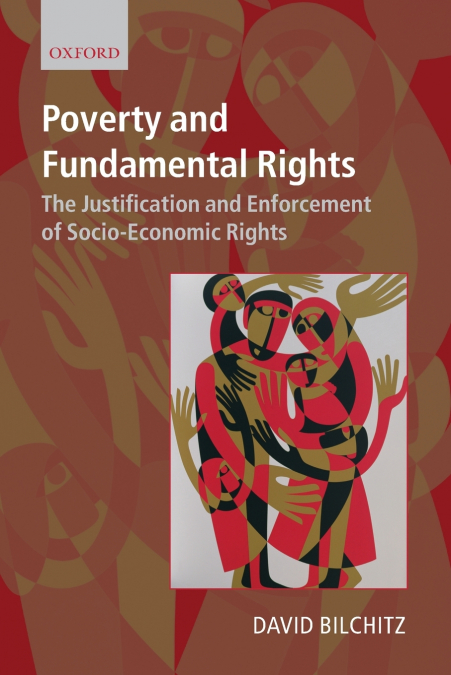
This book addresses the pressing issue of severe poverty and inequality, and questions why violations of socio-economic rights are treated with less urgency than violations of civil and political rights, such as the right to freedom of speech or to vote? Socio-economic rights have been widely regarded as aspirational goals, rhetorically useful, but having few practical implications for government policy and the distribution of resources within a polity. It is not therefore surprising that socio-economic rights have been systematically neglected in the world today, with millions still lacking access to even basic shelter, food or health-care. This book seeks to provide a sustained argument for placing renewed emphasis upon socio-economic rights in the fight against desperate poverty. It utilizes a combination of political philosophy, constitutional law, and public policy in its focus on the right to food, to housing, and to health-care. Part I involves the development of a philosophical theory of rights that provides a common normative foundation for both civil and political rights and socio-economic rights. This theory involves developing an understanding of value that recognizes individuals have fundamental interests of differing levels of urgency. It also involves drawing an important distinction between conditional rights that flow purely from a normative focus on the equal importance of individuals and unconditional rights that involve competing normative and pragmatic considerations. A general theory of judicial review is also put forward that provides a justification for judicial involvement in the enforcement of socio-economic rights. Part II then considers the implications of this general philosophical theory for the interpretation and enforcement of socio-economic rights in law. The focus of this more applied discussion is upon South Africa, where entrenched, directly justiciable socio-economic rights are expressly protected in the constitution. The current approach of the South African Constitutional Court to their interpretation and enforcement is considered and criticized primarily for failing to provide sufficient content to such rights. A modified version of the minimum core approach to socio-economic rights is proposed as an alterative way which is supported by the philosophical theory developed in the first part of the book. This approach requires priority to be given to worst off in society through placing a heavy burden of justification on any society that fails to meet the minimal interests of individuals. It also requires concrete steps to be taken towards realizing a higher level of provision that guarantees individuals the necessary conditions for realizing a wide range of purposes. This is also shown to have important policy implications both for developing and developed countries that can, it is hoped, assist in creating an urgency and commitment towards eradicating extreme poverty.
Artículos relacionados

  • Comparative regulation, economic analysis, and applications of private equity in the united states and european union
    Irini Liakopoulou
    The present work examines the economics and legal doctrine of private equity. After a consideration of private equity’s origins, the book will explore the evolution of private equity in the United States and Europe. The reference economic model then will be reconstructed, with particular attention to financial flows to and from private equity firms and funds. This reconstructio...
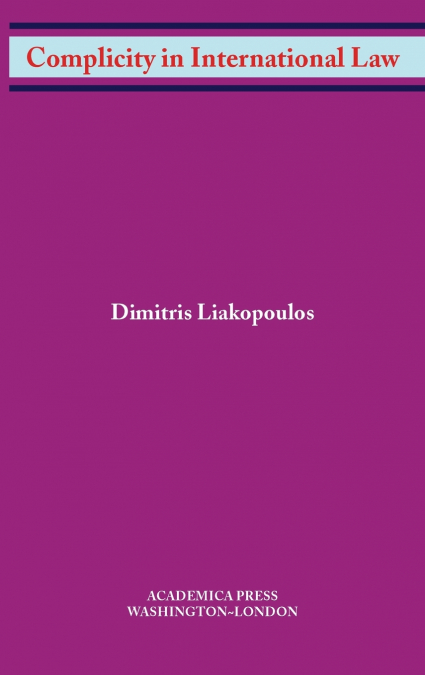
  • Complicity in International Law
    Dimitris Liakopoulous
    Complicity in International Law aims to analyze questions arising from a state’s complicity in conflict with another state or an international organization. On the basis of international legal provisions, a state that assists the illicit fact of another state or an international organization in turn commits an offense if it is aware of the main fact and is bound by the same obl...
  • Command responsibility
    James B Whisker / Kevin R Spiker
    Command responsibility, or executive accountability, assumes that leaders are responsible for the actions of their subordinates. If subordinates misbehave, violate basic moral laws, transgress international law, or thwart international standards of behavior, their leader may be called before to justice. Standards that set the boundaries of human action have been evolving for ma...
  • International Organizations and Reparations
    Dimitris Liakopoulos
    In the first part of this book, noted legal scholar Dimtris Liakopoulos deals with reconstructing the legal regulatory framework governing human rights violations in the activities of organizations. After identifying rules that are generally applicable to organizations’ offenses and govern the profile of reparations, this study assesses primary rules that guarantee the right to...
  • International Organizations and Legal Sanctions Against Governments
    Dimitris Liakopoulos
    This book examines the relationship between governments and international organizations under international law. After surveying the policing powers of international organizations under international law, it illustrates some normative aspects of law that distinguish regulation from enforcement via study of recent legal cases before international judicial bodies. According to Di...
  • The EU Foreign Subsidies Regulation
    Andreas Reindl / Isabelle Van Damme
    'The EU Foreign Subsidies Regulation' is a pioneering manual authored by legal experts Andreas Reindl and Isabelle Van Damme. This essential guide, the first of its kind, is tailored for legal practitioners, offering a thorough exploration of the tools and mechanisms embedded within this novel European regulatory framework. The authors meticulously dissect the EU Foreign Subsid...

Otros libros del autor