Posthuman Bliss?

Posthuman Bliss?

LEVIN

134,13 €
IVA incluido
Consulta disponibilidad
Editorial:
Oxford University Press
Año de edición:
2021
Materia
Ética y filosofía moral
ISBN:
9780190051495

Selecciona una librería:

  • Librería Samer Atenea
  • Librería Aciertas (Toledo)
  • Kálamo Books
  • Librería Perelló (Valencia)
  • Librería Elías (Asturias)
  • Donde los libros
  • Librería Kolima (Madrid)
  • Librería Proteo (Málaga)

A tightly argued and expansive examination of the pitfalls of transhumanism that reacquaints us with what it means to live well. Advocates of transhumanism, or 'radical' enhancement, urge us to pursue the biotechnological heightening of select capacities -- above all, cognitive ability -- so far beyond any human limit that the beings with those capacities would exist on a higher ontological plane. For proponents of such views, humanity’s self-transcendence through advancements in science and technology may even be morally required. Consequently, the human stakes of how we respond to transhumanism are immeasurably high. In Posthuman Bliss? The Failed Promise of Transhumanism, Susan B. Levin challenges transhumanists’ overarching commitments regarding the mind and brain, ethics, liberal democracy, knowledge, and reality, showing their notion of humanity’s self-transcendence into 'posthumanity' to be little more than fantasy. Uniting philosophical with scientific arguments, Levin mounts a significant challenge to transhumanists’ claim that science and technology support their vision of posthumanity. In a clear and engaging style, she dismantles transhumanists’ breezy assurances that posthumans will emerge if we but allocate sufficient resources to that end. Far from offering theoretical and practical 'proof of concept' for the vision that they urge upon us, Levin argues, transhumanists engage inadequately with cognitive psychology, biology, and neuroscience, often relying on questionable or outdated views within those fields. Having shown in depth why transhumanism should be rejected, Levin argues forcefully for a holistic perspective on living well that is rooted in Aristotle’s virtue ethics but that is adapted to liberal democracy. This holism is thoroughly human, in the best of senses: It directs us to consider worthy ends for us as human beings and to do the irreplaceable work of understanding ourselves rather than relying on technology and science to be our salvation.

Artículos relacionados

  • Ka Ab Ba Building The Lighted Temple
    Dr Terri R. Nelson / Dr Terri RNelson
    The book KaAbBa Building The Lighted Temple/Metaphysical Keys to the Tree of Life draws a circle that is inclusive of the Afrikan origin of the Ancient Kemetic/Egyptian wisdom. It reveals the undeniable root and link of Ancient Africa to all the religious systems that would develop worldwide. This book is explosive in its power to convey the meaning of KaAbBa, the Medu Neter  (...
    Disponible

    37,41 €

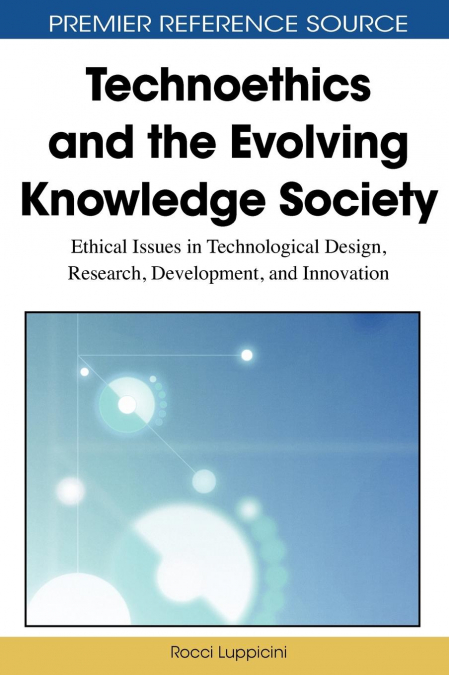
  • Technoethics and the Evolving Knowledge Society
    Rocci Luppicini
    Recently, there has been a major push to rediscover the ethical dimension of technology across the sciences, social sciences, and humanities. Technoethics and the Evolving Knowledge Society: Ethical Issues in Technological Design, Research, Development, and Innovation examines human processes and practices connected to technology embedded within social, political, and moral sph...
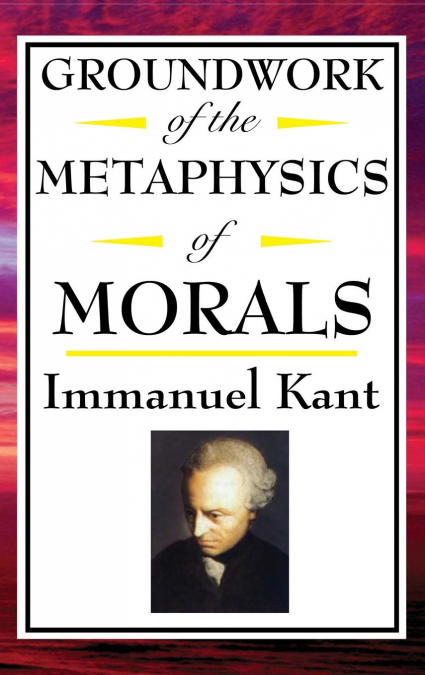
  • Kant
    Immanuel Kant
    Kant’s Groundwork of the Metaphysics of Morals is one of the most important works in modern moral philosophy. It belongs beside Plato, Aristotle, Machiavelli, and Hobbes. Here Kant sets out to articulate and defend the Categorical Imperative - the fundamental principle that underlies moral reasoning - and to lay the foundation for a comprehensive account of justice and human vi...
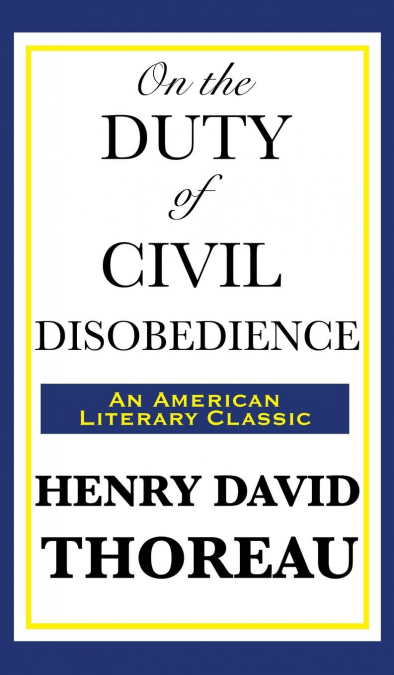
  • On the Duty of Civil Disobedience
    HENRY DAVID THOREAU
    Civil Disobedience argues that citizens should not permit their governments to overrule their consciences, and that they have a duty to avoid allowing their acquiescence to enable the government to make them the agents of injustice. Thoreau was motivated in part by his disgust with slavery and the Mexican-American War, but the sentiments he expresses here are just as pertinent ...
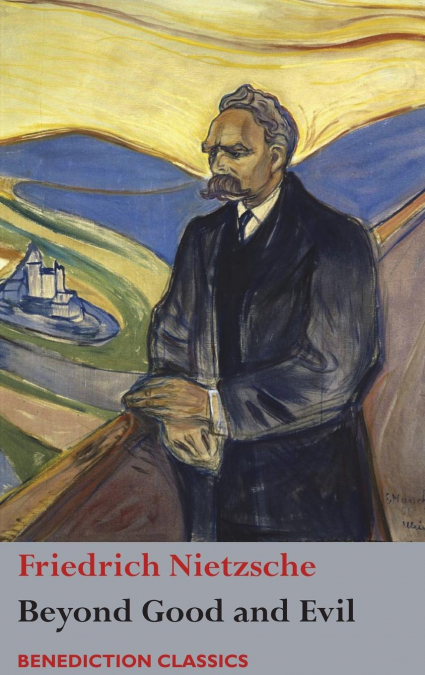
  • Beyond Good and Evil
    Friedrich Nietzsche
    Nietzsche, though primarily a philosopher, wrote widely on art, philology, history, religion, tragedy, culture, and science.  In 1886, at the height of his powers, he published Beyond Good and Evil.  Here he examines much of the best of human thought--dogmatic philosophy, Judeo-Christian morality, science and democracy – and finds it lacking.  Rejecting “slave-morality” he pres...
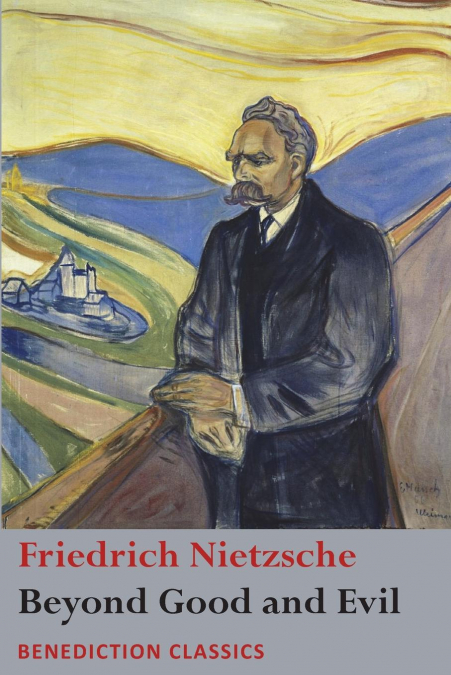
  • Beyond Good and Evil
    Friedrich Nietzsche
    Nietzsche, though primarily a philosopher, wrote widely on art, philology, history, religion, tragedy, culture, and science.  In 1886, at the height of his powers, he published Beyond Good and Evil.  Here he examines much of the best of human thought--dogmatic philosophy, Judeo-Christian morality, science and democracy – and finds it lacking.  Rejecting “slave-morality” he pres...
    Disponible

    9,99 €

Otros libros del autor