

 Librería Samer Atenea
 Kálamo Books
 Librería Elías (Asturias)
 Librería Kolima (Madrid)
 Librería Proteo (Málaga)
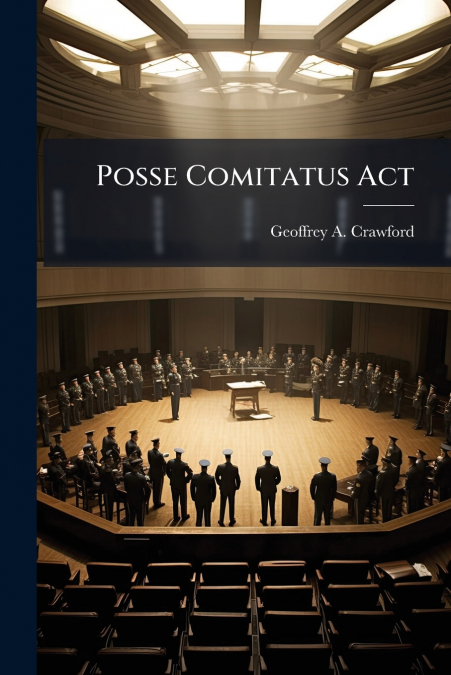
The 11 September 2001 terrorist attacks thrust the realities of an asymmetrical threat environment upon the United States in an unprecedented fashion. As a result of these attacks and the likelihood this country will experience additional attacks in the future, the Department of Defense and the subordinate services must understand the roles they will fulfill to identify and defeat this threat in support of homeland defense missions. The Posse Comitatus Act (PCA) is one of many significant issues the armed services must deal with in order to effectively participate in homeland defense. This law is central to much of the confusion and misunderstanding involved in the employment of military forces within the United States. Consequently, the primary question this thesis centers on is: Is it necessary to improve clarity in Department of Defense (DoD) interpretation and guidance of the PCA so that operational commanders are able to understand and support fully homeland defense of the United States of America as it relates to terrorist activities? In order to deter these future terrorist threats, every aspect of the homeland defense mission must be analyzed. Clarifying the meaning of the PCA for military commanders is a crucial step in this analysis.This work has been selected by scholars as being culturally important, and is part of the knowledge base of civilization as we know it. This work was reproduced from the original artifact, and remains as true to the original work as possible. Therefore, you will see the original copyright references, library stamps (as most of these works have been housed in our most important libraries around the world), and other notations in the work.This work is in the public domain in the United States of America, and possibly other nations. Within the United States, you may freely copy and distribute this work, as no entity (individual or corporate) has a copyright on the body of the work.As a reproduction of a historical artifact, this work may contain missing or blurred pages, poor pictures, errant marks, etc. Scholars believe, and we concur, that this work is important enough to be preserved, reproduced, and made generally available to the public. We appreciate your support of the preservation process, and thank you for being an important part of keeping this knowledge alive and relevant.





