Inicio > Humanidades > Historia > Historia regional y nacional > Historia de África > Portraiture of the Nigerian Conundrum in Ola Rotimi’s 'The Gods are not to Blame'
Portraiture of the Nigerian Conundrum in Ola Rotimi’s 'The Gods are not to Blame'

Portraiture of the Nigerian Conundrum in Ola Rotimi’s 'The Gods are not to Blame'

Akwu Sunday Victor

24,04 €
IVA incluido
Disponible
Editorial:
GRIN Verlag
Año de edición:
2014
Materia
Historia de África
ISBN:
9783656717201
24,04 €
IVA incluido
Disponible

Selecciona una librería:

  • Librería Samer Atenea
  • Librería Aciertas (Toledo)
  • Kálamo Books
  • Librería Perelló (Valencia)
  • Librería Elías (Asturias)
  • Donde los libros
  • Librería Kolima (Madrid)
  • Librería Proteo (Málaga)

Academic Paper from the year 2014 in the subject African Studies - Literature, , language: English, abstract: This paper attempts reading Ola Rotimi’s 'The Gods are not to blame' against the backdrop of the Nigerian dilemma in the contemporary times. The play first performed in the year 1968, in the heat of the Nigerian civil war is still relevant today. Many scholars viewed the work as a transplantation of Sophocle’s Oedipus Rex and underplay its powerful political message to the nascent Nigerian political class then and now. The paper examined the role of Odewale in the shaping of the Destiny of his society and how albeit with stint of tyranny champions the welfare of the state, taking blames for the decadence and the breakdown of law and cosmic order when found culpable. On the other hand, the contemporary Nigerian leaders are antithetical of Odewale, blame-games and outright refusal to be accountable, or step-down when found wanting; misappropriation, mismanagement of state and human resources are institutionalized on local and national scale. The paper above all, adumbrated some of the conundrums of Nigeria and proffered a number of useful ways by which the Odewale examples could be integrated into the Nigerian political morality, and the pitfalls to be avoided in a bid to move ahead into the state dreamt of on the 1st of October, 1960.
Artículos relacionados

  • Kulubnarti I
    William Y. Adams / William YAdams
    Sudan Archaeological Research Society. Publication Number 18In 1998 and 1999 volumes II and III of the reports on the University of Kentucky excavations at Kulubnarti were published by the Sudan Archaeological Research Society as numbers 2 and 4 in its monograph series. Kulubnarti III was also available through British Archaeological Reports in its International Series no. 814....
    Disponible

    104,23 €

  • The Creole Elite and the Rise of Angolan Protonationalism
    Jacopo Corrado
    This book is about Angolan literature and culture. It investigates a segment of Angolan history and literature, with which even Portuguese-speaking readers are generally not familiar. Its main purpose is to define the features and the literary production of the so-called ’creole elite’, as well as its contribution to the early manifestations of dissatisfaction towards colonial ...
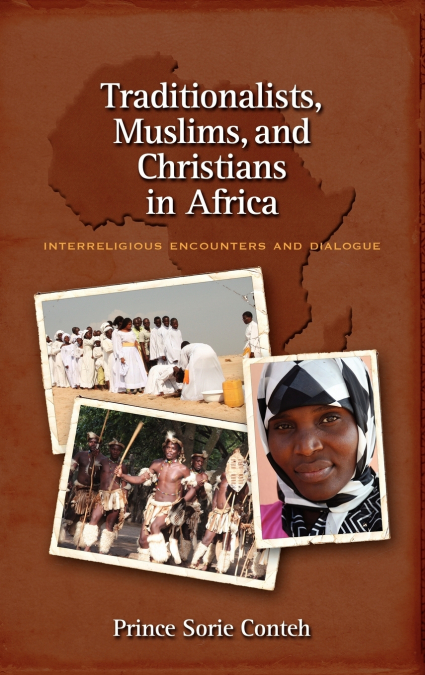
  • Traditionalists, Muslims, and Christians in Africa
    Prince Sorie Conteh
    As is the case for most of sub-Saharan Africa, African Traditional Religion (ATR) is the indigenous religion of Sierra Leone. When the early forebears and later progenitors of Islam and Christianity arrived, they met Sierra Leone indigenes with a remarkable knowledge of God and a structured religious system. Successive Muslim clerics, traders, and missionaries were respectful o...
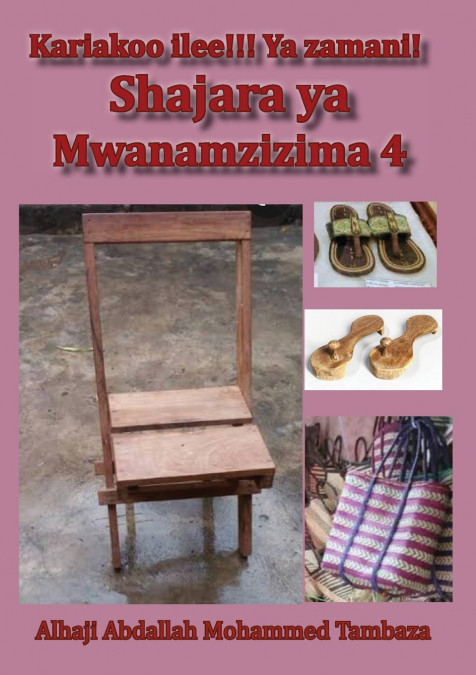
  • Shajara ya Mwana Mzizima 4
    Alhaji Abdallah Mohammed Tambaza
    This is the fourth part in the series of the history of Dar es salaam. This book is about Kariakoo, the first area where Africans were allowed to live and stay. It traces the history of the area before independence and up till the 1970’s.Kitabu hiki ni mfululizo wa vitabu vya kumbukumbu ya sehemu na watu mashuhuri katika jiji la Dar es Salaam. Kitabu hiki ni cha tatu ambacho ki...
    Disponible

    41,51 €

  • Britain, the Royal Air Force and relief flights to Biafra, 1968-1969
    Onianwa Oluchukwu Ignatus
    In this intriguing new book, Onianwa Oluchukwu Ignatus investigates Britain’s decision to engage the Royal Air Force (RAF) in the relief operations during the Nigerian Civil War. The main area badly ravaged by the conflict being the Republic of Biafra was declared 'a frontier of need.' Humanitarian concerns and mounting public pressures, both in Britain and other Western countr...
  • We Rest Here Content
    Robin Smith
    We Rest Here Content is not the history of the Imperial Light Horse Regiment - that was written by the regiment’s Intelligence Officer, Lieutenant George Fleming Gibson and published in 1937 as The Story of the Imperial Light Horse in the South African War 1899-1902. We Rest Here Content approaches the subject of the I.L.H. from a different viewpoint. It looks at all the known ...
    Disponible

    75,50 €