

 Librería Samer Atenea
 Kálamo Books
 Librería Elías (Asturias)
 Librería Kolima (Madrid)
 Librería Proteo (Málaga)
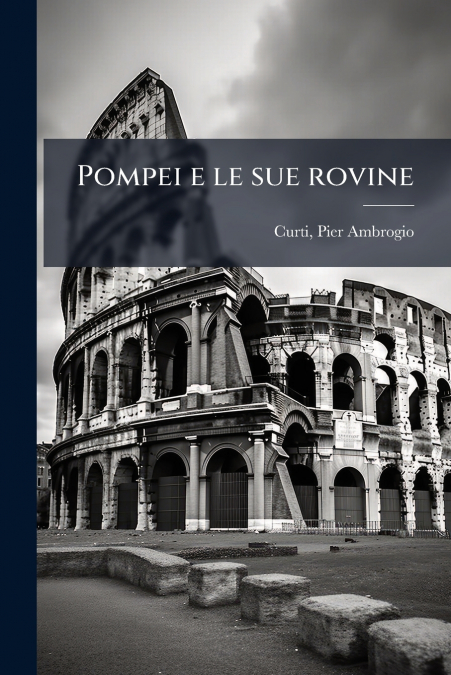
'Pompei e le sue rovine' di Pier Ambrogio Curti offre una vivida esplorazione dell’antica città di Pompei e delle sue vestigia. Quest’opera, ricca di dettagli storici e archeologici, conduce il lettore in un viaggio attraverso le strade, le case e i monumenti che furono tragicamente preservati dall’eruzione del Vesuvio nel 79 d.C. Curti, con la sua profonda conoscenza del sito, illustra la vita quotidiana, l’arte e l’architettura di Pompei, offrendo uno sguardo affascinante sulla civiltà romana.Il libro rappresenta una risorsa preziosa per gli studiosi e gli appassionati di storia antica, fornendo una testimonianza dettagliata delle scoperte archeologiche e delle interpretazioni dell’epoca. L’opera di Curti cattura l’immaginazione e suscita un profondo interesse per la storia e la cultura di questa città straordinaria, rendendola una lettura essenziale per chiunque desideri comprendere meglio il mondo romano e le sue vestigia.This work has been selected by scholars as being culturally important, and is part of the knowledge base of civilization as we know it. This work was reproduced from the original artifact, and remains as true to the original work as possible. Therefore, you will see the original copyright references, library stamps (as most of these works have been housed in our most important libraries around the world), and other notations in the work.This work is in the public domain in the United States of America, and possibly other nations. Within the United States, you may freely copy and distribute this work, as no entity (individual or corporate) has a copyright on the body of the work.As a reproduction of a historical artifact, this work may contain missing or blurred pages, poor pictures, errant marks, etc. Scholars believe, and we concur, that this work is important enough to be preserved, reproduced, and made generally available to the public. We appreciate your support of the preservation process, and thank you for being an important part of keeping this knowledge alive and relevant.








