 Librería Samer Atenea
 Kálamo Books
 Librería Elías (Asturias)
 Librería Kolima (Madrid)
 Librería Proteo (Málaga)
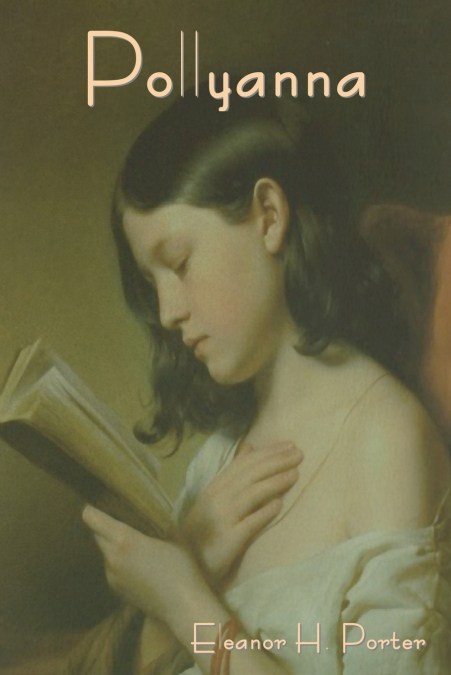
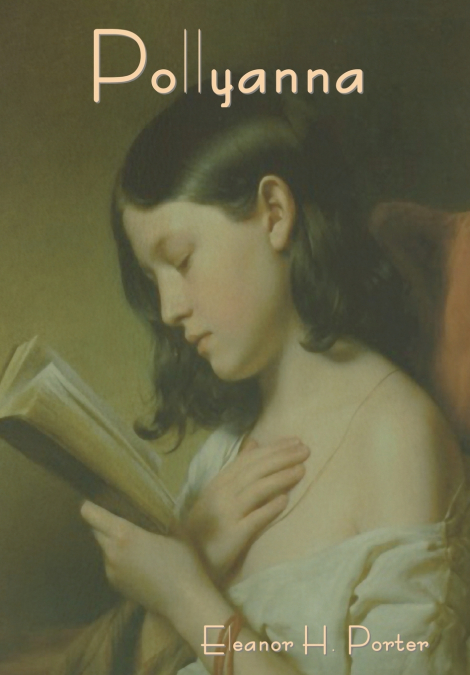
Pollyanna is a 1913 novel by American author Eleanor H. Porter, considered a classic of children’s literature. The book’s success led to Porter’s soon writing a sequel, Pollyanna Grows Up (1915). Eleven more Pollyanna sequels, known as 'Glad Books', were later published, most of them written by Elizabeth Borton or Harriet Lummis Smith. Further sequels followed, including Pollyanna Plays the Game by Colleen L. Reece, published in 1997. Due to the book’s fame, 'Pollyanna' has become a byword for someone who - like the title character - has an unfailingly optimistic outlook; a subconscious bias towards the positive is often described as the Pollyanna principle. Despite the current common use of the term to mean 'excessively cheerful', Pollyanna and her father played the glad game as a method of coping with the real difficulties and sorrows that, along with luck and joy, shape every life. Pollyanna has been adapted for film several times. Some of the best known are the 1920 version starring Mary Pickford, and Disney’s 1960 version starring child actress Hayley Mills, who won a special Oscar for the role. The title character is Pollyanna Whittier, an eleven-year-old orphan who goes to live in the fictional town of Beldingsville, Vermont, with her wealthy but stern and cold spinster Aunt Polly Harrington, who does not want to take in Pollyanna but feels it as her duty to her late sister Jennifer. Pollyanna’s philosophy of life centers on what she calls 'The Glad Game', an optimistic and positive attitude she learned from her father. The game consists of finding something to be glad about in every situation, no matter how bleak it may be. It originated in an incident one Christmas when Pollyanna, who was hoping for a doll in the missionary barrel, found only a pair of crutches inside. Making the game up on the spot, Pollyanna’s father taught her to look at the good side of things-in this case, to be glad about the crutches because she did not need to use them. With this philosophy, and her own sunny personality and sincere, sympathetic soul, Pollyanna brings so much gladness to her aunt’s dispirited New England town that she transforms it into a pleasant place to live. The Glad Game shields her from her aunt’s stern attitude: when Aunt Polly puts her in a stuffy attic room without carpets or pictures, she exults at the beautiful view from the high window; when she tries to 'punish' her niece for being late to dinner by sentencing her to a meal of bread and milk in the kitchen with the servant Nancy, Pollyanna thanks her rapturously because she likes bread and milk, and she likes Nancy. Soon Pollyanna teaches some of Beldingsville’s most troubled inhabitants to 'play the game' as well, from Mrs. Snow, a querulous invalid, to Mr. Pendleton, a miserly bachelor who lives all alone in a cluttered mansion. Aunt Polly, too-finding herself helpless before Pollyanna’s buoyant refusal to be downcast-gradually begins to thaw, although she resists the Glad Game longer than anyone else. Eventually, however, even Pollyanna’s robust optimism is put to the test when she is struck by a car and loses the use of her legs. At first, she does not realize the seriousness of her situation, but her spirits plummet when she is told what happened to her. After that, she lies in bed, unable to find anything to be glad about. Then the townspeople begin calling at Aunt Polly’s house, eager to let Pollyanna know how much her encouragement has improved their lives; and Pollyanna decides she can still be glad that she at least had her legs. The novel ends with Aunt Polly marrying her former lover Dr. Chilton and Pollyanna being sent to a hospital, where she learns to walk again and is able to appreciate the use of her legs far more as a result of being temporarily disabled and unable to walk well. (wikipedia.org)