 Librería Samer Atenea
 Kálamo Books
 Librería Elías (Asturias)
 Librería Kolima (Madrid)
 Librería Proteo (Málaga)
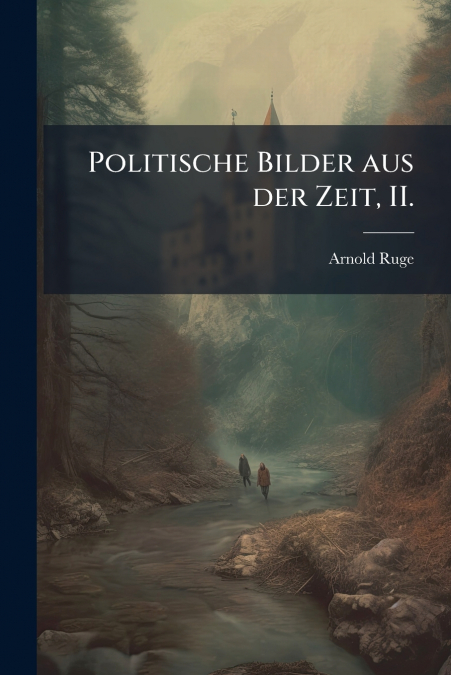
Politische Bilder aus der Zeit, II. ist eine Sammlung von politischen Schriften und Essays des deutschen Philosophen und Schriftstellers Arnold Ruge. Geschrieben im Geiste der Zeit, reflektieren diese Werke die politischen und sozialen Umwälzungen des Jahres 1848 und bieten Einblicke in die damaligen Debatten über Freiheit, Demokratie und nationale Einheit. Ruge, ein wichtiger Vertreter des Junghegelianismus, analysiert die Kräfte, die Europa bewegten, und entwirft Visionen für eine gerechtere und fortschrittlichere Gesellschaft.Diese Sammlung ist ein wertvolles historisches Dokument, das die Ideale und Konflikte einer Epoche des Umbruchs lebendig werden lässt. Leser finden hier eine tiefgründige Auseinandersetzung mit den politischen Herausforderungen des 19. Jahrhunderts und die bleibende Relevanz von Ruges Ideen für die Gestaltung einer besseren Zukunft.This work has been selected by scholars as being culturally important, and is part of the knowledge base of civilization as we know it. This work was reproduced from the original artifact, and remains as true to the original work as possible. Therefore, you will see the original copyright references, library stamps (as most of these works have been housed in our most important libraries around the world), and other notations in the work.This work is in the public domain in the United States of America, and possibly other nations. Within the United States, you may freely copy and distribute this work, as no entity (individual or corporate) has a copyright on the body of the work.As a reproduction of a historical artifact, this work may contain missing or blurred pages, poor pictures, errant marks, etc. Scholars believe, and we concur, that this work is important enough to be preserved, reproduced, and made generally available to the public. We appreciate your support of the preservation process, and thank you for being an important part of keeping this knowledge alive and relevant.